Humans and lions in Serengeti can coexist through community conservation
Kenya's Masai Mara
By Hannah Osborne
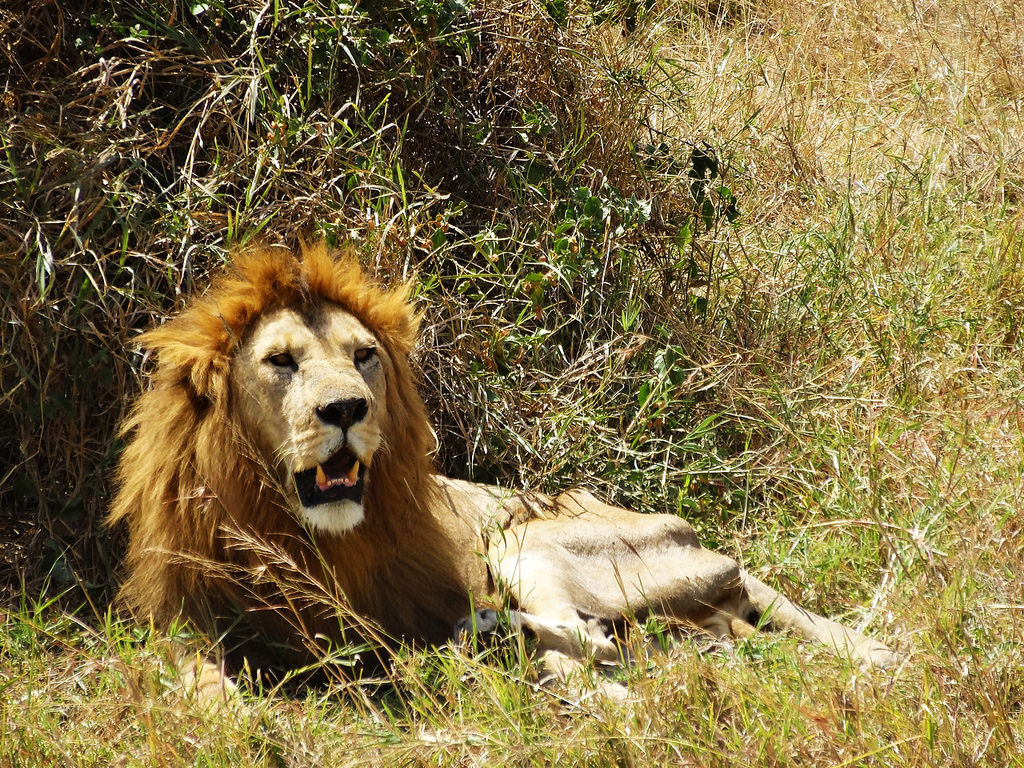
Community conservancies result in lion population growth in Kenya regionDigital Aesthetica/Flickr
Humans
and lions can successfully coexist through community conservation
programmes, a study of Kenya's Masai Mara region has shown. With
significant declines in lion populations across Africa, researchers were
looking at what interventions can lead to people to live alongside
lions without conflicts.
A study published in the Journal of Applied Ecology
examined the impact community conservancies had on areas where lions
and humans overlap, to assess their effectiveness and understand what
effect they have on lion populations.
Lions are regularly killed
by humans they live alongside because of attacks on livestock and or
people. While trophy hunting is controlled by authorities, the killing
of lions by local people is not.
Community conservancies are
privately protected areas that engage the local community in ecotourism
and wildlife management. Income from tourism is distributed to local
people. However, evidence of how effective these programmes are at
conserving large carnivores, such as lions, was unknown.
Scientists
from the University of Glasgow spent five years assessing lion numbers
by observing individuals through their whisker-spot patterns. Data
showed that between 2008 and 2013, lion numbers were 2.6 times higher
than had been reported in 2003. Survival rates were also highest among
lions living in central regions of the conservancies.
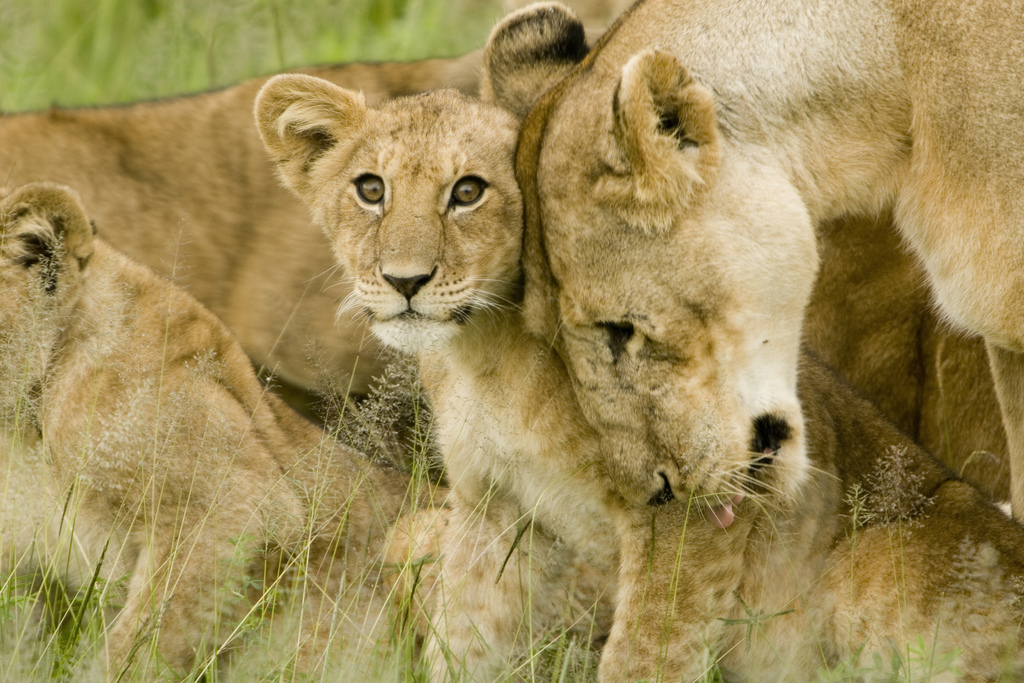
Lion cub with mother in the SerengetiDavid Dennis/FlickrFindings
showed settlements that were not members of the conservancy, but still
came into contact with prides, had a "large negative effect on female
survival". They accounted for a 37% variation on survival (from the
lions being killed, as opposed to natural causes). In contrast,
settlements within the conservancy had no impact on lion survival.
The
team say the study shows community conservancies are an effective
strategy for the future protection of lion populations because it
results in a change in attitude towards these predators. Laurence Frank,
director of Living With Lions, adds: "Due to rapid human population
growth, wildlife has been in free-fall across most of Africa. Only local
people can reverse the downward spiral, and this study shows that
profits from tourism can motivate rural people to tolerate rather than
eliminate wild animals."
Grant Hopcraft, corresponding author on
the paper added: "The most important finding in this study is that
community conservancies are a viable way to protect wildlife and pose an
alternative solution to building fences. If we are concerned about the
population of lions, we need to let the people who actually live with
the lions benefit from their existence."

No comments:
Post a Comment