This Dec. 1, 2016 video image provided by Fort Huachuca shows a photo of a wild jaguar in southern Arizona. Authorities say a camera belonging to Fort Huachuca Army installation has captured what is likely the second wild jaguar to be spotted in the U.S. in recent years. The Arizona Game and Fish Department says a preliminary analysis suggests the cat is new to the area and not "El Jefe," a jaguar that was captured on video in a nearby mountain range last year. (Fort Huachuca via AP)
PHOENIX — Arizona officials have confirmed that a wild jaguar spotted on a southern Arizona trail camera is new to the area.
The Arizona Game and Fish Department said on Wednesday it has completed the analysis of the jaguar in the Huachuca Mountains near Fort Huachuca southeast of Tucson.
Another jaguar, dubbed “El Jefe” by conservationists, was spotted on camera in a different mountain range in that region last year.
Until now, El Jefe was believed to be the only jaguar in the U.S., although he hasn’t been seen in over a year.
Animal conservationists have hailed the new jaguar as a sign that the giant cat could repopulate here in the future after disappearing from the area decades ago.
But Game and Fish says the jaguar is a solitary male and the closest breeding population is about 130 miles away. A female jaguar hasn’t been spotted in Arizona in decades.
Mark Hart, a spokesman for the Arizona Game and Fish Department, said jaguars migrate from Mexico to southern Arizona about every five to 10 years, but that a female jaguar hasn’t been spotted in the U.S. since the 1940s.
“So the quality of life isn’t here for the jaguar,” Hart said.
But Arizona, New Mexico and other parts of the Southwest were home to jaguars before habitat loss and predator control programs aimed at protecting livestock eliminated them over the last 150 years. A hunter shot and killed the last verified female jaguar in the U.S. in 1963 in northern Arizona.
“It’s so exciting that in the last 30 years or so, five or six males have shown up in the U.S. and are starting to re-establish themselves in the historical range,” said Rob Peters, a biologist with Defenders of Wildlife who is based in Tucson. Peters says that although there haven’t been any female jaguars here, the fact that males are establishing habitats is a good sign that they could come in the future.
It could be days before experts determine whether the jaguar seen in a Dec. 1 photo is new.
Hart says analysts will study the jaguar’s rosettes, or the spots within the spots on the cat’s fur, to figure out if it’s been seen before.
Peters says his organization is anxiously awaiting a report by the federal government that is expected to outline a jaguar recovery plan for the area.
“They were once found in Arizona as far north as the Grand Canyon. There were females and cubs in the Southwest,” Peters said.
But protecting the big cats has been fraught with legal challenges.
In March 2014, the U.S. Fish and Wildlife Service set aside nearly 1,200 square miles along the U.S.-Mexico border as habitat essential for the conservation of the jaguar. The New Mexico Farm and Livestock Bureau, New Mexico Cattle Growers’ Association and New Mexico Federal Lands Council filed a lawsuit nearly a year later, saying the decision was “unlawful, arbitrary and capricious” action by federal authorities. That lawsuit is ongoing.
Only El Jefe has made numerous appearances in the U.S. in several years. He first popped up in the Whetstone Mountains in 2011 when he was about 3 years old and showed up again in video in the Santa Rita Mountains south of Tucson around September 2015.
Photo courtesy National Park Service Flicker page
P-45, a large adult male mountain lion, is suspected of killing at least 10 alpacas in Malibu.
By
Dana Bartholomew, Los Angeles Daily News
Posted:
A killing spree by a mountain lion that munched 11 alpaca and a
goat above Malibu over the weekend was enough to grant a state permit to
kill the cat.
But environmentalists, state and federal officials
across Southern California were up in arms Tuesday about the rancher’s
aim to hunt down the male mountain lion known as P-45.
“I
understand if you lost the animals you’re raising and are upset,” said
Michael Bell, founder of Citizens for a Humane Los Angeles, based in
Encino. “But this is a mountain lion, P-45. Famous.
“I believe he should be left alone to do what mountain lions do.
If people have livestock, they should go to great extremes to protect
their own without killing a natural predator.”
A state game warden
gave the unidentified rancher permission Monday to kill the cougar in
the mountains above Malibu after it slaughtered a dozen farm animals
over the weekend.
The
mountain lion identified as P-45 allegedly tore apart 10 alpaca at one
ranch near Mulholland Highway at Decker Canyon Road on Saturday, and
another alpaca and a goat Sunday at a second ranch.
The California Department of Fish and Wildlife issued the
so-called depredation order, which under state law grants a person the
right to shoot a mountain lion if it has been killing livestock or pets.
A spokesman for the agency did not respond to a request for comment.
The
state order allowing the take-down of the 4-year-old cat coincides with
a federal study of between 10 and 15 mountain lions thought to live in
the Santa Monica Mountains between the 101 Freeway and the ocean. P-45
is equipped with a radio transmitter tracked by National Park Service
biologists.
Federal park rangers have been trying to improve the bloodlines
of the mountain lions trapped by urban freeways between Los Angeles and
Camarillo. Inbreeding between the cats, they say, could cause them to go
extinct in 50 years.
Two weeks ago, the state Wildlife Commission
approved a $7.1 million land buy along the 101 Freeway west of
Calabasas to provide habitat for the endangered subspecies. Cougar
advocates hope to raise $56 million for a wildlife crossing bridge over
the 10-lane freeway.
Federal rangers, in conjunction with state game wardens and
environmental groups, will host a “Living in Mountain Lion Country”
workshop today about local cougars and how to safeguard pets and
livestock. The meeting will be at 7 p.m. at the NPS Paramount Ranch,
2903 Cornell Road., Agoura Hills.
Malibu Hills residents are
expected to press game wardens to trap and relocate killer cats. Cougar
advocates are expected to press for greater pet and livestock
protection.
“The lion is obviously killing for sport — not food,”
Mary-Dee Rickards, who lives on a nearby ranch, had said in a statement
to KBUU radio.
The National Park Service issued a statement Tuesday saying the
only long-term solution to keeping the big cats around Los Angeles is to
erect mountain lion-proof enclosures for pets and livestock.
“Eliminating
P-45 does not solve the problem, especially given there are at least
four mountain lions in the Santa Monica Mountains that have killed
livestock over the past year,” said Kate Kuykendall, acting deputy
superintendent for the Santa Monica Mountains National Recreation Area,
in a statement. “Nor is P-45’s behavior abnormal or aberrant in any way.
“If animals are stuck in an unsecured pen, a mountain lion’s natural response can be to prey upon all available animals.”
State
Sen.-elect Henry Stern, who will represent the region after being sworn
in Dec. 5, said he will call upon state game wardens to find a solution
other than death to the cat.
“I think there’s a way to deal with
it,” said Stern, the incoming senator for District 27, based in
Calabasas. “Not even the ranching community wants to pull out a shotgun
and protect the herd.”
The National Wildlife Federation, whose Save L.A. Cougars
campaign is working with state and federal agencies to save the Santa
Monica Mountains cats, has offered to pay for livestock protection for
the rancher. The safeguard measures include secured pens, guard dogs and
outdoors lights.
“We want a landscape that’s safe for wildlife,
livestock, pets and people,” said federation California Director Beth
Pratt-Bergstrom. “It’s possible to do so. Mountain lions are just being
mountain lions.
“This is a predictable conflict, and one that we
can solve by being good neighbors and by taking responsibility for
securing our livestock or domestic animals,” she said.
An elusive predator returns to Europe’s mountains, helping restore
nature’s balance. A French photographer stalks the Eurasian lynx.
by Mike Unwin
November 29, 2016
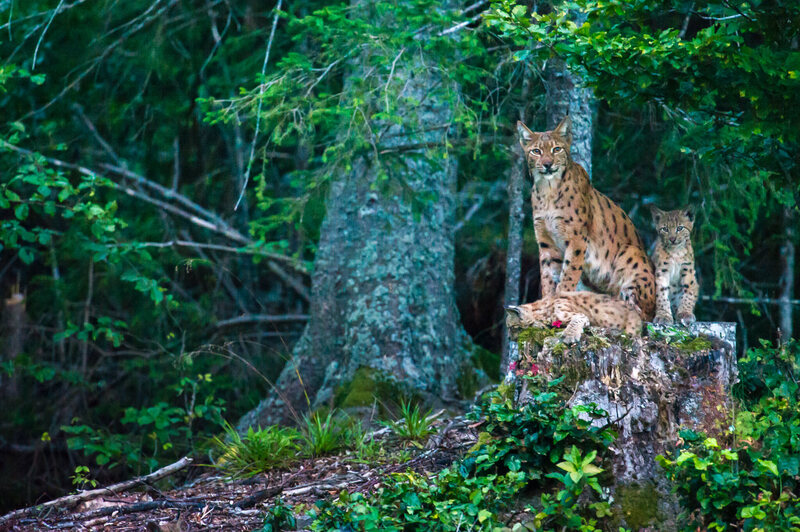
An anxious female Eurasian lynx looks on as biologists tag her three-week-old cub. All Photos: Laurent Geslin
A hoarse, yelping bark rang out from the
wooded hillside. Then again. The unearthly calls, sounding somewhere
between fox and cat, continued in a steady sequence, carrying through
the forest’s mossy tree trunks and damp leaf litter, growing louder as
they approached. Then, abruptly, the woods fell silent.
“I knew he must be close when the call
stopped,” explains French wildlife photographer Laurent Geslin,
recounting the moment in January 2011 when he first laid eyes on a wild
Eurasian lynx. “I knew that he must have seen me.” Geslin, who has spent
the past six years pursuing this elusive beast through Switzerland’s
Jura Mountains, was confident that the cat, though shy, would be
curious. All he had to do was keep quiet and watch.
“I checked every tree and every branch,”
Geslin recalls. “And then I checked again.” He explains how a lynx’s
lightly marked grey-brown coat blends so perfectly into the dappled
backdrop of rock, leaf and shadow that it can disappear in plain view.
This time, however, his diligence paid off. One final binocular sweep in
the fading light at last revealed those telltale cat contours,
materializing from the abstract backdrop like an optical illusion. “He
was about 25 meters away, sitting on his backside, looking very calmly
at me.” Geslin’s voice still betrays the excitement. “It was a great
sensation.”
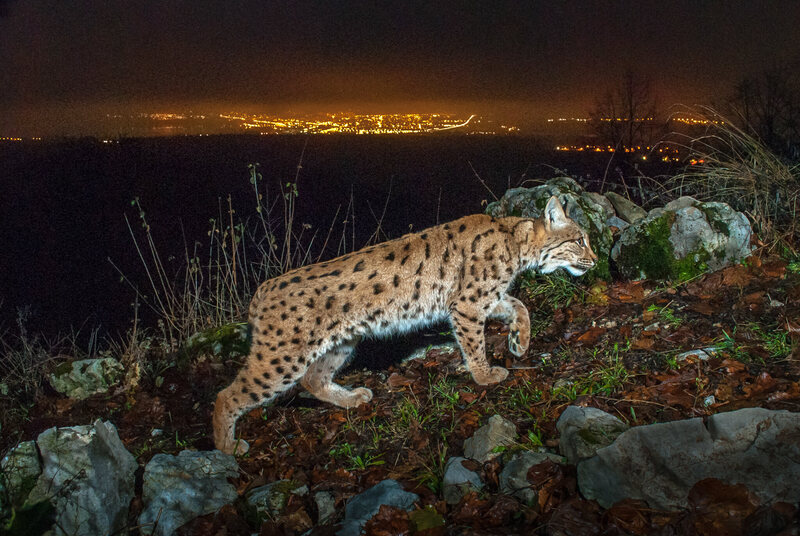
A
camera trap captures the image of a female Eurasian lynx, known to
biologists as “B218,” with the lights of Yverdon-les-Bains, Switzerland
in the distance.
Since then, Geslin has notched up about
30 precious sightings, ranging from distant glimpses to, on one
memorable occasion, a mother leading her three cubs to feed within
meters of his hide. This total might seem a modest return for six years
of searching—six years of pursuing every clue, staking out every
hideaway, and sitting in hides for 96 hours at a stretch. But few people
anywhere have enjoyed such success.
Having spent years photographing big cats
around the world, Geslin was amazed to find how little was known about
the one living on his own doorstep. His book, Lynx: regards croisés
(“different perspectives”), published in France in 2014, is the first
full photographic study of this species in the wild, and testament to
his extraordinary dedication and perseverance.
Just a few decades ago, such a project
would have been impossible. The lynx had not been seen in Switzerland
since 1904. Once common across much of Europe, it had also disappeared
from France, Germany, and many other former strongholds. By 1940, the
continent’s entire population had fallen to an estimated 700 animals,
confined largely to the wildest reaches of Scandinavia. This sorry tale
mirrored that of the lynx’s fellow large carnivores, the wolf,
wolverine, and brown bear. All had declined dramatically in Europe,
victims both of ruthless persecution— either for sport or because, as
hunters of wild game and occasional livestock killers, they were viewed
as competition—and the relentless destruction of their natural habitats.
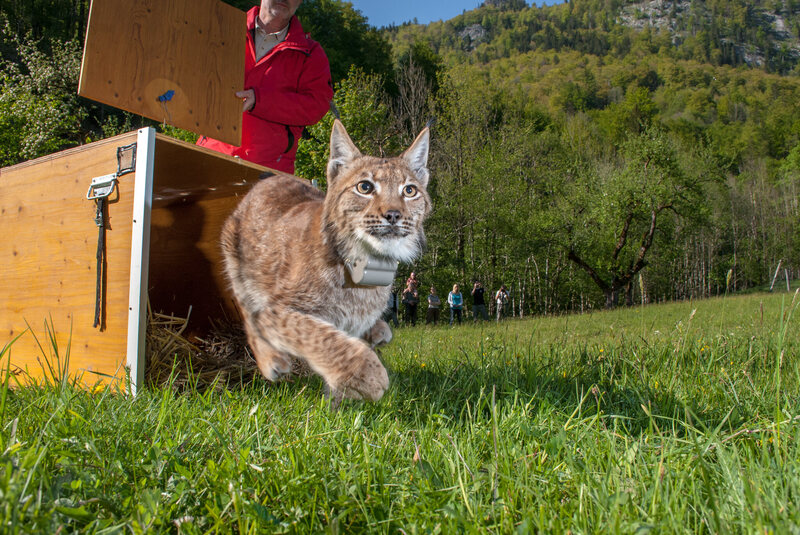
An
adult female Eurasian lynx is released in Kalkalpen National Park as
part of a continuing effort to reestablish healthy populations of the
species in western Europe.
In the 1970s, however, scientists began a
pioneering project to reintroduce the lynx to Switzerland, focusing
their efforts on the Alps and, a little farther north, the Jura
Mountains. Some 30 animals from the Carpathians were, over time,
introduced to the Jura, founding a population that has since grown to
130 and spread unassisted into neighboring France. It is these animals
that Geslin has been studying, working closely with Swiss-based
carnivore conservation group KORA.
The lynx reintroduction project forms
part of a larger “rewilding” initiative, of which KORA is a leading
proponent. By returning Europe’s native large mammals to the landscapes
they once roamed, scientists hope to recreate something of the natural
environment that carpeted Europe before humankind began felling forests.
Predators, according to the basic laws of ecology, are essential to the
healthy functioning of any natural habitat. Remove them and prey
species soon proliferate, leaving the environment in much worse
condition for everything else that depends on it. “In the nineteenth
century the Jura forests were strongly over-exploited and all large
mammals, including wild ungulates, became virtually extinct,” explains
Urs Breitenmoser, KORA co-founder. Then in the 20th century,
without predators around, wild ungulate populations—including red and
roe deer and wild boar—rebounded. So much so that their numbers are
unsustainable and regularly cause significant ecological damage. Many
other regions around Europe are suffering similar effects from
burgeoning deer population.
The classic example of how bringing back
predators can turn things around is Yellowstone National Park—where, in
the 1990s, wolves were reintroduced after 70 years of absence. Elk
numbers have since fallen to sustainable levels, allowing overgrazed
vegetation to recover, beavers to return, wetlands to develop and
ground-nesting birds to thrive. Not all the complexities of this
“trophic cascade” are fully understood, but ecologists generally agree
that wolves have transformed Yellowstone’s ecology, restoring the park’s
ecosystems in a way they had not dreamed possible.
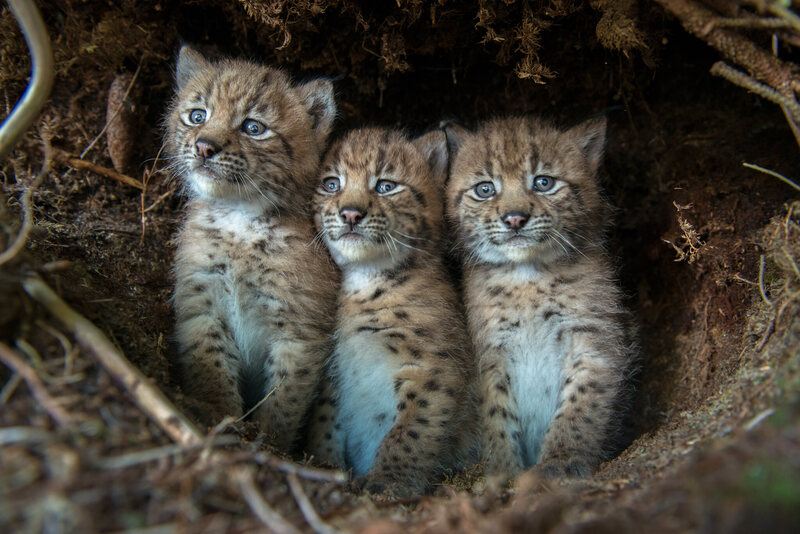
Three bewildered Eurasian lynx cubs peer out from their den after being discovered by KORA conservation biologists.
But central Europe is not Yellowstone.
How, one might reasonably ask, can we bring back large predatory mammals
that long ago proved incompatible with people to a region that has only
become more populous since the animals disappeared? If there was no
room for these predators before, surely there is even less of it now.
The answer lies in the nature of the
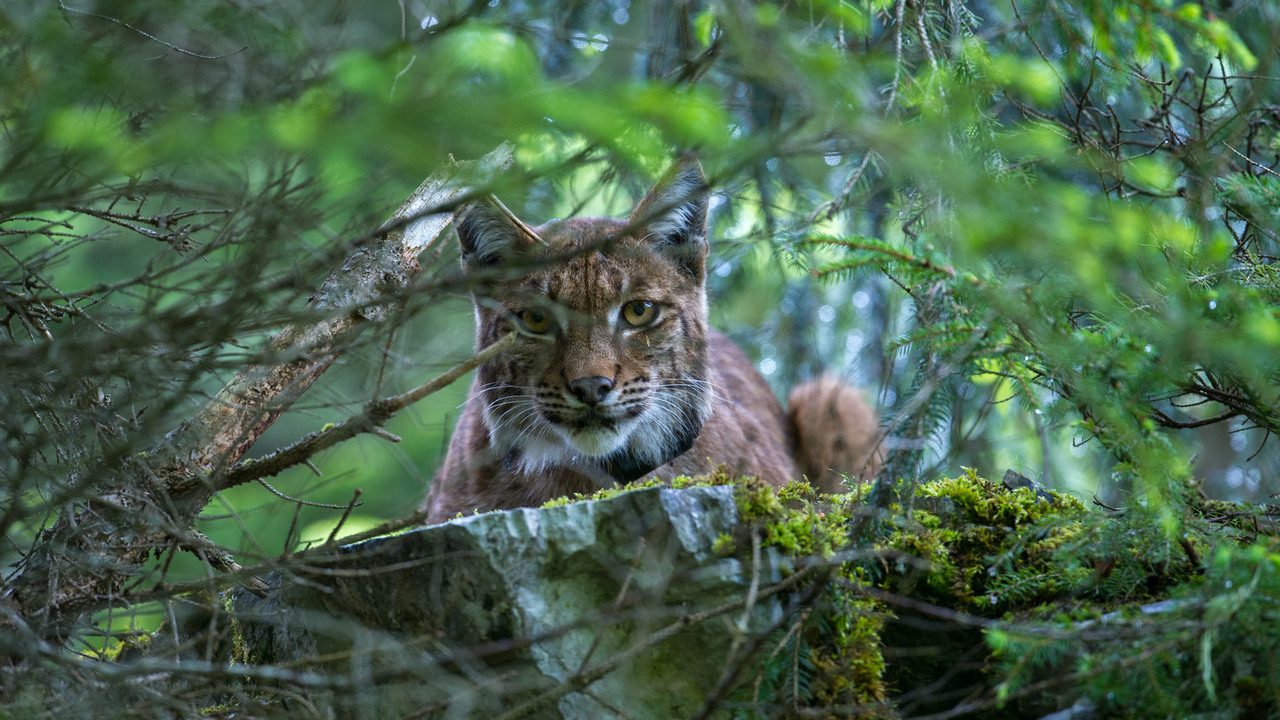
animal itself. The Eurasian lynx (Lynx lynx) is a formidable predator.
Though not technically a big cat—it doesn’t sit alongside lions and
tigers in the genus Panthera—males can nonetheless top 30 kg (65 lbs),
almost twice the weight of the superficially similar Canadian lynx (Lynx
canadensis). This gives it considerable predatory punch, allowing it to
subsist not—like other lynxes—on rabbits and hares, but on hoofed
mammals such as roe deer. What’s more, this is an animal of almost
preternatural stealth. Wherever it occurs, it nearly always remains well
out of sight.
Reintroducing the lynx, therefore, is a
very different proposition from bringing back wolves and bears—schemes
that have met stiff opposition across Europe. Though large enough to
have a significant influence on ecology, the cat will slip silently into
the woods the moment it is released, never to be seen again, except by
the most dedicated. It is thus what scientists call a “soft” predator,
representing no perceived threat to the public and so prompting none of
the fuss generated by the likes of wolves. “For most people,” explains
Geslin. “This cat is like a ghost.”
KORA
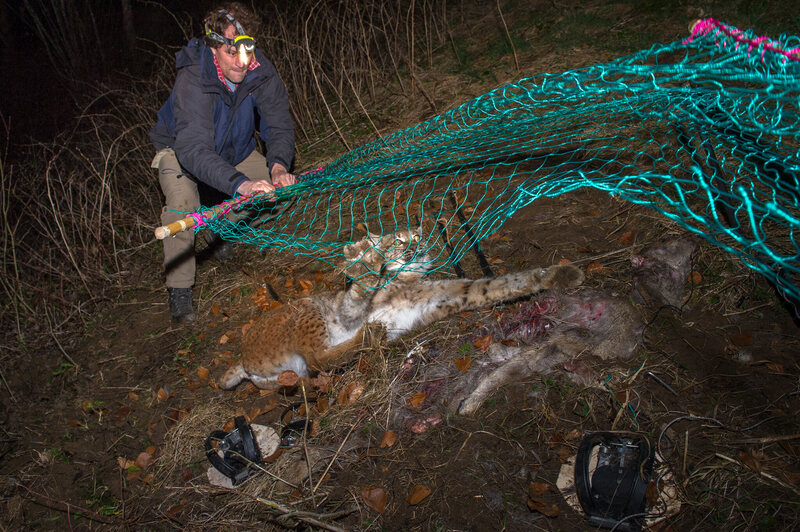
biologist Fridolin Zimmerman subdues an adult female Eurasian lynx in
preparation for the animal’s relocation to Kalkalpen National Park,
Austria.
But while the animal slips under the
radar of most of its human neighbors, the foresters are beginning to
notice a difference, with roe deer populations thinning out and forests
showing signs of regeneration. It is not simply that lynx keep deer
numbers down. After all, there are only so many deer a handful of lynxes
can catch and eat. It is also that the herbivores’ behavior changes
when a predator is around. They gather in smaller numbers and, ever
alert to possible attack, become more mobile, less inclined to linger in
feeding areas. Just the scent of a lynx’s territorial markings on a
trailside tree trunk can be enough to keep them on the move. Park
rangers, Geslin reports, wish more of the cats could be introduced.
“They tell me that since we’ve had lynx they never have any problems.”
For the cat, however, problems remain.
Livestock farmers are rather less welcoming than conservationists. It is
true: lynxes can, and occasionally do, take sheep. However, studies
have shown that the cats much prefer wild prey. As forest ambush
predators, they are not adapted to hunting in the open. Only in Norway,
where sheep roam forested areas unmanaged, have significant losses been
recorded. Elsewhere, including in Switzerland, predation has had
negligible impact. Further studies have shown that appropriate
management measures—for example, grazing sheep away from forest
edges—make a big difference. The World Wildlife Fund (WWF) is among the
conservation organizations promoting new livestock management strategies
in the Alps, including the use of specially trained guard dogs and
protective fences, that help reduce conflicts between lynx and livestock
herders.
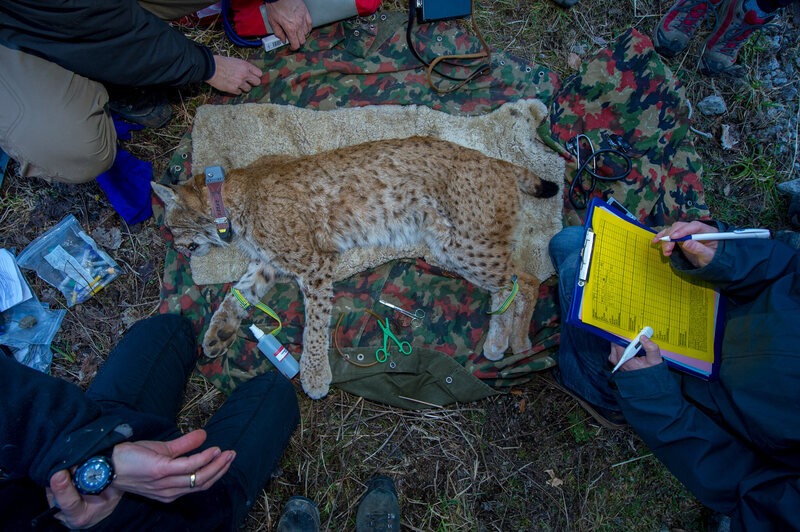
Biologists work quickly to collar, measure, and take tissue samples from an anaesthetized adult Eurasian lynx in the Swiss Alps.
Hunters, unfortunately, are harder to
convince. They see the cats as competition, arguing that roe deer and
chamois—a goat-like antelope native to mountainous areas of Europe—have
become much harder to hunt now that lynxes keep them more wary.
Breitenmoser points out that Swiss law protects not only lynx but also
the right of hunters to harvest wildlife. “Unfortunately such situations
regularly lead to conflicts,” he explains, “including illegal
killings.” The female with cubs that Geslin observed and photographed
fell victim to a hunter’s rifle just one month later. Another
reintroduction program in the Vosges, just south of the Jura, has
failed, with the last individuals killed by hunters. “No lynx population
in Europe will survive,” warns Breitenmoser, “if hunters actively
oppose it.”
Scientists also worry about the dangers
of inbreeding. The reintroduced lynxes have not dispersed as far as was
hoped. Penned in by roads and development, they have tended to stick to
the areas into which they were first introduced. Given the very small
number of lynxes from which today’s population is descended, this has
raised the threat of inbreeding and a prospect of genetic problems for
future populations. While things are better in the Jura than in some
other reintroduced lynx populations, the problem will need to be
addressed in the long term by increasing connectivity between isolated
populations: “Links for the Lynx,” as WWF calls it.
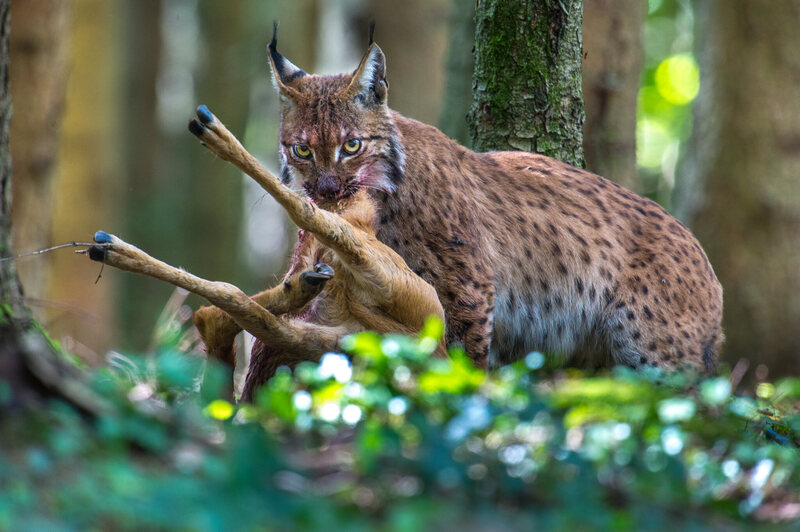
A wary, and bloody, adult Eurasian lynx drags a fresh kill to a more secluded location.
Nonetheless, KORA deems the program a
success. From those first 1970s releases, there are some 130 lynx in the
Jura today. The effort has now been extended to other areas of the
country and lynxes have expanded their range, naturally, into France.
Recently, KORA has also relocated individual lynxes into both Austria
and Italy, and a further relocation into Germany is in the pipeline.
“Lynx have demonstrated that they can live well in a human-dominated
environment, such as the Jura,” confirms Breitenmoser. “So the argument
that they can no longer survive in our modern world has mostly
disappeared.”
Meanwhile, lynx numbers elsewhere in
Europe continue to rise. The overall population is now estimated at
around 9,000, with the largest concentrations in Finland and the
Carpathians. This population is made up of 11 key groups, spread across
23 countries. Only five of the groups are native—indicating the success
of reintroduction efforts. The Lynx UK Trust now hopes to reintroduce
the cat to Britain, where it was last seen in AD700, and where the
environment is in serious need of a predator to control its rampant deer
populations. Surveys indicate 91% public support for the idea, with
trials proposed for 2017.
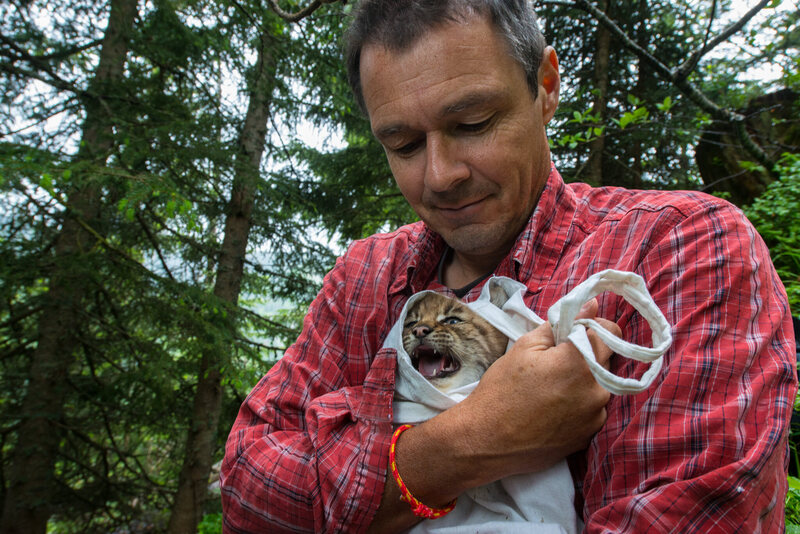
Even
lynx cubs must be handled with great care. KORA biologist Andreas Ryser
swaddles this three-week-old youngster in preparation for weighing,
measuring, and releasing the cub back into its den.
The lynx’s future depends upon
cross-border cooperation. No single country in central Europe can
support a viable population alone. A critical factor to date has been
the EU Biodiversity Directive, which compels all member states to
protect and restore populations of rare species. Only with this
cooperation, Breitenmoser believes, can the scattered populations become
better connected, allowing a flow of lynxes over a broad enough area,
and reduce inbreeding. “We need the distribution to be broader,” he
explains, “but the local abundance to be more limited.”
Meanwhile, the lynx’s enemies must still
be won over. This will take education, overturning traditional
antagonism towards predators, and convincing the public at large of how
the cats benefit the environment for everybody, including hunters. It’s a
long process and not something KORA and other conservation bodies can
accomplish without political support.
A female Eurasian lynx, known to biologists as “B123,” surveys her territory with her two cubs in Switzerland’s Jura Mountains.
Out in the forest, Geslin’s mission
continues. Tramping the trails daily in search of tracks and kills,
checking his camera traps and setting up his hides, he is learning ever
more about this most private of cats. When KORA researchers take to the
field—to monitor the lynxes, study their movements through radio
telemetry or even capture one for a GPS collar or translocation
elsewhere—he is always close by with his camera to record the action.
These are the memorable days—examining a
sedated cat or photographing a relocated individual bounding away into
its new home. Most of the time, however, things are not so easy. “Days
become weeks and weeks become months,” Geslin says. “But then I hear a
strange call or notice a slight movement and all the waiting vanishes.”
The rewards make the long, lonely vigil worthwhile. “After all,” he
confirms, “you just cannot beat a lynx.”
A new plan has been developed to help guide multi-institutional efforts in conserving the jaguar (Panthera onca) in the Amazon basin.
The vast Amazon basin is the single most important region for jaguar conservation.
Credit: Rob Wallace/WCS
The (WCS) Wildlife Conservation Society reports the publication of a plan to help guide multi-institutional efforts in conserving the jaguar (Panthera onca) in the Amazon basin.
A region known to conservationists as the central Amazon Jaguar Conservation Unit is the largest jaguar stronghold in the world. It encompasses parts of Brazil, Bolivia, Peru, Ecuador, Colombia, Venezuela, Guyana, French Guiana, and Suriname. However, even in this vast area, changes in biological diversity and jaguar populations can come quickly.
Huge extents of formerly unbroken forest, experts say, have already been lost to conversion to monoculture crops, cattle ranching, and hydro-electric, mining, and transportation projects. Development is inevitable in the Amazon, so the question becomes how to best ensure both sustainable development for local communities along with a secure future that includes the area's icon of functional ecosystems: the jaguar.
Recognizing the need to address that challenge, several leading Latin American conservation organizations working in the Amazon basin recently met in Quito, Ecuador, to review regional jaguar conservation efforts and outline priorities to maintain healthy jaguar populations in the Amazon in perpetuity. The result of the meeting is a document titled "Memorias Del Taller Internacional Planificando La Conservación Del Jaguar En La Amazonía."
The unique assemblage included experts from the Instituto Nacional de Pesquisas da Amazônia, Instituto de Desenvolvimento Sustentável Mamirauá, Instituto de Investigación de Recursos Biológicos Alexander von Humboldt, Fundación Omacha, Universidad Nacional de Colombia, Ministerio del Ambiente de Ecuador, Pontificia Universidad Católica del Ecuador, Universidad San Francisco de Quito, E.tech, TRAFFIC, WWF, Panthera, and WCS.
The participants drew on their extensive experience to develop a plan around five central themes to help secure the long-term future of jaguars: Landscape and Corridor Scale Conservation; Research and Monitoring; Conflict Management; Legislation, Policy and Administration; and Education, Training and Communication.
"The main recommendations to come out of the meeting were related to the importance of working at large landscape scales to conserve meaningful populations of jaguars," said Dr. Rob Wallace, Amazon Landscape Conservation Expert at WCS. "This landscape approach requires an integrated threats-based strategy involving a series of long-term partnerships with territorial stakeholders such as protected areas, indigenous territories, municipal governments and others. WCS is proud of our long-standing conservation commitments to some of the most outstanding natural wilderness areas in the Amazon."
Dr. Emiliano Esterci Ramalho, Monitoring Coordinator at the Mamiraua Sustainable Development Institute and a groundbreaking jaguar researcher in the flooded forests of central Amazonian Brazil underlined the importance of collective conservation efforts. "This meeting encouraged us to create the Jaguar Conservation Alliance in Brazil, a multi-institutional initiative that aims to coordinate jaguar research and conservation efforts in the Amazon, and to ensure that our collective efforts amount to more than just the sum of their parts," Ramalho said.
The document also includes a post-workshop addition highlighting the emerging threat of hunting and illegal trade of jaguars in the Amazon and beyond. Forty years ago, jaguars benefited from international trade policy decisions such as the inclusion in 1975 of the jaguar in Appendix I of the Convention on International Trade in Endangered Species of Wild Fauna and Flora (CITES) that prohibited all commercial trade in spotted cat skins for the international fur trade. Since then, in areas with effective conservation measures, jaguar populations have stabilized and in a number of cases, bounced back. However, conservation is an ongoing process of vigilance and actions to counter new threats. Jaguar hunting for trade has re-emerged, this time for teeth and other body parts for markets in Asia.
"Protecting and restoring critical habitats that also provide connectivity between habitats are the main goals for which we have to work together in order to ensure the survival of jaguars in the Amazon River Basin," said Diego Amorocho. WWF Species Program Coordinator Latin America & Caribbean
"The globally significant Amazon jaguar population merits strong international cooperation not only to proactively maintain its habitat and prey, but also to actively and effectively counter any resumption in trade in jaguar parts," said Dr. John Polisar, Jaguar Conservation Program Coordinator for WCS.
Court to Monterey County: Lawsuit Over Wildlife Services Animal-killing Contract Can Move Forward
SALINAS, Calif.— The California Superior Court issued an order Monday evening denying Monterey County’s motion to dismiss a lawsuit, filed in June by animal protection and conservation organizations, that challenges the county’s contract renewal with the U.S. Department of Agriculture’s Wildlife Services. This notorious federal program has killed more than 3,000 coyotes, bobcats, mountain lions and other animals in the county in the past six years, largely in the name of protecting livestock.
Monterey County’s renewal of its contract with Wildlife Services violates the California Environmental Quality Act because the county failed to analyze environmental impacts and wrongfully claimed an exemption from the Act, according to the lawsuit. In today’s order the court rejected arguments made by the county that the wildlife conservation organizations brought their claim too late and against the wrong parties.
The lawsuit now moves forward, with the nonprofit organizations slated to submit their opening legal brief in November. The county has recently retained an outside law firm from Sacramento to represent it in the case.
“Monterey County taxpayers should be aware that they’re footing the bill for this program and for the county’s aggressive legal defense in this case,” said Collette Adkins, an attorney and biologist at the Center for Biological Diversity. “We hope our lawsuit spurs Monterey County to realize that people don’t want their tax dollars used to evade environmental laws and eradicate wildlife, such as coyotes and other predators, that control rodents to the benefit of the county’s farmers.”
“An increasing body of evidence demonstrates that Wildlife Services’ lethal predator-control program is ecologically destructive, ethically indefensible and economically unjustifiable,” said Camilla Fox, founder and executive director of Project Coyote. “This federal agency bears the burden of proof to justify their actions using the best available science, which we have demonstrated it has failed to do.”
“We are glad to see that the judge was not misguided by any of the tactics used to minimize the simple fact that the county needs to comply with CEQA before hiring Wildlife Services,” said Tara Zuardo, Animal Welfare Institute wildlife attorney.
Background Over the past six years, Wildlife Services has killed more than 3,500 animals in Monterey County using traps, snares and firearms. From June 2014 to June 2015 alone, Wildlife Services killed 105 coyotes, three mountain lions and two bobcats. Nationwide the program killed more than 3.2 million animals in 2015. The agency’s use of poison and traps has also injured people and killed more than 1,100 dogs since 2000.
Peer-reviewed research shows that such reckless slaughter of animals — particularly predators — results in broad ecological destruction and loss of biodiversity. The program’s controversial and indiscriminate killing methods have come under increased scrutiny from scientists, the public and government officials. Wildlife Services has killed many threatened and endangered species, as well as family pets.
The Animal Legal Defense Fund was founded in 1979 to protect the lives and advance the interests of animals through the legal system. To accomplish this mission, the Animal Legal Defense Fund files high-impact lawsuits to protect animals from harm; provides free legal assistance and training to prosecutors to assure that animal abusers are punished for their crimes; supports tough animal protection legislation and fights harmful legislation; and provides resources and opportunities to law students and professionals to advance the emerging field of animal law. For more information, please visit aldf.org.
The Animal Welfare Institute is a nonprofit charitable organization founded in 1951 and dedicated to reducing animal suffering caused by people. AWI engages policymakers, scientists, industry, and the public to achieve better treatment of animals everywhere—in the laboratory, on the farm, in commerce, at home, and in the wild. For more information, visit awionline.org.
The Center for Biological Diversity is a national, nonprofit conservation organization with more than 1.1 million members and online activists dedicated to the protection of endangered species and wild places: biologicaldiversity.org.
Project Coyote, a national nonprofit organization headquartered in Northern California, is a North American coalition of wildlife educators, scientists, ranchers, and community leaders promoting coexistence between people and wildlife, and compassionate conservation through education, science, and advocacy. For more information, visit ProjectCoyote.org.
The Natural Resources Defense Council (NRDC) is an international nonprofit environmental organization with more than 2 million members and online activists. Since 1970, our lawyers, scientists, and other environmental specialists have worked to protect the world's natural resources, public health, and the environment. NRDC has offices in New York City, Washington, D.C., Los Angeles, San Francisco, Chicago, Bozeman, Montana, and Beijing. Visit us at www.nrdc.org and follow us on Twitter @NRDC.
For 30 years, the Mountain Lion Foundation has worked with member volunteers and activists to further wildlife policies that seek to protect mountain lions, people and domestic animals without resorting to lethal measures. For more information, visit mountainlion.org.
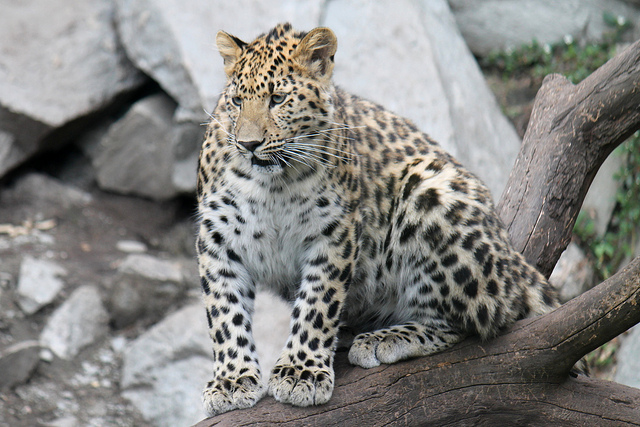
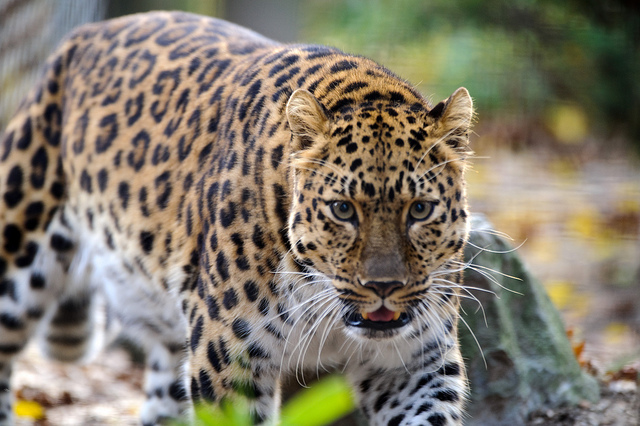
The
team’s research uncovered that the genome of the Amur leopard is
composed of 2.57 billion base pairs, with roughly 19,000 genes. (image:
Flickr/ elPadawan)
SEOUL, Nov. 1 (Korea Bizwire) –Korean
scientists have successfully mapped the reference genome of the Korean
leopard, better known as the Amur leopard (Panthera pardus orientalis),
the National Institute of Biological Resources announced Tuesday.
According
to the institute, the complete genetic blueprint of the Amur leopard is
the result of an 18-month study, which it conducted jointly with UNIST.
The two organizations took part in an international consortium to
decoding the genome of a cat family.
The
Amur leopard is currently extinct in South Korea, but it was an apex
predator alongside Siberian tigers (also extinct in Korea) in the past.
It is classified as Critically Endangered by the ICUN, with as many as
70 surviving in southeastern Russia (Primorye region) and the Jilin
Province of China, near the North Korea-China border.
A
genome is the complete set of genes of an organism, and is a
near-complete genetic record of a species. The recent breakthrough will
provide an important foundation for future preservation and restoration
efforts of the Amur leopard, said an official.
The
research team first launched its project by mapping a reference genome
of a leopard that died in a Daejeon zoo in 2012. The team then decoded
the genome sequence of a wild Amur leopard, for a comparison analysis of
the two.
The
team’s research uncovered that the genome of the Amur leopard is
composed of 2.57 billion base pairs, with roughly 19,000 genes. It also
found that instances of genome sequence variation are rare, leading to
low genetic variety, hence a higher risk of extinction.
“For
the first time globally, we succeeded in decoding an entire genome of
an Amur leopard, and secured an important reference for restoration
efforts of the cats,” said an institute official.
(image: Flickr/ Eric Kilby)
Furthermore,
the research revealed that the cat family (Felidae) had genes related
to muscle movements, neurotransmission, and light detection better
preserved than omnivorous Hominidae or herbivorous Bovidae, while
Hominidae had better genes for fat metabolism, and Bovidae, for
perceiving smell.
The
team also found that Felidae had genes for carbohydrate digestion and
detoxification of plant poison degraded over time through a prolonged
carnivorous diet. And although the diet improved the digestive functions
of protein, genes for regulating blood sugar (related to diabetes) were
no longer functioning due to genetic mutation.
Such
discoveries are expected to help scientists better understand, at a
genetic level, mankind’s physical capabilities – such as muscular
strength and vision – as well as diseases that are believed to be
affected by a prolonged meat diet.
The full research findings will be published in the November 2 edition of Genome Biology. By Lina Jang (linajang@koreabizwire.com)
Noninvasive genetic survey on wild Mesoamerican jaguars is largest of its kind, reveals conservation priority
Date:
October 26, 2016
Source:
American Museum of Natural History
Summary:
The largest gene-based survey of its kind on wild jaguar populations in Mesoamerica has now been published. The analysis is based on nearly 450 jaguar scat samples collected in Belize, Costa Rica, Guatemala, Honduras, and Mexico. This work identifies areas of conservation concern for Mesoamerican jaguars and underscores the importance of large-scale genetic monitoring efforts when prioritizing conservation and management efforts for this near-threatened, and elusive, carnivore species.
A photo of "Junior," a jaguar conservation ambassador at the Belize Zoo.
A research group led by the American Museum of Natural History and global wild cat conservation organization Panthera has published the largest gene-based survey of its kind on wild jaguar populations in Mesoamerica. The analysis, published in the journal PLOS ONE, is based on nearly 450 jaguar scat samples collected in Belize, Costa Rica, Guatemala, Honduras, and Mexico. This work identifies areas of conservation concern for Mesoamerican jaguars and underscores the importance of large-scale genetic monitoring efforts when prioritizing conservation and management efforts for this near-threatened, and elusive, carnivore species.
"Mesoamerica has one of the highest deforestation rates worldwide, potentially limiting movement and genetic connectivity in forest-dependent jaguars across this fragmented landscape. Large-scale conservation genetics studies on wild jaguars spanning across several range countries assessing these threats are rare and suffer from low sample sizes for this region," said Claudia Wultsch, the lead author of the paper, a scientist in the Museum's Sackler Institute for Comparative Genomics, and a conservation research fellow at Panthera. "Over the last 100 years, jaguars in Mesoamerica have been pushed out from more than 77 percent of their historic range."
To get a better idea of the genetic health and connectivity of jaguar populations in this area and the effectiveness of the existing wildlife corridors (i.e., stretches of habitat that facilitate movement between local populations), the researchers turned to DNA obtained from field-collected jaguar scat.
This non-invasive technique lets researchers gather large DNA sample sizes of difficult-to-study wildlife species, such as big cats, without physically capturing, handling, or disturbing the animals. Since these samples quickly degrade in the warm and humid conditions of the tropical countries, however, a great deal of laboratory work has to be done to successfully analyze the DNA.
"We believe that these jaguars were once continuously distributed over the whole landscape of Mesoamerica, but human activity has resulted in smaller populations that are isolated from other groups," said George Amato, director of the Museum's Sackler Institute for Comparative Genomics and the paper's senior author. "We want to know whether this fragmentation is resulting in reduced gene flow or inbreeding or other things that might be detrimental to the animals. But most importantly, we want to figure out ways to reconnect these populations or, even if they're not completely isolated, to engage in activities that allow jaguars to move more freely across the landscape. One of the only ways to do this is through genetic analysis."
The researchers analyzed DNA from 115 individual jaguars spread across five Mesoamerican countries. Overall, they found moderate levels of genetic variation in the jaguars, with the lowest diversity in Mexico, followed by Honduras. Low levels of genetic diversity could decrease reproductive fitness and resistance to disease, and generally lower animals' potential to adapt to a changing environment.
When assessing genetic connectivity in Mesoamerican jaguars, the scientists found low levels of gene flow between jaguars in the Selva Maya -- the largest contiguous tropical forest north of the Amazon, spreading over northern Guatemala, central Belize, and southern Mexico -- and those in Honduras.
This suggests that there is limited jaguar movement between these two areas, which is somewhat surprising since they are so geographically close. Although more data are needed to fill gaps in the study, the authors say that the region connecting these sites faces rapid land-cover changes, which have severely increased over the last two decades, putting remaining stepping-stone habitats for jaguars at further risk. This region represents a conservation priority and the authors recommend continued management and maintenance of jaguar corridors and mitigation of jaguars' main threats (e.g., human-wildlife conflict).
"Large-scale conservation strategies such as Panthera's Jaguar Corridor Initiative, which are instrumental to protect broadly distributed species such as jaguars, maintain their connectivity, and by doing so to ensure their long-term survival, need to incorporate genetic monitoring of wild populations to fully understand how these species respond to environmental changes and increasing levels of human impacts," Wultsch said.
Claudia Wultsch, Anthony Caragiulo, Isabela Dias-Freedman, Howard Quigley, Salisa Rabinowitz, George Amato. Genetic Diversity and Population Structure of Mesoamerican Jaguars (Panthera onca): Implications for Conservation and Management. PLOS ONE, 2016; 11 (10): e0162377 DOI: 10.1371/journal.pone.0162377
American Museum of Natural History. "Jaguar scat study suggests restricted movement in areas of conservation importance in Mesoamerica: Noninvasive genetic survey on wild Mesoamerican jaguars is largest of its kind, reveals conservation priority." ScienceDaily. ScienceDaily, 26 October 2016. <www.sciencedaily.com/releases/2016/10/161026151152.htm>.
The brains of wild cats don’t necessarily respond to the same evolutionary pressures as those of their fellow mammals, humans and primates, indicates a surprising new study.
The cheetah is social, like primates, yet unlike primates its frontal lobe is relatively small. Why? It may be a consequence of its unusual skull shape, an adaptation for high-speed pursuits.
The brains of wild cats don't necessarily respond to the same evolutionary pressures as those of their fellow mammals, humans and primates, indicates a surprising new study led by a Michigan State University neuroscientist.
Arguably, the fact that people and monkeys have particularly large frontal lobes is linked to their social nature. But cheetahs are also social creatures and their frontal lobes are relatively small. And leopards are solitary beasts, yet their frontal lobes are actually enlarged.
So what gives? Sharleen Sakai, lead investigator of the National Science Foundation-funded research, said the findings suggest that multiple factors beyond sociality may influence brain anatomy in carnivores.
"Studying feline brain evolution has been a bit like herding cats," said Sakai, MSU professor of psychology and neuroscience. "Our findings suggest the factors that drive brain evolution in wild cats are likely to differ from selection pressures identified in primate brain evolution."
Sakai and colleagues examined 75 wild feline skulls, representing 13 species, obtained from museum collections, including those at MSU. The researchers used computed tomography (CT) scans and sophisticated software to digitally "fill in" the areas where the brains would have been. From that process, they determined brain volume.
Sakai's lab is interested in uncovering the factors that influence the evolution of the carnivore brain. One explanation for large brains in humans and primates is the effect of sociality. The idea is that dealing with social relationships is more demanding than living alone and results in bigger brains, especially a bigger frontal cortex.
"We wanted to know if this idea, called the 'social brain' hypothesis, applied to other social mammals, especially carnivores and, in particular, wild cats," Sakai said.
Of the 13 wild feline species examined, 11 are solitary and two -- lions and cheetahs -- are social.
Here are some of the key findings of the research:
*Surprisingly, overall brain size did not differ, on average, between the social and solitary species of wild cats. But the part of the brain that includes the frontal cortex did differ between the two species.
*The female lion had the largest frontal cortex. Female lions are highly social, working together to protect and feed their young, hunt large prey and defend their territory. In contrast, males may live alone and may be dominant in a pride for only a few years. The larger frontal cortex in females compared to male lions and the other wild cats may reflect the lionesses' demands of processing social information necessary for life in the pride.
*The social cheetahs, in contrast, had the smallest overall brains and the smallest frontal cortex of the wild cats. Small brains weigh less and require less energy, factors that might contribute to the cheetah's remarkable running speeds. "Cheetah brain anatomy is distinctive and differs from other wild cats," Sakai said. "The size and shape of its brain may be a consequence of its unusual skull shape, an adaptation for high-speed pursuits."
*Leopards' frontal lobes were relatively large. Although the leopard is solitary, it is noted for its flexibility and adaptability -- behaviors associated with enhanced brain processing and larger brain size in other species.
The study, published online in the journal Frontiers in Neuroanatomy.
Sharleen T. Sakai, Bradley M. Arsznov, Ani E. Hristova, Elise J. Yoon, Barbara L. Lundrigan. Big Cat Coalitions: A Comparative Analysis of Regional Brain Volumes in Felidae. Frontiers in Neuroanatomy, 2016; 10 DOI: 10.3389/fnana.2016.00099
I cover food, luxury, and occasionally tennis (when Nadal is playing).
Opinions expressed by Forbes Contributors are their own.
Given all the luxury pet spas and fat camps exclusively for dogs, it’s about time cats get some love.
Earlier this month, UK brand Green Pantry launched a luxury cat food for a whopping $918 per month. (That’s the equivalent to $11,000 per year, $15.3 per serving or about $1.53 per mouthful.)
British Banquet (Photo credit: Green Pantry)
Each 2kg-packet—priced 30 times the average cat food at $306 and expected to provide ten days’ supply—contains Arenkha caviar, line-caught Scottish salmon, hand-caught Norfolk lobster, and locally-sourced Devon crab. With organic asparagus, quinoa, and saffron, it’s completely free from preservatives, GM, additives and artificial colors.
Named British Banquet after its high-quality British ingredients, the idea of this luxury cat food came about when celebrities and other VIPs reached out to Green Pantry for a more luxurious product, according to Simon Booth, Co-Founder and Managing Director of Green Pantry. And as the manufacturer of holistic pet foods for cats and dogs, the team felt a lot of emphasis within the pet trade is geared toward dogs. So to provide a high-quality dietary alternative for cats—which at this point is still largely based on cereals and their derivatives, the team spent two years developing this product.
Some of the luxurious ingredients in the British Banquet include: Arenkha caviar, Line-caught Scottish Salmon, hand-caught Norfolk lobster, locally-sourced Devon crab, Organic Asparagus, Quinoa, and Saffron. (Photo credit: Green Pantry)
Understandably, given the remarkably high cost of the ingredients, Green Pantry cannot mass-produce this luxury product. Currently, all the British Banquet is only available by special request via the company’s website. U.K. orders will be delivered for free, while customers from outside of the U.K. will be expected to pay an extra $61 for a 2kg-parcel, which roughly amounts to $183 for a month’s supply or a total of $2,196 for annual supply to cover postage and packaging, and administration costs. (In other words, for $11,000 of cat food per year, be prepared to shell out $13,196 if you don’t live in the U.K.)
So far, the response to the British Banquet has been wholly positive, according to Booth. However, what do feline experts think? While it’s no surprise that the uber-luxurious product comprise of high-quality ingredients, but do they really provide the benefits for the cost?
Dr. Eric Dougherty, Feline Veterinarian and Medical Director of The Cat Practice in New York City, doubts it. “Cats are obligate carnivores, so foods like asparagus, quinoa or saffron are not necessary at all,” he said. Moreover, contrary to popular belief, cats don’t particularly fare well with a seafood diet.
According to the feline expert, cats that are fed with strict seafood diet (and no other supplements such as taurine) have a higher risk of Pansteatitis (inflammation of fat as a result of prolonged deficiency of Vitamin E), and are more susceptible to mineral deficiencies plus serious cardiac issues.
“At $11,000 per year, this is clearly a product tailored for the one percent,” said the feline veterinarian. Since a cat would unlikely be able to distinguish the real benefits of Nova Scotia salmon from Scottish salmon, Dougherty believes this product is clearly more geared for the owners’ wants than the cats’ needs.
“Odds are, the people who would buy this cat food are the same people who would splurge $5,000 on a burger. And while I think this luxury cat food could make for a nice treat once in a while, what cats really need are high-quality protein like duck, turkey or chicken and lots of water within their diet,” he said.
As for those looking to create homemade or raw diets, check out Balance IT and Catinfo.org. “With everything you need to make a nutritionally balanced diet, Balance IT even customizes a diet with you, and makes sure that every step is designed for the best of your cat,” noted Dougherty.
The cougars of Los Angeles finally have online profiles (with photos!) to match their real world lives. But we're not talking about those kind of cougars or those kind of profiles.
Earlier this week, the National Park Service launched its Puma Profiles, life stories of the 53 big cats they've tagged in and around the Santa Monica Mountains during the past 14 years.
Biologist Jeff Sikich, who has overseen the long-running mountain lion study since it launched in 2002, spends a good chunk of his time in the field, trying to track down these cats.
Once they're collared, he can follow their movements, hiking in to their kills and seeing what they're eating. The goal is to understand how mountain lions survive in such a fragmented urban landscape.
"Where are they going? What's their diet? Are they reproducing and successfully raising young? Are they crossing roads? Are the crossing freeways? What are they dying from?," Sikich asks.
Take, for example, P-12, a young male who was collared in the Simi Hills in 2008. According to Sikich, he's the only lion in the past 14 years to cross 101 freeway from north to south. Mountain lion P-12 has fathered eight documented litters of kittens, as of October 2015. Courtesy of the National Park Service
"His crossing was very cool because he actually brought new genetic material not seen in the Santa Monica Mountains. He bred with a female, had a litter of kittens and passed on some of this unique genetic material to his offspring, so his presence, actually altered the genetic structure of our population," Sikich says.
But the problem of inbreeding remains when you have an "island of habitat," in this case a roughly 275-square-mile area bounded by the 101 freeway to the north, the 405 freeway to the east, the Oxnard agricultural fields to the west and the ocean to the south. It can sustain 10 to 15 lions tops — two to four adult males, four to six adult females and some kittens and sub-adults.
Sikich is blunt: "In the future, that cannot genetically sustain a population."
After his semi-miraculous crossing and successful mating, P-12 has had no other options so he has been breeding with his daughters and granddaughters.
"We're really interested in how all these regions are connected," Sikich says. "We have these huge barriers in between a lot of these mountain ranges — freeways and developments."
Sikich says he's currently following 15 individuals not only in the Santa Monica Mountains but also in the Verdugo Mountains, the Santa Susana Mountains, one in the Los Padres Mountains and one in Griffith Park — the famous P-22.
P-22 was most likely born in the Santa Monica Mountains and crossed two major freeways to reach his current home, Griffith Park. A couple of years ago, when he was recaptured, he looked like he'd been through the wringer. Mountain lion P-22 was trapped, sedated and treated for mange during a capture in Griffith Park. National Park Service via Flickr
He was suffering from mange and tests showed he had rodenticide in his blood. In fact, 13 of the 14 mountain lions in the study have tested positive for one or more anticoagulant compound and three have died from anticoagulant intoxication.
"We believe the likely mechanism of exposure is from the mountain lion killing and eating the coyote that killed and ate the ground squirrel that ate the poison that the golf course or apartment complex or homeowner put out," Sikich says.
Research conducted from 1996 to 2003 points to rat poison as the second leading cause of death for coyotes after roadkill.
When P-22 was recaptured this last December, he appeared healthy and seemed to have recovered, much to the delight of Angelenos. But nothing has changed in his environment and the problems faced by Southern California cougars — a tiny genetic pool, encroaching human developments, poisons — remain.
Sikich hopes that the Puma Profiles will raise awareness and interest about the big cats, enough that a wildlife bridge over the 101 freeway connecting the Santa Monica Mountains to the mountains in the north moves from long-held dream to reality. Until then, these big cats at least have a moment of online glory.
It's like an episode of Tom and Jerry in the African bush...
Safari guide Kevin Van Der Linde and his coworkers were enjoying a drive through South Africa's Balule Game Reserve recently when they spotted a leopard rummaging in a nearby bush – a meal clearly on its mind. "We tried to identify what it was chasing," he told Latest Sightings. The team initially thought the big cat's target was a dassie (or rock hyrax), but when the small animal eventually poked its head out, it turned out to be a slender mongoose (Galerella sanguinea).
"[The chase] was a very rare sighting for all of us (as you might have heard in the video)," says Van Der Linde. "It was an ongoing game raising our excitement levels and curiosity to see how it would play out, but after about ten minutes of the leopard aimlessly circling the bush, it finally lost interest and gave up."
This isn't the first time we've seen a mongoose evade a feline foe: back in 2014, one was spotted in Kenya's Masaai Mara National Park ferociously defending itself against four young lionesses.
We don't know whether the quartet of big cats actually intended to eat their small quarry, but South Africa's leopards, especially ageing ones, are known to hunt mongoose. In fact, one old female in MalaMala Game Reserve was given the nickname "mongoose killer" after she was seen taking down four mongoose in one go.
"It is common for older leopards to begin hunting small rodents, mongoose, birds and other dangerous reptiles – often to their detriment," explains MalaMala ranger Matt Nolden. "As a leopard ages, it lacks the strength and speed to stalk and kill larger mammals like impala and bushbuck. Thus they attempt to capture more vulnerable, but often dangerous, animals. Porcupines and black mambas are but two good examples of animals which older leopards are regularly injured by."
Global populations of vertebrates -- mammals, birds, reptiles, amphibians, and fish -- have declined by 58 percent between 1970 and 2012, states a new report. Animals living in the world's lakes, rivers, and freshwater systems have experienced the most dramatic population declines, at 81 percent. Because of human activity, the report states that without immediate intervention global wildlife populations could drop two-thirds by 2020.
The top threat to wildlife is habitat loss and degradation, driven primarily by increasing demand for food and energy.
Global populations of vertebrates -- mammals, birds, reptiles, amphibians, and fish -- have declined by 58 percent between 1970 and 2012, states a new report from World Wildlife Fund (WWF).
Animals living in the world's lakes, rivers, and freshwater systems have experienced the most dramatic population declines, at 81 percent. Because of human activity, the report states that without immediate intervention global wildlife populations could drop two-thirds by 2020.
"This research delivers a wake-up call that for decades we've treated our planet as if it's disposable," said Carter Roberts, WWF president and CEO. "We created this problem. The good news is that we can fix it. It requires updating our approach to food, energy, transportation, and how we live our lives. We share the same planet. We rely on it for our survival. So we are all responsible for its protection."
The top threat to wildlife is habitat loss and degradation, driven primarily by increasing demand for food and energy. According to the report, global food production is the leading cause for destruction of habitats and overexploitation of wildlife. Agriculture currently occupies approximately one-third of Earth's total land area and accounts for 70 percent of all freshwater use.
Wild animals are not the only ones at risk; the report states that increased pressure threatens the natural resources that all life -- including humanity -- depend on.
The report demonstrates the need to rethink how we produce, consume, measure success and value the natural environment, and calls for an urgent system change by individuals, businesses and governments. The report also illustrates the positive momentum that is building by highlighting recent global agreements on climate change and sustainable development. In particular, the report recognizes the 2030 Agenda for Sustainable Development as an essential guide to decision-making that can ensure that the environment is valued alongside economic and social interests.
"A strong natural environment is the key to defeating poverty, improving health and developing a just and prosperous future," said Marco Lambertini, WWF director general. "We have proven that we know what it takes to build a resilient planet for future generations, we just need to act on that knowledge."
Living Planet Report 2016: Risk and resilience in a new erais the eleventh edition of WWF's biennial flagship publication. The report tracks over 14,000 vertebrate populations of over 3,700 species from 1970 to 2012 and includes research from the Global Footprint Network and the Zoological Society of London.
Posted by Wildlife Conservation Society in Cat Watch on October 23, 2016
By Peter Zahler
It would be one of the 10 largest countries in the world. It also would be the 6th least dense country in terms of human population. It is the birthplace of many of the world’s greatest rivers – the Yangtse, Yellow, Ganges, Indus, Amu Darya, and others – that provide life-sustaining water to hundreds of millions of people. All of the mountains on earth that soar above 7,000 meters (23,000 feet) – well over 100 of them – are found here.
This huge, remote, and incredible region is the home to the snow leopard. Camera trap picture in Lower Wakhan of Afghanistan’s Badakhshan Province, 2012. Credit: WCS Afghanistan Program.
Stretching for somewhere between two and three million square kilometers, from Russia in the north to Pakistan in the south and east to Nepal, it also almost exactly defines the greatest mountain ranges on the planet – the Himalayas, Karakoram, Hindu Kush, Tien Shan, Pamir, Kunlun, Altais. The snow leopard roams this landscape, the apex predator of its soaring sky kingdom, hunting among the cliffs, boulders, and ice for the giant ibex and markhor goats, the massive argali and the blue sheep.
Shrouded in clouds and mystery, the snow leopard’s world is only just beginning to be uncovered. Although it was known about for centuries, and greatly familiar to the isolated mountain communities that share its home, it was really not until George Schaller went to look for the big cats and Peter Matthiessen wrote about them (and George’s adventures) in the 1970s that the cats entered into the larger international consciousness.
However, our knowledge about snow leopards, little as it may still be, is growing almost exponentially. Multiple research efforts aimed at understanding snow leopard biology and behavior are underway across the 12 range countries. New methods – satellite collars, capture-recapture individual recognition methods for (now digital) camera traps, and a host of other systems have largely replaced the old-style, slogging, binocular-driven field studies.
Those methods were largely ineffective for a creature living in such an inaccessible and difficult environment, that was so wide-ranging and at such low densities, and that was so well camouflaged that photographs of the cats often appeared to be just jumbles of rocks and cliffs, even to the photographer who knew a cat was somewhere in the frame. Camera trap picture in Lower Wakhan of Afghanistan’s Badakhshan Province, 2012. Credit: WCS Afghanistan Program.
Even with these new technologies and methodologies, the huge and remote area that defines snow leopard range means that we still struggle with even the simplest of baselines – an understanding of the total number of snow leopards. However, information is beginning to pile up from new studies across Asia’s mountains. Previous estimates ranged from 4,000 to 7,000; new country estimates put that number at between 7,000 and 8,000; and a number of recent studies suggest that the number might well exceed these totals.
We’re also learning more about the significant threats that face snow leopards. Poaching (mostly for skins) and retaliatory killing (by shepherds after predation of livestock by snow leopards) were long suspected as the leading threat to these big cats, and a just-published study from TRAFFIC supports the belief that this may be leading to a decline in the snow leopard population.
The loss of wild prey, the great mountain goats and sheep that Schaller dubbed “mountain monarchs,” from overhunting and livestock impacts (competition, overgrazing, disturbance, and even disease) is also significant. Development in these high mountains is a slow and difficult task, but new roads are increasing access and the ability for mines and other extractive industries to reach the snow leopard’s home.
The good news, however, is that we are also exponentially growing the number of tools in our ‘conservation toolbox’ to find solutions to these threats. Predator-proof corrals are being built across the mountains, protecting livestock and halting retaliatory killing of these cats. New technologies are also being applied to stop poaching and trade in snow leopards.
WCS (Wildlife Conservation Society) is rolling out SMART – an enforcement software tool to better manage anti-poaching patrols – in Mongolia and Afghanistan, and they have also developed a hand-held phone app to help enforcement officers identify illegal wildlife products. Panthera and Fauna and Flora International (FFI) are piloting the use of sniffer dogs to identify snow leopard and other illegal wildlife products by customs and border agencies. Camera trap picture of snow-leopard in Afghanistan. Credit: WCS Afghanistan Program.
Other projects are building on old systems – WCS now has over 100 community rangers patrolling and monitoring in Afghanistan and northern Pakistan, while the Snow Leopard Conservancy works on sacred sites to help preserve the snow leopard and other wildlife of these high mountains.
Perhaps most exciting is that the international community is seeing the importance of snow leopard conservation in terms of helping support not just these big cats and biodiversity but also the marginalized and poverty-stricken mountain communities that live with them.
The United Nations Development Programme (UNDP) and the Global Environment Facility (GEF) have joined forces to support numerous projects across the region aimed at helping both the snow leopard and local people. These win-win initiatives are helping to improve local governance, providing incentives for better resource management, and helping to build local capacity to protect mountain wildlife.
Under the leadership of the President of the Kyrgyz Republic, all 12 range countries have joined forces under the umbrella of the Global Snow Leopard and Ecosystem Protection Program (GSLEP) and agreed to take action to save the snow leopard. A number of UNDP-GEF funded projects aimed at transboundary protection of the snow leopard and its high mountain environment are now ongoing, yet another way that the snow leopard is bringing countries across this region together.
It is amazing that we still know so little about one of the world’s great cats. However, our knowledge and efforts on behalf of what was once a near mountain phantom are growing, even as the snow leopard helps to bring communities, government, and the international community together. On this International Snow Leopard Day, there is a growing sense that we may be able to save one of the last great wildernesses in Asia, and the great cat that defines it.
——————————————————————- Peter Zahler is the Snow Leopard Program Coordinator and Regional Director for Asia at WCS (Wildlife Conservation Society).
 This Dec. 1, 2016 video image provided by Fort Huachuca shows a photo of a wild jaguar in southern Arizona. Authorities say a camera belonging to Fort Huachuca Army installation has captured what is likely the second wild jaguar to be spotted in the U.S. in recent years. The Arizona Game and Fish Department says a preliminary analysis suggests the cat is new to the area and not "El Jefe," a jaguar that was captured on video in a nearby mountain range last year. (Fort Huachuca via AP)






 Posted by

