Friday, January 23, 2015

Ban on Chinese trade only way to secure future of #tigers

By Biplob Ghosal
January 23, 2015

Tiger, a magnificent creature, is one of the most important constituents of the ecosystem. However the big cats are facing the threat of extinction due to unabated hunting for greed of money, despite global conservation efforts.

While population of tigers is facing a threat globally, that in India is estimated to be around 2,226, a rise of over 30 percent since the last count in 2010, according to the latest census report.

In an exclusive interview, Belinda Wright, one of India`s leading wildlife conservationists, shares her views with Biplob Ghosal of Zee Media Corp on several issues ranging from reasons behind significant surge in tiger population and the Chinese connection to illegal trade and poaching of tigers.

Belinda Wright founded the Wildlife Protection Society of India in 1994. The organisation helps avert India`s wildlife crisis by providing support and information to combat poaching and the escalating illegal wildlife trade.

Biplob: The latest Census shows tiger population has increased by 30 percent in the last three years. How do you view this development?
Belinda: This is very good news for tigers and for India.

Biplob: What according to you has helped achieve a rise in tiger numbers? Have government actions over the past few years yielded results?
Belinda: There has certainly been a lot more focus and funding by the government on better field patrolling and protection, scientific monitoring and village relocation, not to mention increasing the number of tiger reserves to 47. NGOs have also played an important role, assisting in resources and equipment, enforcement efforts with training and intelligence, legal interventions, village relocation, etc. But without casting aspersions on the results, it is still not clear to me what has changed so dramatically on the ground to cause such an increase in tiger numbers. Is it possible that the dramatic rise might actually be due to tiger habitats being covered in a lot more detail, resulting in a more accurate count?

Biplob: Illegal trading of tiger body parts is still rampant in India. Can you throw some light on this illegal business and the Tibet connection?
Belinda: In 2014, tiger poaching and tiger part seizures still accounted for 28 percent of all known tiger deaths, so clearly the trade in tiger parts is still a serious threat to the future of wild tigers. India needs to send a strong and encouraging message to China to make a commitment to end all trade in all tiger parts and products, from all sources, wild and captive. Without reduction in the demand for tiger parts and effective law enforcement in both India and China it will be very difficult to protect tigers. Indeed, tiger farming and legal trade in tiger parts in China make this virtually impossible. A total ban from China would be the single biggest contribution to securing a future for wild tigers.

Biplob: What steps does the government need to take to reduce encounters between tigers and humans, so farmers encroaching forest lands do not force big cats to leave reserves in search for water and food?
Belinda: Hopefully these new tiger figures and the prestige it brings to India will encourage the government to show a lot more caution about approving development projects in the precious tiger landscapes. We need a lot more focus on tiger landscapes and connectivity between different tiger populations. Keeping these landscapes free of large development projects is the very best way to reduce human-tiger conflict.

Biplob: Are Indian laws competent enough to instil fear amongst poachers?
Belinda: The Wild Life (Protection) Act is potentially a strong piece of legislation. It is the implementation that is weak. At the moment, quality of prosecutions and the low level of convictions do not discourage organised wildlife crime. But it certainly could do, if the law was properly implemented.

Biplob: India was once home to 40,000 tigers. Can the country regain that figure?
Belinda: India no longer has enough tiger habitat and prey species to sustain such large numbers. But if we respect and protect the little we do have left, there is certainly enough tiger habitat to sustain many more tigers - perhaps double what we have today.

source


#Tigers barometer of forest health

Jan 23 2015

Wild and beautiful

Some of the best fed and most handsome specimens of tiger would be found in American homes, where nearly 5,000 of the big cats are held in captivity — more than the entire wild population in the world estimated around 3,000. But the most beautiful would still be in the jungles of India. Not because of their stripes or grace, but what they represent — a forest base in which they have survived. Indications are that this habitat has made a slight recovery from extreme ill health, with the latest tiger census saying the numbers may be up 30 per cent since 2010, and 60 per cent since 2006. 
Officially, India is now home to 2,226 tigers. 

The camera-based identification and counting of tigers, apart from giving more reliable figures, is also part of a larger requirement in conservation - knowledge of what wildlife remains. A major hurdle in establishing the environmental worth of a wild expanse - to ward off the unrelenting march of development — is lack of data on its assets. To formulate any wider policy or a local conservation strategy this information is crucial. The funds available for this are way too inadequate. Most research by even the prestigious Wildlife Institute of India is funded by NGOs or global conservation bodies, rather than the government, which provides funds barely enough to pay the salaries. 

Poaching continues to be the most immediate concern, but habitat destruction and isolation of reserves owing to the snapping of wildlife corridors remain the biggest long-term threat. Only a century ago, the number of tigers in India was around 1 lakh, despite the rampant hunting that was happening at the time. It is ironical that Prakash Javadekar should take pride in announcing the latest tiger figures. Among his first orders in the Environment Ministry was a review of the environment protection laws, the outcome of which is only recommendations to relax many of them, and not tighten any. Here is hoping for saner decisions on the review report.

source 

#Tiger population triples in Tamil Nadu in less than a decade

Divya Gandhi & B. Aravind Kumar

File photo of a tiger sighted along the Masinagudy-Theppakadu stretch of the Mudumalai Tiger Reserve in Tamil Nadu. Photo: Special Arrangement

This December 19, 2014 photo shows officials inspecting the body of a tiger found dead in Annikatty Village near Mudumalai in Niligiris district of Tamil Nadu.

From 76 tigers in 2006, the number of big cats shot up to 229 in 2014, says the report on the Status of Tigers in India - 2014.

In a big pat on the back for conservation efforts in Tamil Nadu, the population of tigers has tripled in the State in just eight years, finds the latest official count of the big cats. 

From 76 tigers in 2006, the number of big cats shot up to 229 in 2014, says the report on the Status of Tigers in India - 2014 by the National Tiger Conservation Authority. The 2010 survey recorded 163 tigers. 

The forest complex of Mudumalai, Bandipur, Nagarhole and Wayanad Tiger Reserves has “the world's single largest tiger population” now estimated at over 570 tigers, says the report. With the addition of Sathyamangalam Tiger Reserve in 2013, Tamil Nadu has four Tiger Reserves, including Mudumalai, Kalakad Mundanthurai Tiger Reserve and Anamalai Tiger Reserve.
For the survey, researchers and volunteers sampled 7033 km of forest trails and analysed images of tigers from 578 camera traps. 

Western Ghats Landscape Complex 
 
The trend in Tamil Nadu’s tiger reserves is consistent with other tiger habitats in the Western Ghats, which together have seen the biggest growth in tiger numbers compared to other tiger-occupied landscapes in the country. The four States that make up the Western Ghats Landscape Complex saw a jump in tiger numbers from 402 tigers in 2006 to 776 in 2014. 

Tiger expert Ullas Karanth, Director, Centre for Wildlife Studies attributed the growing numbers to the improved forest protection in this region in the last decade. “Apart from the contiguity, the prey base and protection measures in this landscape will ensure the tigers will live here for many, many years,” says K. Sankar, Senior Scientist, Wildlife Institute of India (WII), Dehra Dun. 

The connectivity of this landscape with Sathyamangalam Tiger Reserve, through Moyar gorge, is pushing the number of tigers up in this newly formed tiger reserve. Tigers must have inhabited the Sathyamangalam forests for long but not many dared to go inside when forest brigand Veerappan was alive. With easy access now, more tigers are being sighted, say activists. 

Tiger deaths
 
The rising number of big cats also raises the apprehension on their survival outside the protected habitat. In 2014, Tamil Nadu topped tiger deaths in the country. “The sub-adult tigers move out to carve out new territories for themselves and could resort to cattle lifting making them vulnerable to poisoning and poaching. There is a need for continuous monitoring of tigers outside protected areas,” says Mr. Sankar. The finer details of the analysis on the tigers and their habitat will be known by March, he adds. 

Thursday, January 22, 2015

Your Daily Cat

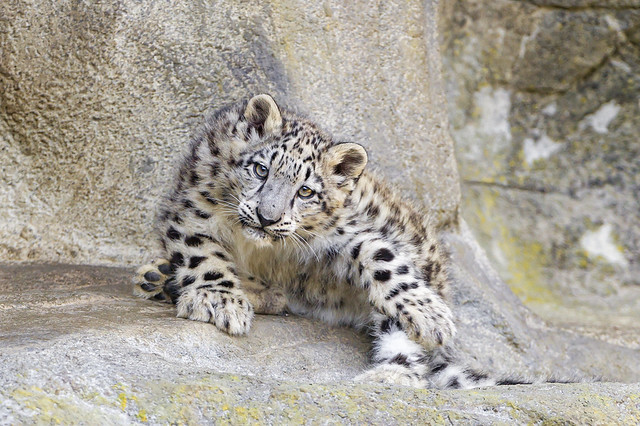
Orya looking at me 

Orya looking at me by Tambako The Jaguar

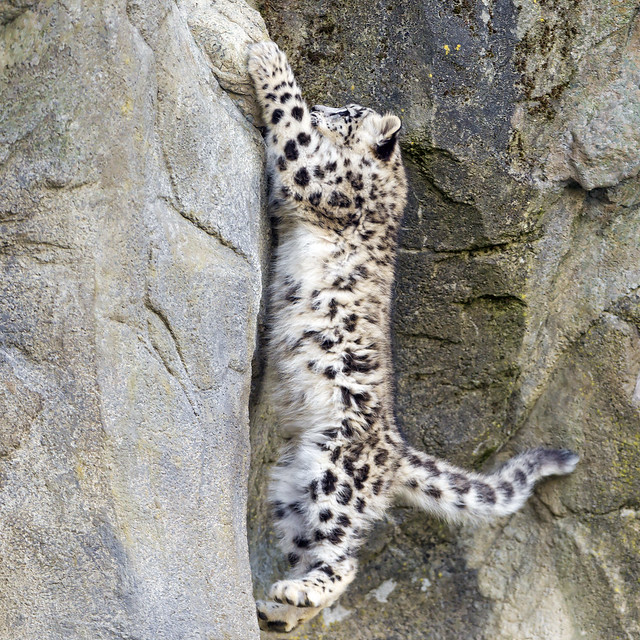
Climbing snow leopard cub

Climbing snow leopard cub by Tambako The Jaguar

America Has a #Tiger Problem And No One’s Sure How to Solve It

No one even knows how many of the big cats are in the United States
 
Tony the Tiger, a 550-pound Siberian-Bengal mix, lives in a cage at a Louisiana truck stop. (© FTTT)

Smithsonian Magazine


Clayton James Eller loved going to his aunt’s house in Millers Creek, North Carolina, where he got to visit Tigger, her 317-pound pet Bengal tiger. One December day in 2003, ten-year-old C.J. was shoveling snow near Tigger’s outdoor pen when the animal attacked him from an opening in the chain-link fence and dragged him under. C.J.’s uncle grabbed his rifle and shot the tiger, but the boy died before he reached the hospital.

Tiger attacks in the United States are always dramatic news—there were 27 reported between 1990 and 2006, with seven people and most of the tigers killed. But maulings aren’t the only problem arising from the perhaps surprising fact that there are more captive tigers in the U.S. than there are wild tigers on earth.

Conservationists estimate that about 3,200 wild tigers remain around the world, while there are some 5,000 tigers in captivity in the U.S., according to the World Wildlife Fund. Even that number is probably low, says Carole Baskin, the founder of Big Cat Rescue, an animal sanctuary in Tampa, Florida, because reporting is “based on the honor system, and we’re dealing with a lot of people that are really dishonorable.” Edward J. Grace, the U.S. Fish and Wildlife Service’s deputy assistant director for law enforcement, estimates that the nation is home to more than 10,000 captive tigers. Only about 350 of those, says the WWF, are held in facilities accredited by the Association of Zoos and Aquariums.

For the thousands of tigers in private hands, from those in big-top circuses and roadside attractions to others in backyard dens, the regulations are inconsistent at best. Six states (North Carolina, South Carolina, Wisconsin, Nevada, Alabama and West Virginia) place no restrictions on owning a tiger; 14 states require a permit; and 30 states prohibit ownership, though in some of those states people have been known to flout the law, as in the famous case of the man who kept a tiger in his apartment in Harlem. 
 
One of the problems associated with these captive tigers, animal welfare advocates say, is that many of the creatures suffer. For example, the popular and stunningly beautiful white tigers—all descendants of a single, anomalous albino Bengal named Mohan, captured in 1951, and bred with his daughter—continue to be inbred with immediate family members to disabling effect; one frequent defect is severe strabismus, or crossed eyes, which hampers vision and coordination. Moreover, animal rescuers point out that many privately owned tigers live in deplorable conditions. Some tigers spend lifetimes in small, unsanitary enclosures. And wildlife advocates have accused tiger cub exhibitors of depriving the cats of sleep and exercise, and endangering both animals and people. One well-known captive animal is Tony the Tiger, a 550-pound Siberian-Bengal mix who has spent more than a decade in a cage at a truck stop in Louisiana. Baskin has been working with the Animal Legal Defense Fund to bring Tony to her sanctuary, but not everyone thinks his owner should be forced to send him. A Facebook group called “Keep Tony Where He Is” has more than 10,000 “Likes,” and Tony’s owner has called animal rights activists terrorists.

Some advocates argue that America’s other tiger problem, to put it bluntly, is hypocrisy, at least on the world stage. In China, a booming market for tiger parts has fueled the growth of legal “tiger farms,” where the animals are raised to be slaughtered for luxury décor (a tiger pelt can run tens of thousands of dollars) and pricey tiger-bone wine (up to $135 for a half-liter bottle). U.S. conservation groups and others have criticized the tiger farms both on humane grounds and for stoking demand for tigers—including poached wild animals. But Chinese officials dispute the claim that farmed tigers threaten animals in the wild, and, in any case, Americans have little credibility on the subject, given our own large but untallied population of neglected tigers and the patchwork of weak or nonexistent protections, according to J.A. Mills, a wildlife conservationist and author of the new book Blood of the Tiger. “U.S. tigers have a direct bearing on what China does,” she says, “and what China does has a direct bearing on whether wild tigers survive.” 

So some advocates are heartened that America is trying to get its regulatory act together. The Fish and Wildlife Service has long overseen buying and selling “pure” tiger subspecies (such as Bengals and Amurs) across state lines, but the agency has limited authority because most privately held tigers are mixed breeds; a 2011 move to expand the agency’s authority over all tigers is reportedly close to being approved. Even more sweeping is the proposed Big Cats and Public Safety Protection Act, which would formally restrict tiger ownership to facilities accredited by the Association of Zoos and Aquariums. (A grandfather clause would allow unaccredited owners to keep their tigers as long as they register with the U.S. Department of Agriculture.) The bipartisan bill was introduced in 2013 and may come up again in the new Congressional term. Some tiger owners and businesses feel the bill is overly restrictive, but proponents say it would go a long way toward closing the gap between what we say about the treatment of captive tigers and what we’re actually willing to do about it.

source

NE GETS BACK ITS ROAR

Guwahati: Tigers seem to be burning bright in the jungles of the northeast as the latest data of the ministry of environment, forests and climate change (MoEFCC) showed a marked increase in the number of big cats in the region.

Experts are of the opinion that "lesser known" tiger habitats should be given utmost protection for the long-term conservation of big cats in the region.

The report, 'The status of tigers in India 2014', released on Tuesday in New Delhi, stated that, in Assam, the tiger count has increased to 167 in 2014 from 143 in 2010.

In Arunachal Pradesh, the tiger population has doubled to 28 in 2014 from 14 in 2006.

In Mizoram, the report said, the tiger count has dipped from five in 2010 to three in 2014.

On the whole, the data said the count of big cats has gone up from 148 in 2010 to 201 in 2014. The areas taken into account included hills, the Brahmaputra plains and also contiguous tiger habitats in the northern parts of West Bengal.

Former member of the National Tiger Conservation Authority and wildlife biologist, Aaranyak, M Firoz Ahmed, said more conservation efforts should be extended to potential habitats in the region, like the Namdapha Tiger Reserve, the Dibang Valley in Arunachal Pradesh and Karbi Anglong in Assam.

"Tiger habitats like Kaziranga and other reserves in the region are already getting the necessary attention. The time has come to shift focus on lesser known habitats for long-term tiger conservation. If these lesser known habitats are included in serious conservation efforts, our tiger population will increase manifold," Ahmed observed.

Sources said many of the areas which are potential habitats are being threatened by poaching and encroachment. Namdapha's biggest conservation threat is poaching.

"The hills of Karbi Anglong and its adjoining areas are equally important habitats. But they face the threat of militancy and law and order problems," another conservationist pointed out.

The report also mentioned Kaziranga as having the maximum number of tigers in the region. "The number of tigers in the Karbi Hills (Assam), Dibang Valley and Namdapha Tiger Reserve (Arunachal Pradesh) are encouraging," the report added.

The Troubling Reason Why Half Of Maine’s Rare Lynxes Have Died in 5 Years

The big cats' snowshoe hare prey is disappearing, but climate change poses the biggest threat to the endangered predator.
January 22, 2015
John R. Platt covers the environment, technology, philanthropy, and more for Scientific American, Conservation, Lion, and other publications.
The elusive and rarely seen Canada lynx is in trouble.

No one knows exactly how many of the distinctive big cats remain in the United States, but all signs point to the fact that their population is shrinking while their habitats have become fragmented.
That has prompted efforts to secure greater protection for Canada lynxes. The U.S. Fish and Wildlife Service (FWS) last week kicked off a review of the species, the first since it was listed as “threatened,” one step below endangered, in the year 2000.

“By comparing historical and recent lynx records, we know that they’re now scarce in regions where they used to be more common,” said Kylie Paul, Rockies and Plains representative for Defenders of Wildlife, who has spent the past several years working to preserve the species. “Now they’re holed up in a few major regions across the northern part of the country.” That includes populations in Montana, Idaho, Wyoming, Colorado, Washington, Minnesota, and a few New England states.

One area where lynx appear to be on the decline is Maine, which just five years ago was home to an estimated 750 to 1,000 of the cats. Today, that number is probably closer to 500, according to FWS. (The Maine Department of Inland Fisheries & Wildlife (IFW) still sticks to the higher number.)

No matter which figure is correct, “they are expected to decline,” Paul noted, pointing out that the population actually expanded in the last 1990s after clearcutting and fire-suppression techniques created more habitat for snowshoe hares, the lynx’s primary prey. Changes in forestry methods have allowed trees to grow there once again, removing the low-height underbrush the hares need to thrive. “That habitat is slowly aging and the changing and that’s going lead to a decrease in both hares and lynx,” she said.

Climate change will also pose problems for both species across their range in the future, as both the hares and the lynxes are highly adapted for snowy conditions. “Lynx need snow,” Paul said. “They’re fully adapted to a winter lifestyle, with a weight ratio that allows them to move quickly across snow.”
FWS estimates that the amount of snowy habitat for lynx in Maine and New Hampshire will almost completely disappear by the end of the century, based on current climate-change models. Climate change was not even recognized as a threat to Canada lynxes when the species was first protected 15 years ago.

The long-standing tradition of trap-hunting in Maine could also pose a risk to lynx. More of the cats were caught in traps last year, more than in any year since 1999. In response, FWS and IFW adopted strict new trapping rules in November. But two lynx died in traps almost immediately after the new rules went into effect, forcing IFW to put even stricter measures in place and ban almost all trapping in the state’s North Woods.
Sportsmen immediately objected to the new rules, with one writer accusing FWS of having an “anti-trapping agenda.” The Maine Trappers Association did not respond to requests for comment.
Paul said she hopes the FWS review period will inspire people to think about Canada lynxes. “They’ve suffered from a lack of public awareness,” she said. “They lack some of the love that wolves and grizzlies and wolverines have been getting recently. If we can encourage people to take the lynx into their hearts and minds, then hopefully we can get them recovered over time.”

source

Zolushka, (aka Cinderella), the #tiger, rescued and released back into the wild


Date:
January 21, 2015
Source:
Wildlife Conservation Society
Summary:
The Russian Far East is the setting for a Cinderella story. In this case, Cinderella is a tiger. An orphaned, starved, frost-bitten cub was rescued in the winter of 2012, rehabilitated, released, and now is possibly mating and re-colonizing former tiger territory, according to new research.
Zolushka the tiger appears in a camera trap image. Zolushka was rescued as an orphaned, starved, frost-bitten cub in the winter of 2012. She was rehabilitated, released, and now is possibly mating and re-colonizing former tiger territory, according to the Wildlife Conservation Society. Credit: WCS
 ***

The Russian Far East is the setting for a Cinderella story. In this case, Cinderella is a tiger. An orphaned, starved, frost-bitten cub was rescued in the winter of 2012, rehabilitated, released, and now is possibly mating and re-colonizing former tiger territory, according to the Wildlife Conservation Society.

The female tiger known as Zolushka (the Russian equivalent of "Cinderella") seems to be thriving within the Jewish Autonomous Oblast, a region where tigers had vanished some 40 years ago as a result of habitat loss, direct poaching, and loss of prey. Scientists note she has already met up with a resident male tiger and are hopeful that cubs may follow.

"Zolushka appears to be thriving in her new home, and represents the spearhead of a process for re-colonizing habitat once roamed over by her ancestors," said Dr. Dale Miquelle, Director of the WCS Russia Program. "This story is good news for Cinderella but also for tigers overall as she and her prince appear to be consorting in formerly lost tiger habitat. Since her release, an additional five more orphaned cubs have been rescued, rehabilitated and released also into this westernmost range of historical tiger habitat. All but one of the cubs seems to be doing well in their new environment. "

Zolushka first came to the attention of conservationists working in the Russian Far East in the winter of 2012. She was found alone, the likely result of the death of her mother at the hands of poachers. On the verge of starvation, she was brought by hunters to a wildlife inspector of the regional Primorskii Wildlife Department and treated with veterinary treatment regional Agricultural Academy, including amputation of a third of her frostbitten tail.

For the next year 15 months, Zolushka's home was a Russian federal tiger rehabilitation center, designed with technical assistance from WCS's Bronx Zoo General Curator Dr. Pat Thomas. Dr. Thomas made recommendations on facility design to improve safety and reduce the need for direct interactions between tigers and humans. The key to this rehabilitation was ensuring that the tiger's natural fear of humans would remain intact and that she learned to hunt live prey before being released by into the wild. After growing significantly in size and strength, Zolushka began successfully capturing her live prey, including wild boar.

Zolushka was released back into the wild to Bastak Reserve in the spring of 2013. Scientists followed her movements with GPS and camera trap technology. After checking locations in the field where she had been, there was clear evidence of successful predation on wild boar, badgers, and red deer.

After the GPS signals faded, scientists became uncertain of Zolushka's fate. WCS and staff of Bastak Reserve used camera traps to re-establish contact with the big cat, successfully capturing her image multiple times in the Bastak Reserve. While following Zolushka's tracks, scientists discovered the presence of a recently arrived male tiger in the same territory, giving rise to the hope that cubs may soon be on the way. "If cubs are born, it will be the ultimate sign of success in returning tigers to this once empty landscape," said Miquelle.
 
The exact population size of Amur tigers is difficult to estimate, but the official estimates suggest that tiger numbers have dropped to 330-390 individuals (from 430-500 in 2005). This decline was likely the result of increased poaching of tigers and their prey between 2005-2010, a period when poachers took advantage of wildlife management restructuring and the confusion associated with those changes. A full-range tiger population survey, conducted every 10 years, is scheduled for February 2015. The WCS Russia Program plays a critical role in monitoring tigers and their prey species in the Russian Far East and minimizing potential conflicts between tigers and human communities. WCS works to save tiger populations and their remaining habitat in nine range countries across Asia.

WCS's work in rehabilitating, releasing, and monitoring Zolushka was made possible through the generous support of the Liz Claiborne and Art Ortenberg Foundation, Columbus Zoo Conservation Fund, the U.S. Fish and Wildlife Rhinoceros & Tiger Conservation Fund, Disney Worldwide Conservation Fund, International Fund for Animal Welfare (IFAW), and the AZA Tiger Species Survival Plan Tiger Conservation Campaign. Collaborators for this project included the A. N. Severtsov Institute of Ecology and Evolution from the Russian Academy of Sciences, the Russian Geographical Society, Inspection Tiger, IFAW, and Phoenix Fund.

The full Cinderella story and the state of the Amur tiger in Russia is the cover story in the February issue of Smithsonian magazine.

Story Source:
The above story is based on materials provided by Wildlife Conservation Society. Note: Materials may be edited for content and length.


Wildlife Conservation Society. "Zolushka, (the russian translation for Cinderella), the tiger, rescued and released back into the wild." ScienceDaily. ScienceDaily, 21 January 2015. <www.sciencedaily.com/releases/2015/01/150121173543.htm>.

Wednesday, January 21, 2015

India's #Tigers Are Doing So Well, Cubs May Be Given to Other Countries

One of the world's iconic endangered species has seen a 30 percent increase in population over the past four years.

(Photo: Kevin Schafer/Getty Images)
January 20, 2015
Taylor Hill is TakePart's associate environment and wildlife editor.
After watching tiger numbers decline for nearly a century, India has reason to celebrate: The country’s population of wild big cats has jumped 30 percent over the past four years. That’s according to the latest numbers out of the country’s tiger conservation survey, which counted 2,226 tigers in 2014, as compared with 1,706 in 2011, environment minister Prakash Javadekar announced Tuesday.
“While the tiger population is falling in the world, it is rising in India,” Javadekar said in a statement. “That is a huge success story.”

India boasts 70 percent of the world’s tigers; the success of its population is crucial to the animals' survival. In an effort to boost numbers worldwide, Javadekar even offered up India’s baby tigers to other countries struggling to halt the species’ decline.

With a population estimated at around 100,000 at the turn of the 19th century, the iconic cats have become a symbol of the struggles endangered species around the world face. Tigers in India dwindled to an all-time low of 1,411 in 2008—mostly owing to habitat loss and poaching, spurring fears the animals could soon be extinct.

Worldwide, only 3,200 tigers remain in the wild.

The recent increases in India’s tigers have been attributed to better management of the more than 40 tiger reserves around the country and renewed efforts to curb the trade in tiger skins and body parts. India has also set aside more habitat for the animals—sometimes even relocating whole villages in the process.

Tiger deaths are up in many of India’s preserves, but that could be a good thing.


Instead of being killed by poachers, the tigers are dying naturally, showing that some of the country’s reserves are reaching their ecological carrying capacity for the animals, according to Sanjay Gubbi, a program coordinator for Panthera, India’s big cat conservation organization. “India’s outstanding result demonstrates that tigers can recover and thrive, even in densely populated countries with a focus on economic growth—as long as there is political will and the commitment to get results,” Barney Long, World Wildlife Fund director of species conservation, said in a statement.
source 

Public attitude toward #tiger farming, tiger conservation

Date:
January 20, 2015
Source:
Wiley
Summary:
The wild tiger Panthera tigris is considered critically endangered, and it faces unprecedented threats, including habitat loss and fragmentation, depletion of prey, and continued illegal poaching for trade of tiger bones for traditional medicine and skins for ornamentation and collection. A recent survey in Beijing revealed that people hold clear positions on arguments for and against the ban on tiger trade and were inclined to support the ban on trading tiger products.


 ***

The wild tiger Panthera tigris is considered critically endangered, and it faces unprecedented threats, including habitat loss and fragmentation, depletion of prey, and continued illegal poaching for trade of tiger bones for traditional medicine and skins for ornamentation and collection.
A recent survey of 677 citizens and 381 college students in Beijing revealed that people hold clear positions on arguments for and against the ban on tiger trade and were inclined to support the ban on trading tiger products. Also, respondents were more balanced toward arguments against the use of farmed tigers to prevent reductions in wild tigers than arguments in support of it.

"Clearly, the public has a clear mind about the value of tigers: tigers belong to the wild and their ecological, cultural and scientific values are more important than their economic value; however, when the habitat of wild tigers no longer exists anymore, like in the case of the South China Tiger, conservation breeding becomes the last option of saving the tigers," said Dr. Zhigang Jiang, co-author of the Animal Conservation article. "When tiger populations in conservation breeding facilities increase, some people think conservation breeding is a kind of 'farming'. How to maintain a suitable and sustainable population size of conservation breeding and how to handle the dead individuals during breeding are problems that still remain."

Story Source:
The above story is based on materials provided by Wiley. Note: Materials may be edited for content and length.

Journal Reference:
  1. Z. Liu, Z. Jiang, C. Li, H. Fang, X. Ping, Z. Luo, S. Tang, L. Li, Z. Meng, Y. Zeng. Public attitude toward tiger farming and tiger conservation in Beijing, China. Animal Conservation, 2015; DOI: 10.1111/acv.12181


Wiley. "Public attitude toward tiger farming, tiger conservation." ScienceDaily. ScienceDaily, 20 January 2015. <www.sciencedaily.com/releases/2015/01/150120142704.htm>.

More big #cats spotted in Maharashtra

By Samrat Phadnis, TNN | 21 Jan, 2015
The data released by union ministry of environment, forests and climate change (MoEF) on Tuesday shows that the tiger population in Maharashtra has been increased from 169 to 190 in four years. The tiger census was conducted across India in January and February 2014.

The National Tiger Conservation Authority (NTCA) and Wildlife Institute of India (WWI), two statutory agencies which conducted the mammoth survey in 18 states, have said that the figure is estimation of the exact population. Instead of relying on the traditional pugmark identification method, agencies for the first time adopted sophisticated technologies such as capturing images of tigers using camera traps and analysing DNA using collected scat samples.

Since the last census in 2009-10; two more tiger reserves have been notified in the state taking the total count to five. The STR was added to the list last year, Bor and Navegaon wildlife sanctuaries were converted into tiger reserves.

The STR, which is the only tiger reserve in Western Maharashtra, had sent 13 scat samples. The agencies approved 5 and estimated the tiger population to be between five and eight.

The Tadoba-Andhari tiger reserve in Chandrapur district reported maximum big cat presence, STR is at the bottom in tiger estimations.

The report stated that the Western Ghat tiger populations are more connected with each other when compared to tiger populations in Central India and the Shivalik-Gangetic Plains landscapes. The habitat matrix in the Western Ghats is more conducive for tiger occupancy. However, the habitat connectivity is threatened by plantations, agriculture, industrial and infrastructural development.

'It would be prudent to timely identify and legitimize the minimal corridors needed for the conservation objective of ensuring gene flow between the Western Ghats tiger populations in time to come. The major impediments to tiger conservation in this zone are the existence of hydro-electric projects, hunting and deforestation of large areas for commercial plantations,' the report stated.

Forest officials, who are pleased with the performance, said that drastic natural landscape variation between Vidarbha region, where five tiger sanctuaries are located and Western Ghats is the reason for the difference in numbers.

"Tigers here have territory of more than 150 sq km compared to 40 sq km territory of big cats in Vidarbha. Estimating their number is extremely difficult since entire STR is hilly area and having peaks of Sahyadri ranges. In 2010, we had reported the same number of tigers; however the estimation was based on pugmarks. This time we have camera traps, scat and DNA samples along with the pugmark," said M M Panditrao, divisional forest officer (wildlife) of Koyna.

Forest officials are happy since the ranking of STR has been upgraded from 'fair' in 2010 to 'good' in 2014.

The department is keen on increasing the joint forest management committees in STR in the future. At present, there are only five committees in Satara district; while department is planning to establish at least 60 more in buffer zone to protect the tigers.

Tiger experts warned that the forest department will have to remain on high alert and not to lose its grip over the protected and unprotected area. Experts warn that increasing number of tigers in the state would lure the poachers to Maharashtra.

"I think increasing number of tigers have increased the responsibility of the government. Central India has huge forests and also the Western Ghats. Increased tiger presence might lure the poachers to Maharashtra. So, government should be on high alert all the time," said Nitin Desai, director, Central India, Wildlife Protection Society of India, New Delhi.

source

As numbers rise, the #bigcats need more space


Dehradun: As the tiger population rises, some of the big cats have been moving out of the core Corbett Tiger Reserve, now allegedly saturated, into adjoining Territorial Forest Divisions. The protection of these divisions and the removal of corridor bottlenecks are now vital for the creation of the ideal tiger habitat.

AK Singh, senior official of World Wildlife Fund in Uttarakhand, told TOI, "There are around 12 corridor bottlenecks for tigers in the state. We need to improve connectivity gradually, removing encroachments to facilitate movement of tigers in the Terai landscape. Tigers know no boundaries, and they move into adjoining territorial forest divisions of Lansdowne, Ram Nagar and Terai West, and we need to create a suitable environment for them there too."

Qamar Qureshi, tiger expert and scientist with Wildlife Institute of India (WWI), spoke of other viable forests where tigers can expand in numbers.

"There is need for improved connectivity in the western bank of the Ganga in Rajaji National Park. With this, adjoining states such as UP, Himachal Pardesh (Paonta Sahib) and Haryana (Kalesar forests), with a total 1,500 sq km area, known as Shivalik Territorial Division, which otherwise have no tigers despite good prey base, can contain a good population of tigers. In the eastern part, Chilla and Haridwar also have capacity to offer tiger habitats. The entire area can emerge as another ideal habitat for tigers in the state," Qureshi said.

He said territorial forest divisions that have a good population of tigers but lack manpower to offer better protection to the big cats must make wildlife part of their working plan, and not focus on timber growth alone.

YV Jhala, another senior tiger expert with WWI, said apprehension about increased numbers of tigers to the west of the Ganga causing more intense man-animal conflict, with leopards being pushed to the fringes, were misplaced.

"There were more tigers in that area some five years ago, and they never created any problems," Jhala said, adding that forest officials are paid to tackle issues of conflict between humans and wild animals, and must get down to doing their work, rather than cooking up excuses. He said talk of leopards being pushed to the fringes was just nonsense. 
 

Cambodia, Laos Interested in Adopting Indian #BigCats


Published: 21st January 2015
NEW DELHI: Tiger population in the country has risen to 2,226 in 2014, a 30 per cent increase since the last count in 2010, the latest census report said on Tuesday, much to the delight of wildlife enthusiasts.

The third round of independent Management Effectiveness Evaluation of Tiger Reserves has shown an overall improvement in the score of 43 tiger reserves from 65 per cent in 2010-11 to 69 per cent in 2014. Statewise, Karnataka tops the list with 406 tigers followed by Uttarakhand with 340 and Madhya Pradesh with 306. In 2006, Madhya Pradesh had topped the list but slipped to third position in 2014. In 2006, the tiger population was 1,411 and in 2010 it was 1,706.

With the numbers up, India has offered to donate cubs to the global community. Countries such as Cambodia and Laos have informally approached India seeking help in this regard.

The increase of 520 tigers, compared to 2010, came as a big surprise to officials and scientists involved in the estimation efforts. This is a preliminary report and a detailed report of the tiger population in all 47 tiger reserves in the country is expected by March. “These numbers are unexpected and is a surprise to us as we were hoping that the numbers would be between 1,800 and 1,900. There is not much of extrapolation this time as a large number of camera trappings was used.

We have unique identification pictures of 1,540 tigers and 1,900 camera estimates. About 300 have been based on modelling where camera could not be used,” said Y V Jhala, one of the principal investigators. Jhala added that the final report won’t have many changes as far as tiger numbers are concerned and the difference may only be 15-20, adding that any future increase would depend on how development is balanced with conservation as there is a need to build more reserves and increase prey base. “The biggest challenge now is how to protect the tigers that venture out of reserves and so we need corridors. I am not saying we create protected areas, but we need to have a relook at the infrastructure in such areas,” said Rajesh Gopal, director, Project Tiger.

source 

#Bigcat researcher believes they are out there in Victoria

By
The last report on the Big Cats Victoria website was in 2009 when someone posted a message they had seen a large black cat with a long tail at Bessiebelle.

BIG cat researcher Simon Townsend is confident huge felines could still be roaming south-west Victoria. “I have no reason to think there isn’t big cat activity still in south-east South Australia or along the south-west Victorian coastline,” the Geelong district resident said yesterday. Although the last report on his Big Cats Victoria website was in 2009 when someone posted a message they had seen a large black cat with a long tail at Bessiebelle, he believes there are others still roaming.

Other sightings in the past decade have come from Princetown, Winchelsea and the Otways. “I’ve travelled hundreds of thousands of kilometres around western Victoria in the past to investigate reports and am continuing the research,” Mr Townsend said. “My theory is we are dealing with a melanistic (black) leopard which always produced black offspring. There could be lots of stuff out there. These leopards would measure two feet wide at the shoulder, have a head like a footy, large eyes and weigh at least 80 kilograms. I’ve heard a number of reports of people being frightened by a large black cat peering through their window. Prior to the Second World War there were no restrictions of importation of foreign animals.”

The Standard’s renewed interest in the legend was sparked by a conversation with long-time Yambuk resident John Leddin, who recalled seeing one in the early 1960s in a back  paddock on his farm.
“I recall it was a cold winter’s day when a large cat with a long tail jumped out from near the cypress trees,” he said. “It was like a puma, dark in colour. You’d reckon it was a tiger, it was that big. I can remember it running across the paddocks in big leaps.” Mr Leddin said he mentioned it to a neighbour who immediately replied saying he too had seen a large cat in his hay shed.

Rob Whitehead, of Port Fairy, also recalled evidence of a large cat in 1991 while he was walking along the beach near Yambuk picking up driftwood. “I saw fresh paw prints in the sand — the size of a lion or bigger,” he said. “Beside it were small cub prints. It was a bit unnerving knowing there could be two sets of eyes watching me from the sand dunes. I have been told big cats could have travelled from the Grampians to the coast.”

Mr Townsend said it would not be unusual for the big cats to seek refuge in haystacks where they could be relatively undisturbed. His website is bigcatsvic.com.au

 source

Western Ghats zone holds world's single-largest #tiger population


Western Ghats zone holds world's single-largest tiger population
A single ecological continuum spread across three states of India in the biodiversity rich Western Ghats region holds the world's single-largest tiger population, according to a government report.
 
NEW DELHI: A single ecological continuum spread across three states of India in the biodiversity rich Western Ghats region holds the world's single-largest tiger population, according to a government report.

The latest tiger census report released today said that the states falling in this region witnessed a steady rise in their tiger populations with Karnataka at present leading the big cat count in the country.

"The Mudulalai-Bandipur-Nagarhole-Wayanad complex holds the world's single-largest tiger population currently estimated at over 570 tigers," stated the 2014 tiger assessment report.

The above complex is spread across three states - Karnataka, Kerala and Tamil Nadu. It is a contiguous zone where there is no perceptible difference in the landscape.

The report said that in the Western Ghat landscape complex, Karnataka has 406 tigers while Kerala and Tamil Nadu have an estimated 136 and 229 tigers, respectively.

Goa which was reported as being without any big cats in the last census was found to be home to five tigers in the latest count.

The report, which was released on Tuesday by environment minister Prakash Javadekar, said that the Western Ghats, including all the four states in total has an estimated 776 tigers (685-861).

All the three states, barring Goa, saw a substantial increase in their tiger populations over the 2010 estimates where the number of tigers were 300, 71 and 163, respectively, in Karnataka, Kerala and Tamil Nadu.

"The report further said that the tiger population and occupancy has shown a substantial increase within this landscape," the report said.

It said that the Sahyadri tiger reserve has between 5-8 tigers based on scat DNA and model-based predictions. The tiger population which is part of Western Ghats landscape is accounted for in the central Indian landscape in Maharashtra.

Second to Karnataka, Uttarakhand has an estimated 340 tigers as against the 227 which were reported in the 2010 assessment. Odisha and Jharkhand have registered a decrease in tiger numbers, respectively, from 32 in 2010 to 28 in 2014 and from 10 in 2010 to 3-plus in the latest report.

As far as other regions are concerned, tiger population in the Sunderbans has remained stable and is estimated to be about 76 (62 to 96) tigers. A major part of the Sunderbans has now been camera-trapped with 62 unique individual tiger photos captured.

The report added said that the big cat population has shown an improvement in Assam where the Kaziranga national park has the maximum number of tigers. Occurrence of tigers in Karbi Hills, Dibang Valley and Namdapha tiger reserve, on the other hand, has been encouraging, it said.

source

Tuesday, January 20, 2015

Your Daily #Cat

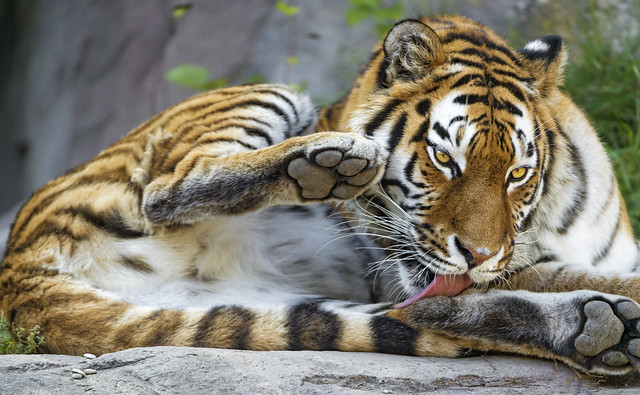
Elena grooming 

Elena grooming by Tambako The Jaguar

Uncertain Origin of Deadly Distemper Causes Unease in Africa

By Brian Stallard
Jan 20, 2015
lion
Back in 1994, a deadly virus swept through Serengeti National park, killing 30 percent of all wild lions in the region. The cause was later revealed to be canine distemper - a shocking revelation as it had long been suspected that cats couldn't contract the virus. Now, new research has found that not only did dogs likely bring the virus to these cats, but it was then spread further by another unidentified species. (Photo : Pixabay) 
 
Back in 1994, a deadly virus swept through Serengeti National park, killing 30 percent of all wild lions in the region. The cause was later revealed to be canine distemper - a shocking revelation as it had long been suspected that cats couldn't contract the virus. Now, new research has found that not only did dogs likely bring the virus to these cats, but it was then spread further by another unidentified species.

That's at least according to a study recently published in the Proceedings of the National Academy of Sciences (PNAS), which details how an international team of researchers has found that while the initial 1994 infection of lions came from dogs, a subsequent spike in infections clearly did not. This suggests another species, one that likely roams, could still be carrying the disease and may potentially spread it once more.

This was determined after a large team of biologists set out to investigate the Serengeti distemper outbreak, analyzing serelogical (blood, urine, etc.) data obtained from lions in the park between the years 1984 to 2014, and domestic dog samples collected between 1992 and 2012.

True to its name, canine distemper virus (CDV) was first detected in dogs in the early 1900s, and has since been associated with members of the canaidae (fox, wolf, coyote), procyonidae (panda, raccoon, etc.), and mustelidae (ferret, badger, otter) families. It causes gastrointestinal and respiratory trouble, and leads to high fever, swollen eyes and vomiting. It can also help facilitate deadly bacterial infections of the neurosystem, which always proves fatal.

While the fact that infected dogs caused the 1994 outbreak wasn't exactly a surprise, the researchers were still stunned to see that another species played a part. This is a worrisome discovery because, while domestic dog vaccination programs were subsequently implemented to curb the spread of the disease by 2000, this other species may continue to have CDV looming in the background.

The consequence may be a resurgence of the virus at any time, threatening lion populations already at risk by encroaching human populations.

source

Great News for #Tigers in India—and a Cautionary Tale

Posted by Sharon Guynup in Cat Watch on January 20, 2015

Bengal tiger in Assam tiger reserve.
Young male tiger in India’s Kaziranga National Park, home to the world’s highest density of tigers. (Photograph by Steve Winter/National Geographic)

Amidst frequent heartbreaking stories about disappearing tigers, today there is some great news. India’s latest census has counted 2,226 tigers, a whopping 30 percent jump from the 1,706 documented in 2011. The full details will be released in March.

Between 30 and 50 of those “new” tigers were found in areas not included in prior counts. But most of those gains came from within the best-protected reserves, illustrating what we know about tigers. They are a prolific, adaptable species. They thrive with just the basics: food, water and a large enough place to live. When you add boots-on-the-ground protection, strong laws, enforcement and careful monitoring, they bounce back.

One tiger reserve that has made a phenomenal comeback is Panna, in central India, which received an award today for excellent management. Given the park’s history, it’s quite remarkable. In 2009, Panna’s last tiger disappeared, poached out from under the noses of those supposedly protecting them. The tigers that were later translocated from other reserves have since bred successfully; today about 23 tigers live there.
Bengal tigers mother and four month old cub, in Central Indian Tiger Landscape
Mom and cub in Bandhavgarh Tiger Reserve in central India. (Photograph by Steve Winter/National Geographic)
But a dark cloud hangs over this news of rebounding tiger numbers. The new report comes at a time when conservation is under serious attack in India and poaching remains a pervasive threat.

The country was at a similar juncture a few decades back. In 1971, only 1,800 tigers remained. Two years later, Indira Gandhi launched “Project Tiger” which remains the world’s most comprehensive tiger conservation initiative. At the time of her assassination in 1984, tiger numbers topped 4,000. “Tigers flourished beyond our wildest dreams,” said Belinda Wright, director of the Delhi-based Wildlife Protection Society of India.

But then, during the 1990s, tigers vanished from across the Indian subcontinent in alarming numbers. The seizure of 2,200 pounds of tiger bone (from about 80 tigers) in Delhi in August 1993 made it obvious what was happening: Poaching for the Chinese medicinal trade had hit the subcontinent.

But it was worse than that. This hunting bonanza coincided with a period of unbridled development after Rajiv Gandhi was voted out of office in 1991. “The plunder of India’s forests was in full swing,” remembers Valmik Thapar, one of the country’s premier tiger experts. “Laws, or no laws…it was all about greed.” Forests were razed, degraded and submerged beneath dam floodwaters, pillaged by mining projects and converted for industry and agriculture. Over the past two decades, the country lost a quarter of its wild lands.
Coal production in Central India
Coal mine in the heart of the Central Indian Tiger Landscape, near Tadoba-Andhari Tiger Reserve.                                              (Photograph by Sharon Guynup)
Then, in 2008, the Wildlife Institute of India’s grim report shocked the nation and the world with its findings: Only 1,411 tigers were left despite a $400 million investment over 34 years to save them under Project Tiger. When compared with figures from 2002, most states in tiger range had lost half of their cats and overall, there was a stunning 60 percent drop from just six years before. Some of that difference was due to better census methods—but there were still far fewer tigers walking the Indian landscape.

History could repeat itself in what has become the tiger’s last real stronghold—and possibly their last best hope for long-term survival: India is home to 70 percent of the entire wild population. There are some disturbing parallels between the 1990s and today. A lucrative market for tiger skins and bones in China is now driving a new spike in poaching. And although substantially fewer tigers are dying now compared with the carnage that wiped out so many of them two decades ago, if proposed government initiatives move forward, ransacking of the country’s remaining wilderness could break previous records.

Under Prime Minister Narendra Modi’s new government, headlong development has become paramount. The election of Modi’s right wing National Democratic Alliance coalition last May sparked unparalleled action to quickly and systematically dismantle the entire legislative framework that protects land, forests, water and wildlife. There are also moves to do away with oversight that could hamper their efforts. “As of now, the dominant influence in the Prime Minister’s Office seems to be that of large project promoters working in the sectors of mining, dams and roads,” says wildlife expert Bittu Sahgal. “They are currently and very directly influencing the government decisions to loosen existing laws, policies and guidelines, to facilitate industrial-scale project clearances at an unprecedented pace.”

It’s the culmination of a debate that has been framed as environment versus growth—just as it is in the U.S. and elsewhere. An example is a Times of India editorial where an infrastructure specialist fueled the fight against laws that some have called ‘green terrorism.’ “We can’t let environmental precautionism be converted into environmental ‘talibanism,’” wrote Srivatsa Krishna. “India’s first priority must be taking care of the energy needs of its people, rather than taking care of sundry animals.”

Powerful industry lobbies and politicians have stoked the myth that “green hurdles”—environmental laws—are strangling the country’s growth, says tiger expert Prerna Bindra. Their position is that “tigers, elephants, et al, are pests,” she says, “and that we need to do away with them so that we can hurtle down the path of growth.” But the rhetoric  just isn’t true. In recent years, more than 95 percent of development projects have been green lit. This is simply a land war, fueled by corporate profit—and the needs of 1.3 billion people. India’s last remaining protected lands that provide homes for endangered wildlife cover about 4.5 percent of the country; just 1.2 percent are tiger landscapes. In contrast, 27 percent of US lands are protected.
Bengal tigers in the grasslands in Central India.
Fourteen month-old sibling cubs in Bandavgarh Tiger Reserve. (Photograph by Steve Winter/National Geographic)
Many of the proposed changes will hit tigers hard—and globally, wild tigers are already in peril. Perhaps 3,000 remain, scattered across 11 countries, often in small, disconnected populations. A century ago, there were about 97,000 more tigers roaming 30 Asian nations. Wild tigers are almost gone—and those that are captive-raised can’t be just plopped back out into nature. They don’t count.
So the hope is that this celebration of India’s a growing tiger population is not short-lived. “The fact that India has conserved tigers rests on the foundation of a strong legal and policy framework,” says Bindra. “If we meddle with that framework, diluting laws, then it will create serious trouble for wildlife.”

The previous administration did not prioritize  conservation, but there was careful scrutiny of projects that could harm wildlife. Now the fight to oppose big projects like dams and mines is getting harder and harder, says Harshawardhan Dhanwatey, co-founder with his wife Poonam of the Tiger Research and Conservation Trust. “These are some of the only places tigers are found. So we’ll fight to the end.”
Tigress in Indian jungle
A female Bengal tiger walks through the protected jungle of India’s Bandhavgarh Tiger Reserve.                                          (Photograph by Steve Winter/National Geographic)
The conservation community is hopeful that these new tiger figures and the prestige it brings to India will encourage the powers that be to tread carefully with future development projects in tiger landscapes.

But for now, let’s take a moment to celebrate the tiger, one of the most magnificent of our planet’s creatures, and to acknowledge the bravery, commitment and hard work of so many men and women that protect them.
source: NG

Monday, January 19, 2015

Your Daily #Cat

Snow leopard cub jumping down! 

Snow leopard cub jumping down! by Tambako The Jaguar

Shifting zoo to Nahargarh endangers animal habitat: Environmentalists


JAIPUR: Environmentalists have warned the state government about shifting Jaipur Zoo to Nahargarh Biological Park as it will destroy the rich flora and fauna of the area. They contended that Nahargarh dense forest is home for several wild animals and endangered birds. The zoo is coming up on 30% of the total area and it will increase human presence which will affect the flora and fauna here.

A group of environmentalists did a study on the aftereffects of this development work. The government, to develop this area, has cleared large parts of thorny forest that supports migratory warbler bird including green warbler, desert warbler, dusky warbler etc. These birds that come from Europe and spend four months here every year are missing this year.

The warblers may have lost a temporary habitat but Prinia bird has lost its nesting place. "These birds exclusively nest in thorny vegetation because they are small in nature so the flying zone is comparatively less in height and it offers safety from preys like snakes and mongoose," said Govind Yadav, environmental activists.

The indiscriminate clearing of forest for zoo has made the white-naped tit bird, which has been listed in the red data list by the International Union for Conservation of Nature, homeless. "The biological park is among the exclusive habitat of this bird in India. Since they have cleared vegetation we have found less than 10 here," said Yadav, who carried out a study in last December and January. The census of birds says this place has been a home for 239 species of birds including migratory birds like Grey neck bunting.

Activists accused the planners of not doing any ground study before making a way for the zoo. This has left mongoose and snakes homeless and they are now moving towards other areas leading to imbalance of their population in rest of the area. "Termites survive in the midst of thorny tress which is food for the snakes, mongoose and porcupine. The cutting has forced them to migrate to other areas," said Rakesh Sharma, another environmentalist.

The big cats-panther, hyena, jungle cats and leopard cats-are now moving to the interiors and in search of food and water they are now being spotted at urban areas like Amber, Sheeshwas, Khurad and Kunda. The shrinking habitat is leading to territorial fights. These patches have been cleared to form big enclosures, pathways, zoo office and parking at the cost of making several birds and animals homeless.
source