Through Golden Eyes

Wednesday, April 29, 2015

How the new wave of man-trapped-in #cat movies could fight puss prejudice

Both Kevin Spacey and Jeremy Clarkson are linked to films about people trapped in cats. Can they help to turn the tide on Hollywood’s anti-feline propaganda?
A litter-ny of feline films on the way ... Jeremy Clarkson, Shannon the cat and Kevin Spacey.
A litter-ny of feline films on the way ... Jeremy Clarkson, Shannon the cat and Kevin Spacey. Photograph: Getty
Benjamin Lee
Wednesday 29 April 2015
 
For years, cats have been the unfair villains of Hollywood or if you’re a dog person, cats have been playing cats in films for a while now. In discriminatory indoctrination such as Cats and Dogs (megalomaniac), Pet Sematary (zombie), Meet the Parents (shit-stirrer), every Bond film with Blofeld (terrorist accomplice), Grumpy Cat’s Worst Christmas Ever (just really grumpy) and most recently The Voices (sociopathic enabler), it’s been nothing but inflammatory hate-mongering for movie cats.

Meanwhile, dogs have been joyously changing lives, helping solve crimes and making people cry when they die. Anyone who endured Marley & Me in a public space can attest to the insufferable awwws whenever the selfish and destructive dog enthusiastically ruined Jennifer Aniston’s family life. After all of the reckless cushion-destroying, I was silently cheering during the weepy finale. I’m not a monster. I’m just a cat person.

While owning a dog is often used to show that a character is responsible and settled, a cat usually signifies crippling loneliness and a predilection for cry-drinking gallons of wine before dying alone. Goldie Hawn’s cat-collecting, Meryl Streep-obsessing, ice cream-necking low in Death Becomes Her is your proof.

But given that every other link you’re emailed involves a cat (usually pushing something off a cabinet, attacking a mirror or being utterly disdainful of your life choices), it makes sense that they would finally be heading for a resurgence on the big screen. But it’s less logical that this renewed interest would exist within the somewhat dated body swap subgenre.
Kevin Spacey playing Keyboard Cat in a Jimmy Kimmel sketch
Kevin Spacey playing Keyboard Cat in a Jimmy Kimmel sketch Photograph: YouTube
Earlier this year we were gifted the wonderful news that Kevin Spacey would be playing the role of a businessman who finds himself trapped in the body of a cat in a film called Nine Lives. The plot and title sound like something Tracy Jordan would headline (its not too far off the plot of Fat Bitch) but with a supporting cast that includes Christopher Walken and Jennifer Garner and the director’s chair filled by Barry Sonnenfeld, an actual real director who did Men in Black, it feels like maybe it isn’t a joke.

While some had suggested, and desperately prayed, that Spacey would be playing the role of the cat himself, the actor took to Twitter to dispel any rumours: “I’ve enjoyed the headlines but I do NOT play a cat in Nine Lives. The cat will be a cat. No posters of me in a cat suit, sorry to disappoint”. Whether or not the soul of a cat will be living in Spacey’s human body is yet to be confirmed but one can dream. Just imagine what will happen at the important meeting he has to give!

Even stranger, it’s not the only film of its kind on the way. Yesterday saw news that ousted Top Gear host Jeremy Clarkson has been offered the role of “a foreigner” in Russian comedy Kot v Sapogakh, aka Puss in Boots. The film follows a young man who is turned into, yes, a cat. In other words, if you’re really into the idea of seeing a man become a cat then boy, what a time to be alive.
If there was a Wikipedia page for films about people turning into cats then it would be an underwhelming and speedy read. It would pretty much just be the plot of Hocus Pocus, which kicks off with a pilgrim boy being transformed into a black cat by Bette Midler.

Unsurprisingly, the canine equivalent would be a far lengthier read. There’s 50s Disney comedy The Shaggy Dog and the Tim Allen remake, hilariously titled kids film Dogmatic, Fluke, which sees Matthew Modine dying and coming back as a dog, Oh Heavenly Dog, which sees Chevy Chase dying and coming back as Jane Seymour’s dog, something called Dog Trouble and a disturbing Chinese film called Yuen mei ching yan where a dog with a human soul falls in love with a woman.

Okay we get it re: dogs.

But as well as the catswap lols that are heading our way, we’re also getting an actual real film where a cat will be allowed to just be, without a man stuck in it. An adaptation of James Bowen’s bestselling book A Street Cat Named Bob is heading our way and will be getting the Marley & Me treatment but without the death stuff because nine lives ftw. But never to be outdone, this summer sees the release of Max, a film about a dog who returns from service in Afghanistan. Because dogs.

While Spacey and Clarkson’s adventures in cats are both clearly exciting prospects, I’m worried they might try to humanise the sharper feline qualities. Who can forget the shamefully pet-racist Be More Dog campaign that suggested that to succeed in life, cats must emulate their more passive yet less discerning rivals. When will Hollywood just let cats be cats, without actors being in them and without their devious plans monopolising their screentime?

Just let them murder small animals, attack young children, give shade and refuse to let anyone touch them. And stop calling them evil, yeah?

 source
Posted by Unknown at 4:41 PM No comments:
Email ThisBlogThis!Share to XShare to FacebookShare to Pinterest

Some #Cats and Dogs Share Relationship Goals (video)

Posted by Unknown at 4:37 PM No comments:
Email ThisBlogThis!Share to XShare to FacebookShare to Pinterest

Tuesday, April 28, 2015

Your #Daily Cat(s)

What's that? 

What's that? by Tambako The Jaguar

Closeup of one of the young leopardesses 

Closeup of one of the young leopardesses by Tambako The Jaguar
Posted by Unknown at 3:45 PM No comments:
Email ThisBlogThis!Share to XShare to FacebookShare to Pinterest

High-pitched sounds cause seizures in old cats: Certain breeds more susceptible

Date:
April 27, 2015
Source:
SAGE Publications
Summary:
Sharp high-pitched sounds have been found to cause seizures in older cats. The most commonly reported triggers were the sound of crinkling tin foil, a metal spoon clanging in a ceramic feeding bowl, chinking or tapping of glass, crinkling of paper or plastic bags, tapping on a computer keyboard or clicking of a mouse, clinking of coins or keys, hammering of a nail and even the clicking of an owner's tongue.

 
Kuching Mahal (which means 'cat expensive' in Indonesian), a 16-year-old Birman that experiences feline audiogenic reflex seizures. Credit: Photo courtesy of Sarie Gilbertson
 
When the charity International Cat Care asked veterinary neurologists at Davies Veterinary Specialists, UK, for help with several enquiries it had received regarding cats having seizures, seemingly in response to certain high-pitched sounds, the answer was that the problem was not documented and little, if anything, was known about it.

Mark Lowrie and Laurent Garosi from Davies Veterinary Specialists and Robert Harvey from the UCL School of Pharmacy, London, decided to investigate, and compiled a questionnaire for owners to complete. Working with International Cat Care, and using the interest generated by the media, the story went worldwide (dubbed 'Tom and Jerry syndrome' after the cartoon character Tom who has a strong startle reflex and often reacts with involuntary jerks to sound stimuli). They received hundreds of replies from across the globe from people who had noticed the same problem in their cats in response to certain types of sound. These owners had also found that their local vets had no information at all about it, and often did not believe that a sound had triggered the seizure!

Now the resulting paper, entitled 'Audiogenic reflex seizures in cats', has been published in the Journal of Feline Medicine and Surgery and has pulled together information from 96 of these cats, looking at the type and duration of seizure and the triggering sound. It reveals that some cats do indeed suffer from audiogenic reflex seizures -- those which are consistently caused by sounds (this is also recognised in people). Certain sounds induced 'absences' (non-convulsive seizures), myoclonic seizures (brief, shock-like jerks of a muscle or a group of muscles), or generalised tonic-clonic seizures. This last category is what most people think of as a 'seizure', with the cat losing consciousness and its body stiffening and jerking, often for several minutes. The new syndrome has been termed feline audiogenic reflex seizures (FARS).

The investigation found that FARS occurred in pedigree and non-pedigree cats, but that among the pedigrees, the Birman breed was over-represented. This is also a problem of older cats -- the average age of seizure onset was 15 years, with cats ranging in age from 10 to 19 years.

The most commonly reported triggers for FARS were the sound of crinkling tin foil (82 cats), a metal spoon clanging in a ceramic feeding bowl (79 cats), chinking or tapping of glass (72 cats), crinkling of paper or plastic bags (71 cats), tapping on a computer keyboard or clicking of a mouse (61), clinking of coins or keys (59), hammering of a nail (38) and even the clicking of an owner's tongue (24). Other, less common triggers were the sound of breaking the tin foil from packaging, mobile phone texting and ringing, digital alarms, Velcro, stove igniting ticks, running water, a dog jangling its collar as it scratched, computer printer, firewood splitting, wooden blocks being knocked together, walking across a wooden floor with bare feet or squeaky shoes and, in one case, the short, sharp scream of a young child.

Avoiding the sounds could reduce the seizures, although owners reported that it was sometimes difficult to avoid certain sounds, and the loudness of the sound also seemed to increase the severity of seizures.

This study has defined a previously unreported syndrome by using a carefully screened questionnaire and medical records. The geriatric nature of this condition is such that it may be overlooked in older cats, which may potentially suffer from other concurrent conditions. The hope is that publication of the paper will raise awareness among vets in practice about this syndrome. Meanwhile, work is ongoing to identify the genetic basis of this disorder and the team is now also working on a paper about treatment of these cases.

Lead author, Mark Lowrie, says: 'We have been overwhelmed by the response to our work. A second study is soon to be published suggesting that levetiracetam is an excellent choice of medication in managing this condition. Our experience is that it can completely rid a cat of these sound-induced seizures, including the myoclonic twitches -- one owner reported that levetiracetam had 'truly been a miracle drug for my cat''.

Claire Bessant, Chief Executive of International Cat Care, summed up: 'How wonderful to be able to go back to those worried owners who came to us for help with a problem previously unrecognised by the veterinary profession with not only an explanation for their cats' behaviours, but a way to help them as well.'

Story Source:
The above story is based on materials provided by SAGE Publications. Note: Materials may be edited for content and length.

Journal Reference:
  1. Lowrie M, Bessant C, Harvey RJ, Sparkes A and Garosi L. Audiogenic reflex seizures in cats. J Feline Med Surg., 2015 DOI: 10.1177/1098612X15582080


SAGE Publications. "High-pitched sounds cause seizures in old cats: Certain breeds more susceptible." ScienceDaily. ScienceDaily, 27 April 2015. <www.sciencedaily.com/releases/2015/04/150427163638.htm>.
Posted by Unknown at 2:57 PM No comments:
Email ThisBlogThis!Share to XShare to FacebookShare to Pinterest

Humans act out the best cat videos, courtesy of VW


Technically Incorrect: A new VW ad offers humans a taste of what it would be like if they were viral heroes. Well, you have to sell cars somehow.
  • by Chris Matyszczyk
  • 28 April 2015


cats78.jpg
Yes, that really is a human dressed as a cat. NHB studios/YouTube screenshot by Chris Matyszczyk/CNET
It sometimes feels as if the Web is one big cat video show, with the occasional interruption from a human who wants to insult you.


The fascination that humans have with felines borders on the pathological. So VW's German arm decided to show what it would be like if humans themselves starred in these cat videos.

Here we have grown men in catsuits climbing walls. We have grown women staring into the camera with a lot less charm than Catwoman.

We have humans sliding headfirst into cardboard boxes. Because when cats do it, this is funny.
At this point you might be wondering what on earth all these scenes have to do with selling cars. Could it be that VW was hoping that it would simply make a silly video and praying that it would enjoy viral splendor?

I understand (from the voice-over) that the purpose of this oeuvre is to tell you that just as you don't need to be a cat to get on the Internet, you don't need to own a VW in order to drive one.
Yes, you can lease VWs. Just as you can lease other cars.

But other car manufacturers haven't made an ad with human beings pretending to be cats in cat videos. And VW has. Because you love cat videos, you should love VW's ad in which humans pretend to be cats in cat videos.

There's a certain logic to advertising. Especially in Germany, it seems.

source
Posted by Unknown at 2:53 PM No comments:
Email ThisBlogThis!Share to XShare to FacebookShare to Pinterest

Plans progress for big cat return to the north east after 1,300 years

28 April 2015 by Blair Dingwall
The owner of the Grumack Forest, at Succoth, near Huntly, has offered his land for a reintroduction scheme for wild lynx - Europe's third largest predator
Farmers fears their livestock could be under threat from plans to reintroduce a big cat to the wild.
The group fighting to allow Eurasian lynx to roam free for the first time in 1.300 years has the backing of the public.
The Lynx UK Trust revealed yesterday that a survey completed by almost 10,000 people – carried out by the University of Cumbria – showed 91% support for the idea.

The group is also preparing formal applications for trial reintroductions of the species to send to the National Species Reintroduction Forum.
The trust want to bring six of the animals to the Grumack Forest, at Succoth, near Huntly in Aberdeenshire, and three locations in England and Wales.
But farmer, John Morren – who keeps cattle and sheep on his land near the Grumack Forest – said: “I think it would be negative. I think we already have badgers and foxes and they are all predators.”

The 78-year-old added: “I think it would be a bit alarming for the lambs to be picked up and carried and bad for the ewe when she loses a lamb. If a lynx was hungry it would go for the ewe as well.”
Chief scientific adviser to the reintroduction project, Paul O’Donoghue, said lynx presented “very little threat” to livestock.
Mr O’Donoghue said: “We’ve been blown away by the level of interest and support from the public. That led to government approval for the trial reintroduction.

“The UK public have spoken. Lynx have proven themselves across Europe to be absolutely harmless to humans and of very little threat to livestock, whilst bringing huge benefit to rural economies and the natural ecology.”
However, Huntly councillor Joanna Strathdee said: “I am not an expert but how can they be sure they are not going to kill farm livestock? I would question how they can be so sure they are not going to decimate the sheep and lambs.”

Deputy director of policy for the National Farmers Union Scotland, Andrew Bauer claimed the Lynx UK Trust had “neither properly consulted land managers nor credibly explained how it plans to manage the risks” of the reintroduction.
He added: “Lynx are solitary and territorial, with individual ranges of at least 40 square miles. It is difficult to reconcile this with Lynx UK Trust’s proposals for reintroduction of multiple adults into relatively small forested areas.”
The trust will apply for licences for a controlled trial later this year.

What do we know about the Lynx?

Habitat loss and hunting led to the extinction of the Eurasian lynx from the UK in the sixth century.
Europe’s third largest predator, it is dwarfed only by the brown bear and the grey wolf.
Today the species is found from Western Europe right across Russia and central Asia where the stealthy big cats are known to bring down animals more than four times their size.
The creatures live solitary lives in woodland areas and are renowned as clinical and efficient hunters, honing in on prey such as deer before delivering a fatal bite to the neck or snout.

Their huge, fur-covered paws allow for hunting in the deepest snow but the animal is best recognised by the pointed black hairs on the tip of its ears and a shock of hair under the neck.
Eurasian lynx grow to more than 4ft with males weighing as much as 88lbs and females 44lbs.
Under the scheme proposed by the Lynx UK Trust, the animals would be released onto private land and monitored round-the-clock to allow experts to see how they adapt to their new surroundings.

The group said the species could help the regeneration of Scottish forests by hunting deer herds – whose overgrazing in woodland areas has contributed to the decline of trees such as the Scots pine.
The owner of the Grumack Forest, businessman Tony Marmont, offered his land to the reintroduction scheme earlier this year.
The Lynx UK Trust said its latest surveys found the majority of people wanted the animals reintroduced within the next 12 months.

source
Posted by Unknown at 2:49 PM No comments:
Email ThisBlogThis!Share to XShare to FacebookShare to Pinterest

'Cats Doing Cat Stuff For Adoption' Will Make You Want To Adopt A #Cat

The Huffington Post  |  By Ed Mazza
Posted: 04/28/2015 


Forget kittens with giant sad eyes pleading at the camera. There's a new pet adoption video making the rounds, and this one aims to have you dancing at your desk.

"Cats Doing Cat Stuff…For Adoption!" puts a new twist on an old viral favorite, turning the catchy "Cat Stuff" song into a video promo for adopting a feline friend.

"We're hoping to put an end to sad pet adoption videos and find homes for all of these cats," said Adam Schleichkorn, a.k.a. Mylo the Cat. He's the viral video producer responsible for the original "I'm Just a Cat and I'm Doing Cat Stuff" clip as well as the recent Muppet mashup videos "So What'cha Want," "Humpty Dance" and "Just A Friend."

Schleichkorn told The Huffington Post that he reached out to Beth Ostrosky Stern, wife of radio host Howard Stern and an animal adoption advocate, who put him in touch with the North Shore Animal League on Long Island, where all of the cats in the video are available for adoption.

"Besides the kittens, these are all cats that have been there for a while, so even if we could get a couple adopted, it would be a huge step in the right direction," Schleichkorn said.

To adopt one of the cats, contact the North Shore Animal League. And if you're not in New York, you can still find the perfect animal companion at a shelter near you. Petfinder, Adopt-A-Pet and the ASPCA can help you locate a new best friend.

source 
Posted by Unknown at 2:47 PM No comments:
Email ThisBlogThis!Share to XShare to FacebookShare to Pinterest

Monday, April 27, 2015

Baffled cheetahs are outwitted by tortoise

  • Amazing scene captured on film in South Africa's Kalahari Desert
  • Two of the big cats approach the little reptile as it scuttled across the sands 
  • But they were denied their meal and forced to wander off disappointed
By Daniel Miller for MailOnline
27 April 2015 

Everyone knows the tortoise beat the hare, but this little fellow has gone one better and beaten two cheetahs. These pictures capture the amazing moment when one of the notoriously slow-moving reptiles escaped becoming big cat fast food by retreating into its shell before scuttling off across desert sands.
The baffled cheetahs surrounded the tortoise and attempted to scare it out of its shell with snarls but the reptile kept well tucked up inside its tough exterior forcing the big cats to wander off in search of another snack.

Hard target: The tortoise attempts a quick getaway under the watchful eye of one of the curious cheetahs

Confused: The two cheetahs exchange glances as they move in to size up their potential meal

The intriguing scene was captured by John Mullineux, a chemical engineer from Secunda, South Africa. He said: 'While driving on the sandy tracks of the Kalahari Desert in South Africa, I came across two cheetahs lying in the shade near the road.
'Shortly after I stopped, they got up and slowly headed to the dunes.

'Halfway up the red sandy dune the younger one stopped to inspect a tortoise, the older one also stopped and tried to bite the shell but couldn't manage it.

Now you see me: The tortoise retreats into its shell as the big cats get too close for comfort
Snarl: One of the cheetahs gets up close and personal to the little reptile and tries to scare it out of its shell 

'By the time the older cheetah had made it to the top of the dune, the younger one decided to run off and follow rather than spend more time at the hard meal.
'The tortoise then casually moved on as if nothing unusual had happened.
From a young age I have loved cheetahs for their elegance and speed - seeing two so close was dream but seeing them size up their lunch was unique. 'It was something that was both exciting and naturally beautiful at the same time.' 
Slow and steady: The tortoise continues his escape across the sands of the Kalahari desert in South Africa
John Mullineux, a chemical engineer from Secunda, South Africa,spotted the scene while driving along a desert track
One of the cheetahs appears to admit defeat and wander off throwing a last glance of its shoulder at the lucky tortoise


source

Posted by Unknown at 11:05 PM No comments:
Email ThisBlogThis!Share to XShare to FacebookShare to Pinterest

Freeway-crossing Cougars Are Brave #Cats

 
By Piyush Jain | April 26, 2015


Two cougar siblings known as P-32 and P-33 have both successfully become freeway-crossing cougars within about a month of each other. The male, P-32 followed in his sister, P-33’s footsteps this week to travel into the Simi Hills of Southern California. The two pumas are some of the few of their kind that have been able to cross the busy 101 Freeway and State Route 23 to find new homes.

The pair of 17-month old pumas are also following the same path as their father, known as P-12, who was the first cougar known to safely travel the same route across the dangerous freeway. The cougar siblings are two of the over 30 pumas that have been studied since 2002 to see how these big cats adapt to an urban environment. Some of the previous animals were unfortunately killed on this dangerous roadway, which is devastating since the cougars are on the Endangered Species list. This is why researchers are happy that these freeway-crossing cougars made the trip safely to get to the Simi Hills area where they will hopefully find new homes and mates to help populate their species.

Freeway-Crossing Cougars Migrate to Diversify the Species

One of the reasons that these two likely became freeway-crossing cougars is because pumas travel to find mates and help to keep their species diverse by breeding with animals in other gene pools rather than their own family units. Due to this, the officials at the California Regional Center say that some sort of California cougar crossing should be built to accommodate the cougars in the area so they can cross the dangerous roads safely.

The freeway-crossing California cougars leave their childhood homes to try to beat the odds and find others of their kind. Many times, California cougars are killed by vehicles, or die due to starvation (especially since recent fires in the area have destroyed the habitat of their prey animals), or are killed by bigger, and stronger cougars fighting for territory or mates.

Out of the original 40 animals counted in 2002, there are only 10 or so estimated to be left. In fact, other than P-32, the only other male known to have safely made it across this busy freeway was their father, P-12. This is good news for the species and hopefully he will find a mate in his new area in the Simi Hills. Scientists think that P-32 will have a better chance of doing so in this area rather than if he had stayed in his childhood den area. In veering away from the mountains where they were born, these two freeway-crossing cougars will have a better chance of survival. This is a vital point in the continuing saga of the travel and future expansion of California cougars. There may be hope yet in getting them off that endangered species list someday.

source
Posted by Unknown at 11:00 PM No comments:
Email ThisBlogThis!Share to XShare to FacebookShare to Pinterest

Lynx back in UK: 90% of public supports reintroduction of big cat to wild

By Hannah Osborne April 27, 2015
lynx in uk
Public supports reintroduction of lynx to UK.(stefanie kraus/Flickr)
The vast majority of the UK public would like to see the lynx reintroduced back to Britain, with over 90% of people saying they would support a trial programme.

The survey, by Lynx Trust UK with support from the University of Cumbria, had over 9,500 responses from people across the country, with data coming from both rural and urban communities.
Findings were weighted towards people in the countryside, who would likely live near the extinct cat and the long-term effects of their introduction.

In the survey, rural respondents made up 20% of the UK but 50% of the sample. Young people aged between 18 and 35 also make up a fifth of the UK population, but 50% of the sample. "Our figures are weighted towards those who will live alongside lynx, and those who will live with the long term effects of a reintroduction, two important groups of people," the charity said.

"Amazingly, the figures weighted towards rural communities and young people came out most positive, but the positivity overall has really stunned us; positive responses are above those recorded for beaver reintroductions in Scotland, and negative responses are a really long way below those recorded for beavers.

"And with all that said, here's some pro-active data; 91% back a trial reintroduction of lynx in the UK, 84% believe it should happen within the next 12 months."
Lynx in uk
The plan would be to put the big cats at sites in Aberdeenshire, Cumbria, Norfolk and Northumberland.(Susanne Nilsson/Flickr)
The Lynx Trust is hoping to reintroduce the big cat for a five-year trial, releasing up to 24 creatures on estates in Aberdeenshire, Cumbria, Norfolk and Northumberland.

After the lynx went extinct, there was a surge in Britain's deer population – largely attributed to the lack of natural predators.

Chief scientific adviser Dr Paul O'Donoghue said: "Lynx have proven themselves across Europe to be absolutely harmless to humans and of very little threat to livestock, whilst bringing huge benefit to rural economies and the natural ecology, including species like capercaillie, which face some serious problems in the UK. It's wonderful that the general public want to see lynx given the chance to do the same here."

A similar survey about the reintroduction of beavers in Scotland got an 86% approval rating, which led the government to go forward with the programme. "We're expecting to see a consistent response from Scottish Natural Heritage and hope for similar in England and Wales," he added.

Applications for the reintroduction programme are expected to be completed by the summer. The animals would be monitored by satellite for between three and five years.

 source
Posted by Unknown at 10:58 PM No comments:
Email ThisBlogThis!Share to XShare to FacebookShare to Pinterest

Sunday, April 26, 2015

Your Daily #Cat

Oskar running in the snow III

Oskar running in the snow III by Tambako The Jaguar
Posted by Unknown at 3:34 PM No comments:
Email ThisBlogThis!Share to XShare to FacebookShare to Pinterest

A tiny petting addict (video)


Posted by Unknown at 1:51 PM No comments:
Email ThisBlogThis!Share to XShare to FacebookShare to Pinterest

Saturday, April 25, 2015

Your Daily #Cat

Atentive lion cub 
Attentive lion cub by Tambako The Jaguar
Posted by Unknown at 7:12 PM No comments:
Email ThisBlogThis!Share to XShare to FacebookShare to Pinterest

Legislation to protect wildlife, may close rescue facilities

Conservators Center
Big cats are commonly housed at the Conservators Center, which is on the border of Caswell and Alamance counties.
File photo
 
By Michael D. Abernethy / Times-News
Friday, April 24, 2015
A bill in the General Assembly is intended to increase protections for wild animals held in captivity and decrease risks to the public of escapes and attacks. House Bill 554, “Protect Public from Dangerous Wild Animals,” would regulate the possession and breeding of wild and non-native animals — including wolves, big cats, bears, primates and hyenas — and bar the public display of privately owned animals. 

But if passed as written, HB554 could cause a number of wild animal rescues and facilities across the state to shut down, say owners of the Conservators Center, a wild animal rescue just north of the Alamance-Caswell line. The bill would leave large and dangerous animals like tigers, wolves and bears without homes, the rescue facility says.

REP. CHUCK McGRADY, R-Henderson, the bill’s primary sponsor, said he first became concerned about people keeping dangerous animals as pets when he was a Henderson County commissioner. 

After a 2011 incident in Zanesville, Ohio, in which dozens of lions, tigers and bears were shot and killed by law enforcement after their owner released them from their enclosures, McGrady became more concerned about the private ownership of wild, predatory animals, and he reached out to the Humane Society, he said in an email this week. “As for the specifics of the bill, I basically went to the Humane Society and asked the Humane Society for a draft bill, and I largely incorporated the recommendations made by the Humane Society in the bill,” McGrady said.

The bill’s other primary sponsors are Rep. Pat Hurley, R-Randolph, Rep. Jon Hardister, R-Guilford, and Rep. Jason Saine, R-Lincoln. Hurley, Hardister and Saine didn’t respond to requests for comment this week.

The bill exempts zoos accredited with the American Zoological Association, circuses, and nonprofit, tax-exempt wildlife sanctuaries. The bill’s intentions are clear, but — because of its wording — its consequences are not, Conservators Center Executive Director Mindy Stinner said.

For instance, wildlife sanctuaries are prohibited from conducting “any commercial activity with respect to dangerous wild animals.” The Conservators Center routinely runs paid tours through its property to educate visitors and raise money to fund its operations. Stinner believes the language is too broad as written, and would end her organization’s mission to educate children and the public about big cats and the environment, along with a chief funding source. She questions that because the U.S. Department of Agriculture doesn’t exempt paid educational tours as noncommercial.

She also questions whether the bill would end the breeding programs the center participates in. The center doesn’t breed big cats or wolves, but does work with other facilities to breed smaller animals, like binturongs, to keep the gene pool of the captive species healthy.

On its website, www.conservatorscenter.org, the organization has outlined and explained the many questions and concerns it has with the bill. “We don’t want things left up to interpretation in the language that ultimately becomes law,” said Mandy Matson, the center’s communications director.

 BUT JUST DOWN THE road, operators of Carolina Tiger Rescue, in Chatham County, support the bill and its language, and don’t understand the Conservators Center’s concern. “The bill is very clear,” said Pam Fulk, Carolina Tiger Rescue’s executive director. “Whether they choose to close or not is entirely up to them.”

Fulk said educational tours and business activity that fund the nonprofit are allowed under the bill.
For entities that don’t meet the requirements in the bill, a grandfather clause effective in December would allow those entities to keep their animals after meeting a number of restrictions. Among those restrictions is a $250,000 insurance policy with a $250 deductible and the requirement that no new animals be acquired. Stinner says such policies don’t exist and would be prohibitively expensive to acquire.

The Conservators Center is a USDA-licensed facility, and Stinner wants an exemption for USDA-licensed facilities. She said the USDA inspects the center annually and performs inspections after any complaint.

Stinner says more than 25 USDA-licensed facilities statewide are threatened by the bill. If they closed, 70 percent of the state’s population would be more than 30 miles from a zoo, Stinner said.
Only three facilities in North Carolina are licensed by the Association of Zoos and Aquariums: the North Carolina Zoo, the Greensboro Science Center and the Western North Carolina Nature Center.

 KIMBERLEY ALBOUM, the Humane Society’s director of emergency placement partner program, responded to the Times-News after McGrady forwarded the newspaper’s questions to her. Alboum said the Conservators Center wouldn’t be closed by the legislation and that the bill isn’t intended to shut down nonprofit facilities.

Alboum said exempting USDA-licensees “severely weakens” laws restricting the private possession of dangerous animals because USDA licenses are easily obtained and the USDA does a poor job enforcing “limited and inadequate standards of the Animal Welfare Act.”

“USDA licensees are often the biggest problem,” Alboum said, because they house animals inhumanely under automatically renewed licenses.

Alboum doesn’t expect animals to be displaced or facilities to close under North Carolina’s proposed. “There is no reason to expect that there will be a significant number — if any — animals displaced by the bill. In fact, displacement of dangerous wild animals has not been a problem in other states that have passed similar legislation,” she said. 

Stinner agrees with the bill’s mission — to keep people from keeping tigers in their backyards — but believes it should be better worded, with more input from law enforcement, the N.C. Department of Insurance and wildlife centers. “It’s a really good concept to protect the public” from people irresponsibly having dangerous pets, Stinner said. “But let’s take our time. … Let’s make sure the law is attainable and that it actually protects public safety and animal welfare. This bill does neither.”

source
Posted by Unknown at 4:27 PM No comments:
Email ThisBlogThis!Share to XShare to FacebookShare to Pinterest

#Cats on Cats on Cats (video)

Posted by Unknown at 4:21 PM No comments:
Email ThisBlogThis!Share to XShare to FacebookShare to Pinterest

Snow Leopards caught on cam!

April 24, 2015

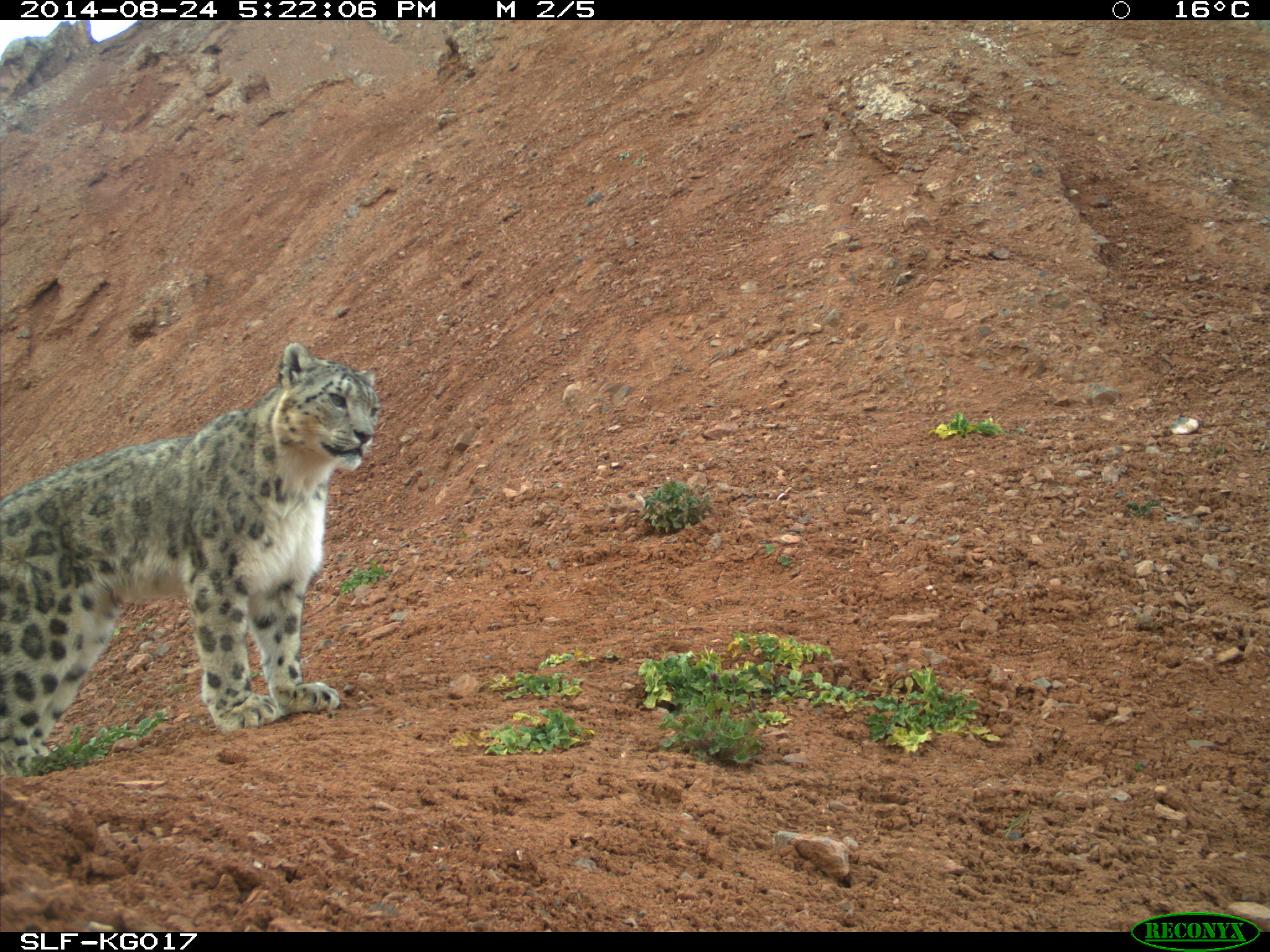
Thanks to the generous support of many of you, we’ve been able to purchase urgently needed research cameras and have begun monitoring the snow leopards of Kyrgyzstan’s Sarychat area systematically last year.


While Kuban Jumabai uulu, our Kyrgyz program director, is out in the mountains setting up the cameras for the next study cycle, we wanted to share a gem from last year’s survey… two almost grown-up cubs, sharing a rare playful moment! Enjoy!

Animated GIF
KG chase

Individual pics

IMG_0877 IMG_0878 IMG_0879 IMG_0880 IMG_0881 IMG_0882 IMG_0883 IMG_0884 IMG_0885

 from the Snow Leopard Trust blog
Posted by Unknown at 4:19 PM No comments:
Email ThisBlogThis!Share to XShare to FacebookShare to Pinterest

...and you think YOUR #CAT is huge? Nah.

BY MAC  
Apr 24, 2015 

big-ass-cats-4
big-ass-cats-12
big-ass-cats-0
big-ass-cats-1
big-ass-cats-2
big-ass-cats-3
big-ass-cats-5
big-ass-cats-6
big-ass-cats-7
big-ass-cats-8
big-ass-cats-9
big-ass-cats-10
big-ass-cats-11
big-ass-cats-13
big-ass-cats-14
big-ass-cats-15
big-ass-cats-16
big-ass-cats-17
big-ass-cats-18
big-ass-cats-19 
source
Posted by Unknown at 4:17 PM No comments:
Email ThisBlogThis!Share to XShare to FacebookShare to Pinterest
Newer Posts Older Posts Home
Subscribe to: Posts (Atom)

.

.
Feline News with an emphasis on advocacy.
Subscribe and stay up to date on what's happening in the world of cats.

Pages

  • Home
  • Big Cat Films
  • Feline Comparison Charts
  • Field guide to lions
  • Fun Big Cat Videos
  • Jaguar Country
  • Jaguar or Leopard?
  • Phylogenetic Tree of Felidae
  • Plants Lethal to Cats
  • The Truth about Black Cats
  • Wallpaper

... and we can do so much more!

... and we can do so much more!

Big Cat Rescue cam powered by EXPLORE.ORG

Search This Blog

Follow Me on Pinterest

.

.

A Reminder

A Reminder

.

.

Big Kitties

Big Kitties

Roaring Good Links

  • International Society for Endangered Cats
  • Big Cat Rescue
  • Caring for Cats
  • Cat Conservation Trust
  • Coyotes-Wolves-Cougars Forever
  • Panthera
  • Wild Cat Conservation Directory

Click the tiger to help the BIG CATS!
The 13 Countries Where Tigers Survive
Via: TakePart.com

Blog Archive

  • ▼  2016 (557)
    • ▼  December (2)
      • Officials confirm wild jaguar shown in photo is new
      • Syracuse's Rosamond Gifford Zoo a rare clouded leo...
    • ►  November (9)
    • ►  October (13)
    • ►  September (7)
    • ►  August (7)
    • ►  July (25)
    • ►  June (36)
    • ►  May (52)
    • ►  April (47)
    • ►  March (121)
    • ►  February (105)
    • ►  January (133)
  • ►  2015 (1411)
    • ►  December (105)
    • ►  November (104)
    • ►  October (135)
    • ►  September (130)
    • ►  August (136)
    • ►  July (116)
    • ►  June (116)
    • ►  May (107)
    • ►  April (133)
    • ►  March (128)
    • ►  February (89)
    • ►  January (112)
  • ►  2014 (1088)
    • ►  December (103)
    • ►  November (108)
    • ►  October (131)
    • ►  September (96)
    • ►  August (102)
    • ►  July (88)
    • ►  June (60)
    • ►  May (67)
    • ►  April (87)
    • ►  March (76)
    • ►  February (70)
    • ►  January (100)
  • ►  2013 (831)
    • ►  December (93)
    • ►  November (128)
    • ►  October (95)
    • ►  September (94)
    • ►  August (98)
    • ►  July (87)
    • ►  June (78)
    • ►  May (91)
    • ►  April (44)
    • ►  March (21)
    • ►  February (2)

Followers


Fellow Blog Readers,

I am proud to be a friend and fan of our resident photographer: Tambako the Jaguar. Unless you have seen the full body of his work, you cannot know the excellence of his talent. Therefore, I encourage you to click on the following links, "like" his Facebook page, and get to know him better. He's not only one of the most talented animal photographers out there, but he is also one heck of a nice person. Enjoy!

Tambako's bio:

http://www.flickr.com/people/tambako/

More info and images:

http://greenbuzzz.net/environment/40-exceptional-and-breathtaking-big-cat-photographs-by-emmanuel-keller/

 And...  tambako.ch

Friend him here:

https://www.facebook.com/tambakophotography

 >^..^<


Nature Blog Network

.

Follow Lin's board Mystical, Mysterious Cats on Pinterest.

...

...
Follow Lin's board Felinidae--Black Cats on Pinterest.

.

.

St. Gertrude

St. Gertrude

LinK. Powered by Blogger.