Thursday, October 8, 2015

“Your Snow Leopards are Killing our Goats”


October 4, 2015

 “Since you started working here, we’ve lost more livestock than ever. There are too many snow leopards. We don’t need livestock vaccination, we just need you and the cats to go away!”


By Matt Fiechter, Communications Specialist, Snow Leopard Trust
I’m stunned. Speechless. This conversation was supposed to be about how conservationists and herders in northern Pakistan could work together to protect snow leopards, and how that would help everyone. Instead, I’m suddenly forced to defend the cats, myself, and everything we do, as an angry herder levels a series of accusations against me. They’re harsh and relentless, and I’m not sure they’re completely off base.

Ali Nawaz, the Snow Leopard Trust's Pakistan Program Director
Ali Nawaz, the Snow Leopard Trust’s Pakistan Program Director

Thankfully, I’m not alone. Dr. Ali Nawaz, the director of the Snow Leopard Foundation Pakistan, comes to my rescue, responding to the herder respectfully, but powerfully. He shares sincere sorrow at the losses of the herders. But then he asks questions. “How many livestock did you lose? Are you sure they were taken by snow leopards? How many animals died from diseases in the same time span?”

Other villagers present at the meeting speak up, admitting that livestock losses may not necessarily have grown from previous years. One herder says he lost a dozen goats to disease last winter, and wants to know more about the vaccination program we mentioned. An elder apologizes for his hotheaded neighbor’s hostility, and asks some critical questions of his own. Slowly, the conversation takes on a more positive, constructive tone. We seem to be making some progress.

Then, the exercise is over. ‘Villagers’ put their conservationist hats back on, and I breathe a sigh of relief that this was only a role-playing session. Time to analyze what happened.
“Community Engagement for Snow Leopard Conservation”, the title of the workshop I’m participating in, sounded slightly abstract two days ago. Now, thanks to a role-playing session on negotiations that allowed me to assume the role of a field conservationist for half an hour, it has become very real and tangible.

Field teams from Kyrgyzstan, India, and Pakistan have come together for this workshop in Kyrgyzstan’s Ala-Archa National Park to discuss best practices, experiences and principles of how to engage with communities that share snow leopard habitat in order to protect the endangered cat.
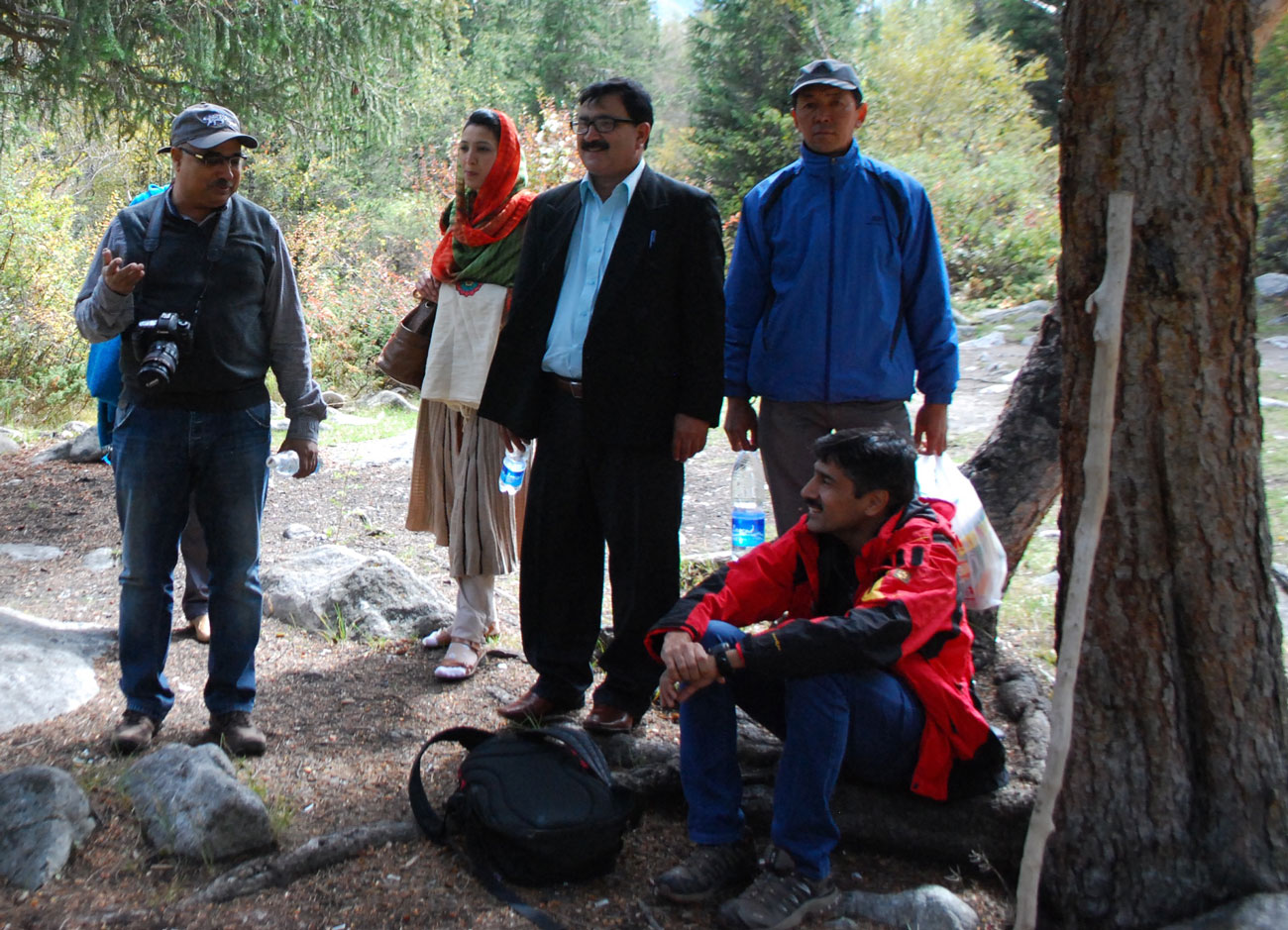
Members of the Snow Leopard Trust's Pakistan team discussing with Science & Conservation Director Charu Mishra
Members of the Snow Leopard Trust’s Pakistan team discussing with Science & Conservation Director Charu Mishra

The PARTNERS Principles – Our Approach to Community-Based Conservation

A Darwin Initiative grant has provided this opportunity to get the teams together. The workshop is based on the PARTNERS Principles, an acronym that describes the Snow Leopard Trust’s approach to community based conservation:
  • Presence of the conservationist in the community,
  • Aptness of conservation interventions,
  • Respect for local people,
  • Transparency in interactions,
  • Negotiation,
  • Empathy,
  • Responsiveness,
  • Strategic support.
Social scientist Juliette Young and ecologist Stephen Redpath have worked with Charu Mishra, SLT’s Science and Conservation Director, to design the workshop.
The PARTNERS Principles

I’m here to learn from them, and to give inputs on how we can do a better job of communicating about this challenging work with supporters, donors, and friends – on how to bring the stories from the roof of the world into homes across the planet.

I work with the team on the principles of storytelling, on characters, plot, narrative arc, and on theory of change. I show them examples from the likes of Humans of New York or charity:water to demonstrate the powerful impact of great storytelling for a cause.
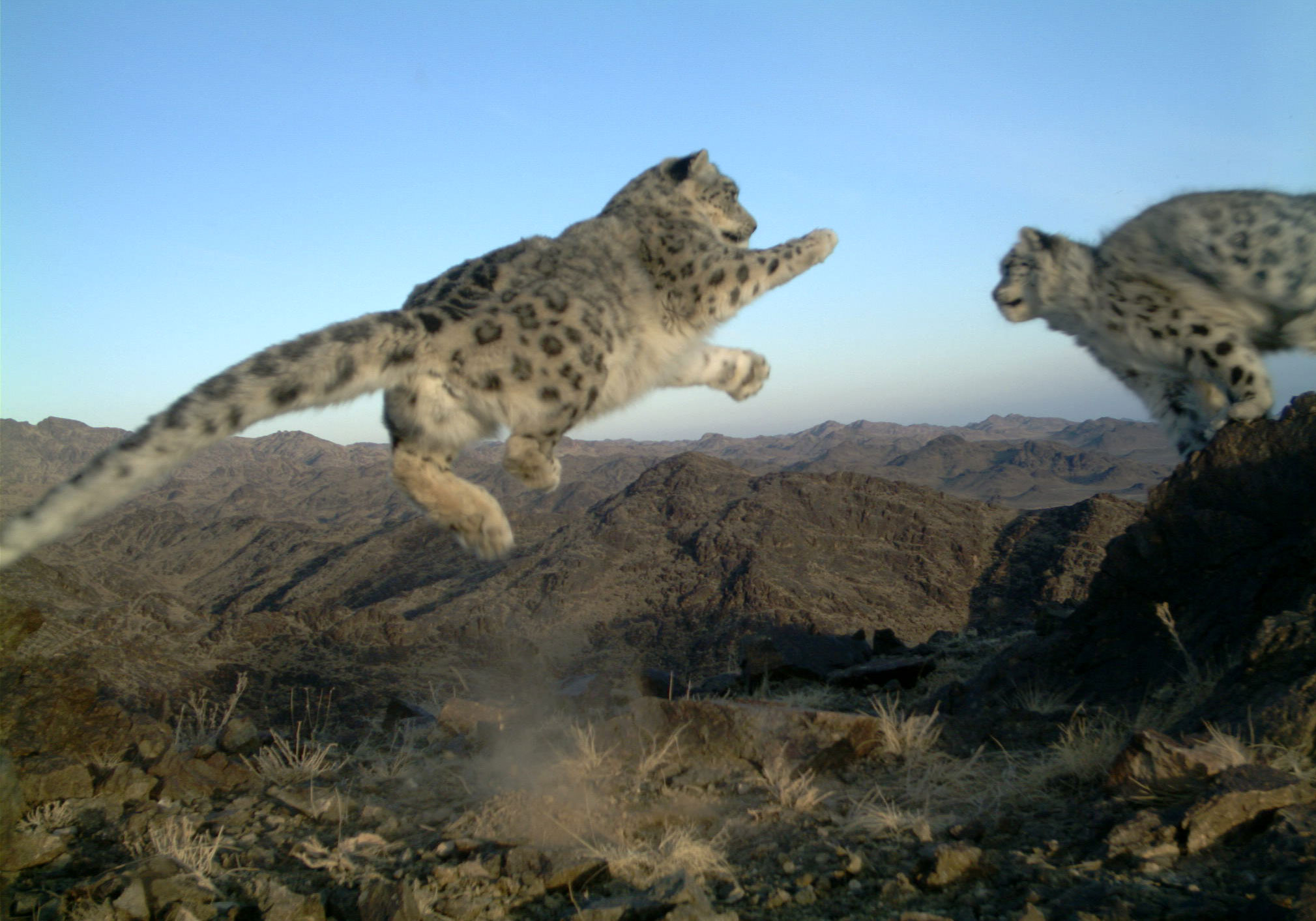
Great photos hint at great stories

Later, as my colleagues from Pakistan, India, and Kyrgyzstan share the stories they’ve experienced in their work, I can sense how they’re trying to employ those principles, and I feel a certain sense of pride that I imagine every teacher knows very well.

However, when we reenact some of those stories in the role-playing session, I’m very much the student, and I’m in way over my head. Looks like I’ve quite a way to go before I could be a successful field conservationist.

I know that many of the people who live in snow leopard habitat are herders, depending on livestock for their livelihoods. I’m aware that to them, the carnivorous cat can be a source of trouble, rather than a valuable species worth saving.

One of the keys of our approach is to partner with these communities and find solutions to conflicts between their interests and those of conservation.

Offsetting losses through livestock insurance schemes is one approach that has worked in many areas. Vaccinating livestock has been a successful strategy as well, particularly in regions where herders were losing more animals to disease than to predation. Generating alternative sources of income, e.g. through selling handicrafts under the Snow Leopard Enterprises label, is another well-received idea.

In all those programs, partner communities agree to protect snow leopards and wild prey species in their area from hunting or retaliation killings, while we provide the means and training to improve their livelihoods.

From a distance, these programs seem like easy win-wins.
What I wasn’t fully aware of – but learned the hard way in the exercise on ’negotiating with communities’ – is how things can be a lot more complicated than they seem.

Pakistani snow leopard researcher Hussain Ali spends several months each year with mountain communities.

“I’ve been received by some communities like a dear friend, while others met me with outright hostility”, explains Hussain Ali, a senior research associate in our Pakistan program, and the man who, a few minutes ago, so convincingly mimed the angry herder in our role-play session. “I was trying to be relatively nice to you”, he says with a smile.
As a researcher, Hussain often spends several weeks ‘embedded’ in a community – eating, praying, and talking with the locals. “Over time, a mutual trust usually develops” he says, “but in the beginning, it can be tough!”

Marginalized Communities Bear the Brunt of Conservation

“We shouldn’t be surprised by those challenges. Many of these rural communities are marginalized economically and politically, and at the same time, they bear the brunt of conservation”, explains Dr. Charu Mishra, who leads the Community Engagement workshop. “It’s up to us as conservationists to find ways to build relationships and share the costs of protecting wildlife with these people.”

The workshop was designed to help field teams cope with these challenges, develop their confidence in community engagements, and build strong, mutually beneficial partnerships with the communities they work with.

“Like every human relationship, community partnerships require empathy, respect, honesty and a lot of time,” Charu says.
There are no set rules to engaging with communities, and each village, each family, each person, is different. But in the PARTNERS document that Charu has developed from the collective experience of our field teams, eight shared principles and best practices are provided that can guide a field conservationist’s work with rural communities:

“For instance, it’s crucial for our work to not only understand the ecological challenges, but also the cultural context of a community. Even as natural scientists, we can’t lose sight of social phenomena; religion, social structures and so on. They can greatly influence attitudes towards wildlife.”

Later, Khurshid Ali Shah, who heads the Snow Leopard Foundation Pakistan’s office in Chitral, will tell a story that’ll perfectly underline Charu’s point.

Khurshid Ali Shah, the head of our Chitral office, with his colleague, Yasmeen Cheema, who heads SLE in Chitral

“Once I spent a week in a remote village, trying to get the community’s support for conservation. One day, a highly respected local Muslim religious leader asked me why I was trying to protect snow leopards. He felt that the predator was causing too much damage to the community and should be gotten rid of. I explained to him that I understood my job as that of a guardian of God’s creation, and that I was perhaps sent here because God’s creations were not safe in the area. I told him that I believed we had no right to remove this cat from the world God had given us, and that I felt it was our duty to preserve it. He fell silent, reflected on what I had said, then shook my hand and told me I had his support.”

Being Immersed in Communities

“This story is more than a nice anecdote”, Charu Mishra says. “It shows how important it is to think of cultural contexts. This religious leader would not have been convinced by an economic argument, for instance. But he was open to a spiritual one”

Beyond that, Charu says, the example also demonstrates why it’s crucial to be present in partner communities: “Khurshid had spent several days in this community, eating, sleeping, praying with the people. He earned their trust with his sustained presence, his empathy, and respectful interactions. An outsider, someone who had just arrived the same morning, would perhaps not have been able to win the religious leader’s support.”

Later that day, I suddenly realize why Khurshid’s story impressed me so much.
It perfectly follows all the principles of storytelling that I’ve rambled on about a few days before. It has two memorable characters that find themselves in a situation of conflict, and it has a resolution that’s poetic and powerful. Just the kind of stuff I look for as a communications officer. The next time I hold a training on storytelling, I won’t have to think very hard about a great example.
________________________________
The workshop on community engagement was supported by a grant from the Darwin Initiative. Whitley Fund for Nature has been a long-term supporter of our community-based conservation programs, and the Acacia Conservation Fund provided support for the development of the PARTNERS document. Our Kyrgyzstan team hosted the workshop, and we are especially thankful to Kubanych Jumabay, our Program Director and Cholpon Abasova.

source: The Snow Leopard Trust

Cats Who Think You're Probably Done Working (video)

Your Daily #Cat

Nice position! 

Nice position! by Tambako The Jaguar

Meet Leon the lion whose luxurious bouffant style hair makes him the mane attraction

(He obviously takes pride in his appearance)

  • Leon has been wowing visitors to Usti nad Labem Zoo in the Czech Republic with his impressive mane
  • Fans admire the congolese lion's voluminous golden locks which always appear coiffured to perfection 
  • He arrived at the zoo 10 years ago with his sister Ronja and they now share the enclosure with another lion
This king of the jungle knows a thing or two about making sure he is the mane attraction. With his luxurious bouffant style hair coiffured to perfection it is clear Leon takes pride in his appearance. He has become the star attraction at Usti nad Labem Zoo in the Czech Republic, where he stands head and shoulders above the other cats. 
Mane attraction: Leon the congolese lion is the star attraction at Usti nad Labem Zoo in the Czech Republic thanks to his glossy mane
Hairy: Leon's voluminous side-parting appears to have been coiffured to perfection and has left many wondering if he is getting a helping hand
Crowning glory: The congolese lion has lived at the zoo since 2005
He lives with his sister, Ronja
Crowning glory: The congolese lion has lived at the zoo with his sister, Ronja, since 2005. They share their enclosure with another female
Because he's worth it: Relaxing on the grass Leon shows off his impressive mane, which appears to be relatively low maintenance

Whether he is rolling in the grass or relaxing on a rock, Leon's voluminous shaggy side-parting receives many admiring glances from visitors. His effortless tresses leaves many questioning whether he has had a brush with a hairdressers scissors.
It is believed keepers at the zoo help Leon keep his impressive barnet in tip top condition. The congolese lion, has lived at the zoo since 2005 along with his sister Ronja. A younger female called Kivu joined their enclosure last year.
Pride in his appearance: Leon rarely has a bad hair day with his luxurious bouffant style always appearing coiffured to perfection
Wowing visitors: His shaggy-side parting has become increasingly popular with visitors to the zoo in the Czech Republic
Styled to perfection
Brush with barbers
Styled to perfection: Leon's locks show no sign of thinning, but he does appear to have had a brush with barbers comb.

source

Wednesday, October 7, 2015

Your Daily #Cat

Sithly lying on his platform 

Sithly lying on his platform by Tambako The Jaguar

The Catio; 454 square feet all for cats


Published:

OLNEY, Ill. (WTHI) – You’ve probably heard the expression “the crazy cat lady.” Well one Wabash Valley woman is no stranger to the nickname. But her love for cats is part of a bigger picture. The importance of family.

31-year-old Misti Ferguson lives in the small town of Olney, Illinois. Her quiet neighborhood is a perfect fit as her nearby loved ones are top priority.“Well if you don’t have family you don’t have anything a nd god blessed me with a wonderful family”

But humans aren’t the only members of Ferguson’s family. She also has five cats. And their shenanigans aren’t unnoticed in that quiet neighborhood. That’s because their home is called a catio.
“My favorite thing is to be able to sit there and watch them and they run around and chase squirrels that get right outside of their reach up above them and things like that. It’s just fun to see them so happy,” Ferguson said.

It’s a 454 square foot enclosure and it’s all for the cats. In bad weather or just to lounge, they have a three story cat condo inside it- heated, air conditioned and insulated.When asked: “So, why go to all this extreme for your cats?” Ferguson said: “Well they’re like family so why not?”

After the cats started going outside their litter box, Ferguson toilet trained them. And it worked but eventually they went back to the bad habit. A love for cats runs in the family. So Ferguson and her mother built the catio together.“She’s my only child and I love her very much. I’d do anything for her,” Margie Ferguson said.

So although Misti Ferguson is no stranger to nicknames.“Well I mean when you have a catio in the back of your house that sticks up over your fence it’s pretty expected people are going to say things.”
All that really matters is family.

source

Meet the Bobcats: Lil Feather Tommie & Ariel (video)

Cat Night Fight! (video)

Tuesday, October 6, 2015

In The Name Of Science, Here's Why You Should Spend More Time Cuddling Cats

A purr-fectly wonderful finding!
Posted: 10/06/2015 

Turns out that petting and talking nicely with shelter cats isn't just an awfully pleasant way to spend the afternoon. There's now scientific proof that this kind of behavior also helps keep the cats healthy -- a finding that sounds adorable, and could have some seriously great implications for the cats.

For the study -- published this month in the journal Preventive Veterinary Medicine -- 96 shelter cats were divided into two groups. One group got positive interaction with the same person for 10 minutes at a time, four times a day, for 10 days. This interaction, which could include petting, brushing and playing among other agreeable things, is called "gentling."

The control group cats were treated to a researcher standing in front of their cage with eyes averted, for that same duration.

All 96 cats selected for the study had been deemed healthy and content -- as opposed to anxious or frustrated -- at the beginning of the study. At the end, the cats who got gentled were found to have maintained their content dispositions, and were less likely to have developed an upper respiratory
disorder.

The control group cats were less content, and more sick.

Seventeen of 49 cats in the control group developed upper respiratory disorders, compared with nine of the 47 cats in the group treated to gentling.

(In case all this is making you consider a career as a cat researcher: these findings were determined in part by looking for evidence in the cats' poop. So, thank you scientists.)

Animal welfare consultant Nadine Gourkow, one of the two researchers who conducted this study, told The Huffington Post she found a "strong association between positive emotions induced by gentling and good health."

The idea is that the cats' contentment stimulates production of an antibody, which helps fight upper respiratory disorders.

"We have learned that the domestic cat is very responsive to good treatment by humans," said  Clive J.C. Phillips, a professor of animal welfare at the University of Queensland, and the study's other author.

The pair plans to continue research in this vein. Next up is a study looking at what gentling methods are most effective. (Gourkow will also soon launching a website teaching shelters how to implement her findings, and other ways of keeping their cats healthy, happy and adoptable. Here's where that'll be, once the site goes live.)

Phillips said that he suspects the same effect could be found in other shelter animals, like dogs with kennel cough, and he is sure "this is important in the home as well as the shelter."
Though, not Phillips' home. His wife is allergic.

"However," he said, "the study has emphasized to me how sensitive pets are, including my dog, to gentle treatment."


source

How to have happy, stress-free cats


Cat behavioral expert Jackson Galaxy will appear Oct. 25 at the Marin Humane Society in Novato. COURTESY OF JACKSON GALAXY

The dictionary defines stress as “a specific response by the body to a stimulus, such as fear or pain, which disturbs or interferes with the normal physiological equilibrium of an organism.” When a cat is confronted by what it perceives as a “stressor” or a potential threat, its body goes into a “fight or flight” reaction. If the stressor continues, the cat will either act out toward its environment — for example, toward you, a family member, another pet or the carpet — or toward itself, such as licking excessively or becoming ill or depressed.

For a cat to be happy, a guardian must satisfy its basic needs: food, water, a clean litter box, warm places to sleep and companionship. And most important, all of these must be free from stress.

Urinating outside the box, spraying, biting or scratching are the kinds of “acting out” behaviors that bring cat guardians to behavior consultations. Of course, if a cat is ill or injured, no amount of behavior modification will be effective so the first step would be to receive a clean bill of health from a veterinarian. Once physical troubles are taken out of the picture, you can look for triggers in the environment.

Cats are creatures of habit so any changes in routine can be upsetting to them. A new baby or pet, strange people, home improvement projects, or an unknown noise or animal outside can all stress a cat.

It’s best to address such environmental stressors with a behavior consultant. You can then turn to other ways to help make your cat feel loved and safe, such as triple-checking that all of its needs are being met. It will love you for it.

Your cat needs a high-quality kibble, wet food or both, which are generally sold at pet food stores. Cats are true carnivores; they don’t eat grain or carbohydrates in the wild. The first few ingredients of their food should be meat. Wet food is about 70 percent water, as is the natural food of cats — mice and gophers — so it’s more species-appropriate for them. Wet food is particularly important for male cats, which may be prone to urinary tract blockages.

Plentiful, fresh water is important to cats and many prefer their water straight from the tap. If this is true of yours, you may want to try a cat drinking fountain. Make sure you change the water frequently and take apart and clean the entire fountain regularly.

No one likes a smelly potty and cat’s noses are far more sensitive than ours. Scoop at least daily; twice a day is preferable. Also consider the location of the box. A high-traffic location will not do. Cats feel vulnerable when they go to the bathroom and can easily be startled.

Cats enjoy a warm sunbeam. When toasty and comfortable, cats tend to relax and bathe. Bathing or grooming themselves is the way they check their body for blemishes. And, like yoga, grooming increasing blood flow to all body parts. Make sure they have a safe, comfortable place to escape any stressors they might face elsewhere in the house or yard. Many cats like to perch up high so you might want to invest in a tiered kitty condo unit.

Your cat likes you and wants to be with you, even though its body language may sometimes say otherwise. It is a social creature so you are one of its best stress-busters. By adhering to a regular feeding schedule, providing it with regular daily play time, and giving it excess amounts of love and cuddling, your kitty should be able to face changes more successfully and peacefully.

To learn more about feline behavior, come to Catapalooza at the Marin Humane Society on Oct. 25. Cat expert Jackson Galaxy, host of “My Cat From Hell,” is the keynote speaker. Go to www.MarinHumaneSociety.org for details.

Beth Weil is the feline behavior coordinator for the Marin Humane Society, which contributes Tails of Marin articles and welcomes animal-related questions and stories about the people and animals in our community. Go to MarinHumaneSociety.org, Twitter.com/MarinHumane, or email lbloch@MarinHumaneSociety.org.

source

T.S. Eliot really liked cats, according to his wife


NEW YORK DAILY NEWS
Tuesday, October 6, 2015


NO SALES,  ONE TIME USE ONLY, NO ARCHIVE, AP PROVIDES ACCESS TO THIS PUBLICLY DISTRIBUTED HANDOUT PHOTO PROVIDED BY CHRISTIE'S LONDON  FOR EDITORIAL PURPOSES ONLY. AP

This is an undated image made available Thursday, May 30, 2013 by Christie's London of poet T.S. Eliot and his wife Valerie Eliot.

(Originally published by the Daily News on October 8, 1982. This story was written by David Hinckley.)

In case there was any doubt, Valerie Eliot confirms that yes, it's true; her late husband, T.S., considered cats to be, well, the cat's meow. He liked dogs. He liked pigs. He even wrote light verse about pigs. But cats "had a special place in his affection," and that affection evolved into "Cats," a long-running musical sellout in London. And, last night, "Cats" opened on Broadway with the largest advance ticket sale in history.

‘CATS’ PREMIERES ON BROADWAY IN 1982

True, Mrs. Eliot says, a $4 million musical is not what her late husband had in mind when he wrote "Old Possum's Book of Practical Cats" in the late '30s. His idea then was to amuse his godchildren. He would be pleased, however, she thinks, at its stage form: "he loved the music Hall and this is the closest his work could have come to it."

Furthermore, despite the fact that many critics regard "Old Possum's Book" as a trivial digression from Eliot's serious poetry and criticism, the man himself rather liked it. In his later years, says Mrs. Eliot, he would keep a copy beside his bed and fool with the text, changing a word here and there, adding or subtracting a thought.

New York Daily News article on 'Cats' in 1982.
Previous Next


    New York Daily News

    New York Daily News article on 'Cats' in 1982.

    "It is all of a piece with his other work, really," she says. "It was his witty, dry, humorous side, a part of the whole man."

    Mrs. Eliot is in New York this week for the Broadway opening of "Cats," to which she contributed material she gathered while editing Eliot's papers. She is a striking woman, sharp, pleasant, articulate, well-dressed, well spoken, and except that her once-copper hair is now silver, she is probably not much different from the way she was when she married Eliot in 1957. She was turning 30 then; he was 68. She had been his secretary. By all accounts, the marriage was blissful; after Eliot died in 1965, Conrad Aiken wrote in Life that Valerie had kept him alive those final eight years.

    Since then, she has immersed herself in Eliot's written legacy; several years ago she released the fascinating first drafts of his poem "The Waste Land," with the original editing of Ezra Pound scribbled in the margins, and she is now working on his letters.

    "We had originally planned three volumes for the letters," she says. "Now it looks like four." She is clearly excited about what she has found; in one letter to Aitken, for instance, Eliot parodies his own propensity for obscure literary allusion by creating fictitious references. "That one will require a lot of footnotes," she says, laughing.

    Exported.;

    Scene in the Broadway musical 'Cats' in 1982.

    Actually, she says, she had to talk "Tom" into allowing his letters to be published at all. "He didn't want to. I said they were simply too important. Then later on, when he was feeling ill, he found he liked having me read letters to him - Yeats, for instance. Finally he said, 'Okay, you win.'" She pauses and smiles. "Then, of course, he threw it all back on me by saying I had to edit them."

    Not that she minds. In fact, she's delighted with the prospect of one work which can reflect all her husband's dimensions, not just the side his advocates call "serious" and his critics call "stuffy." To underscore the point, she notes that Eliot himself, in his public poetry readings, always inserted a cat stanza or two among the more straight-faced verse.

    And oh yes, there's one more thing about Tom and animals. One day during an auto ride, he and his chauffeur fell into a conversation about dogs, and the chauffeur explained that his own dog was just lovable, not pedigreed. "He's not what you'd call a consequential dog," the chauffeur said.

    "Tom just loved that phrase," Mrs. Eliot recalls. "And he immediately got the idea to write a book on 'consequential dogs,' as a companion to the cat book." She shakes her head. "Alas, he never got to it."
    Alas, indeed, for the dog lovers of the world, who missed their golden opportunity for equal time on the Broadway stage. But they can console themselves in the knowledge that where T.S. Eliot and cats are concerned, they did have influential friends in high places. "Cats are fine," says Valerie Eliot. "But actually, I think I prefer dogs."

    source

    Your Daily #Cat

    Sithle looking far away 

    Sithle looking far away by Tambako The Jaguar

    Your "feel good" video of the day

    Monday, October 5, 2015

    Tablets for tabbies: Apps geared toward cats are a hit

     Cat Fishing 2 
    October 04, 2015 • 

    There’s no denying that cats love to play with everything, and as the saying goes, “There’s an app for that.” Read on to discover some of the most popular free gaming apps geared toward cats in the Google Play Store and the iTunes Store in addition to how a young and senior cat responded.

    Cat Fishing 2 by Friskies
    For iOS and Android

    This game features multiple timed levels with varying numbers of fish swimming across the screen. The goal is for the cat to touch, or catch, as many fish as possible. The more fish the cat touches, the more points it gets and the more challenging the game becomes.
    Responses:
    Puma (1-year-old young adult): The cat enjoyed watching the fish swim across the screen with the occasional batting. Strong color contrast between the fish and background, plus noises from the game, kept her interest. This seemed to be her favorite game.
    Snuggles (16 years old, senior): The cat watched the fish swim, but he didn’t touch the screen. Without any contact on the screen, the game will make a meow sound effect attempting to get the cat’s attention. His ears perked up, but he still didn’t play with the game.

    Pocket Pond 2
    For iOS and Android

    Give the fish in the aquarium a break from the cat’s mischievous eyes with this app, which provides a digital koi pond for their entertainment. This app is similar to "Cat Fishing 2," except with a more realistic appearance. The pond water ripples and dragonflies land on the surface adding an extra dimension for visual stimulation. The app can entertain humans as well, allowing them to raise their own koi in the pond.
    Responses:
    Both cats found the game to be more relaxing than stimulating. They laid down for naps after watching the koi swim lazily through the flowing water on the screen. Good for calming cats down.

    Free Game for Cats Paw Me
    For iOS and Android

    This app features several different toys for the cat to play with on the screen. The backgrounds are animated and change over different levels to keep the cat’s attention. Cats can also compete against each other in this multiplayer, or multicat, game.
    Responses:
    Puma: She seemed to enjoy the animated backgrounds, but they caused some distraction to the game.
    Snuggles: The animated backgrounds made it hard for him to see the toys on screen. He ended up staring blankly at the screen and then losing interest.

    Game for Cats
    For iOS

    With a black background, a small colored dot moves quickly across the screen like a laser pointer tempting the cat to bat at it. This game offers in-app purchases so be careful by only playing the laser version to ensure it stays free.
    Responses:
    Puma: The simplicity of this game made this app less exciting. Playing with a normal handheld laser is much more fun for pet and owner.
    Snuggles: It didn’t appear that he could see the laser light on the screen.

    Crazy Cat
    For Android

    Several critters race across the screen tempting the curious cat playing the game. The cat gains points for each critter it touches, like most games, but the faster the critter, the more points it’s worth. This app also features Bluetooth capability, for a price, where the pet parent can connect their smartphone and move the critter around the tablet screen themselves.
    Responses:
    Puma: This was a sensory overload. The cat stared wide-eyed at everything moving around at different speeds and tried to bat at the screen, but it was lackluster. The game seemed almost too complicated for her.
    Snuggles: The flashy backgrounds drew the attention of this senior cat. He slowly moved his paws across the screen, and while he didn’t hit too many critters, he seemed to enjoy the chase. This appeared to be his favorite game.

    The Human House is Full of Terrifying Things that Need To Be Attacked (video)

    Let Me In! (video)

    Your Daily #Cat

    This is my coconut! 

    This is my coconut! by Tambako The Jaguar

    Saturday, October 3, 2015

    Tracking Cats from Space: Satellites Estimate Feral Ranges

    Credit: Seiji | Shutterstock.com  
    How far feral cats roam can now be estimated from space, a new study finds.

    No, satellites haven't become so sensitive as to be able to follow the movements of individual felines. But a new study finds that the productivity of a landscape — measured by vegetation-tracking satellites — determines the range of feral cats.

    This matters because feral cats (domesticated cats that live in the wild) are major predators for native birds and small mammals the world over. A 2013 study published in the journal Nature Communications estimated that cats kill between 1.4 billion and 3.7 billion birds and as many as 20.7 billion small mammals each year.


    But feral cats are hard to control, because they behave very differently depending on where they live, said Andrew Bengsen, a research scientist in the New South Wales Department of Primary Industries Vertebrate Pest Research Unit in Australia, and lead author of the new study."An understanding of the movement patterns of feral cats, particularly the distances that they travel in the course of their day-to-day activities, is critical to developing effective control programs, because it determines how large [of] an area needs to be managed and how intense the control activities need to be within that area," Bengsen told Live Science.

    Following feral cats

    Tracking feral cats is expensive and difficult, Bengsen said. Most studies rely on GPS collars, a labor-intensive method that's difficult for cash-strapped government management organizations. Plus, GPS tracking requires releasing feral cats back into the environment, where they can continue to kill birds and mammals. This is particularly threatening on islands off of Southeast Asia and in the South Pacific, where cats threaten one-of-a-kind island species.

    So Bengsen and his colleagues looked skyward. They pulled data from NASA satellites that measure greenery on Earth, which in turn defines the productivity of the landscape, or how much biomass is produced. The more productive a region is, the richer it is in life, the scientists said.

    The researchers combined this space-based information with data from 41 previous GPS tracking studies and with estimates of feral cat population density at 47 locations.

    The findings revealed huge variations in the ranges of feral cats: from as little as 0.45 square miles (1.16 square kilometers) to as much as 9 square miles (23.24 square km) for females. Males typically have wider ranges, because they travel around looking for females to mate with.

    Landscape mattered in explaining these variations, the study said. In low-productivity areas like deserts, Bengsen said, cats traveled farther. Ranges were smaller in high-productivity environments, such as forests. And the denser the population of cats in a region, the smaller the animals' home ranges were. Seasonality of resources mattered as well, Bengsen said.

    Managing cats

    Most of the sites included in the study were located in Australasia because that region is where feral cats pose the greatest threats to native species. But, the researchers also examined several sites in Europe and North America, Bengsen said."We collected data from sites ranging from deserts to subalpine ranges," he said, adding, "We're fairly confident that the relationships we found should hold in similar sites elsewhere."

    Tracking urban cat colonies wouldn't be possible with this technique, however, Bengsen said. In cities, wild cats depend on food not measurable by satellite data, such as human refuse (or rodents in that refuse). One 2015 study of feral cats in the eastern United States found that the animals preferred urban corridors and yards to wilder areas, perhaps because coyotes roamed more freely in the wilder regions.

    However, the study should give wildlife managers a guide to containing the damage from feral cats in wild areas, Bengsen said.

    The researchers reported their findings Sept. 22 in the Journal of Zoology.

    source

    Shelter Cats Jump Through Hoops, Hop Obstacles To Find Loving Homes

    The proof is in the purring.

    You wouldn't ordinarily want to put obstacles in the way of shelter cats getting adopted, but the ones you're seeing in this video help homeless kitties to find loving homes.


    This is Petunia. She can be a little cranky, which wasn't exactly endearing her to potential adopters during the early stage of her tenure at Cat Depot, a shelter in Sarasota, Florida."Petunia was a swatter and would swat people for no reason," Lynn Rasys, Cat Depot's spokesperson, said.

    Petunia isn't a mean cat: she's smart, and was just bored. And you know how being restless and not fully occupied, mentally and physically, brings out your worst? Same goes for cats.

    So Cat Depot decided to keep Petunia's mind -- and paws --  busy with a great big obstacle course that a volunteer fabricated, and set up in one of the shelter's hallways."She immediately took to the course easily and would look forward every day to her time running through the tunnel and up and down the stairs," Rasys said. "Once she was finished, we would then encourage her to jump in someone’s lap and get petted. No swatting!" 

    Cat Depot adopts out about 1,200 cats and kittens every year. The small percentage showing signs of being a little too tightly wound while they're at the shelter -- which is really a nice place; the large cat enclosures all have televisions playing cat-friendly videos, for example -- will get the obstacle course treatment.

    (A greater number will participate in Cat Depot's leash training program. That's for cats who have a bit of wanderlust, and those who need to lose a few pounds.)


    And it really works. The proof is in the purring.
    Rasys points to example after example of cats who were turning off potential adopters with their plucky behavior -- and who, after becoming obstacle course athletes, grew calmer and happier, and therefore more adoptable.
    Like Buddy, another former biter, who spent some time at the shelter.
    "The agility course was the perfect challenge for him," Rasys said. "Once he had his daily time running and playing the agility course, he was encouraged to sit on someone’s lap and interact with people. He would no longer bite and was eventually adopted."
    That goes for Petunia, too.


    Stacy McDaniels brought Petunia home around Christmas in 2013. She'd come into Cat Depot looking for a kitten, but staff members asked her to check out Ms. P.
    She wound up fostering Petunia for two months, before adopting her on Valentine's Day 2014. "She is my princess," McDaniels said.

    Petunia's name is Sassy now. McDaniels says she lives up to it: "She's sassy!"
    They haven't kept up with the obstacle courses, but Sassy has a lot of toys and gets to play a lot, which keeps her active and engaged, and minimizes behavioral problems.
    And, sure, Sassy still swats and bites a bit, but she's "come a long way. Now she curls up with you," McDaniels said. "She sleeps with me every single night."


    America's Fascination with Cats


    My Tiger Cat Danny VB via Flickr


    Marc Joseph  Author; CEO/President and Founder, DollarDays International, Inc.
    Posted:


    Last month I was watching my hometown baseball team, the Arizona Diamondbacks, play the San Francisco Giants. And when it came time to throw out the first pitch, it was thrown out by Grumpy Cat (also known as Tartar Sauce), an Internet celebrity cat known for her grumpy facial expressions who has over 8 million likes on Facebook.

    This is not the first time a cat has thrown out the first pitch at a ball game. Last year, Tara the Cat, who was made famous in a YouTube video that has had over 24 million views because she saved a four-year-old boy from a dog attack in Bakersfield, CA, threw out the first pitch at the minor league Bakersfield Blaze baseball game. Obviously these cats don't have the paw strength to reach home plate, so to have these cats honored in this esteemed American tradition says a lot about our respect for these pets.

    Domesticated cats have a long and rich history according to the Smithsonian. Cats were first domesticated 12,000 years ago in the Middle East as people abandoned their nomadic lifestyle and settled permanently to farming and storing grain, which attracted rodents. The wildcats preyed on the rodents and stuck around these early towns. In Egypt, the African Wild Cat was domesticated to control the vermin that was harming the crops and causing diseases. These cats controlled the rat population, reducing deaths, and allowed a larger supply of food for the poor. Because they changed the quality of life for Egyptians, cats became sacred creatures representing life and associated with the goddesses Bast, Isis and Pasht. If an Egyptian killed a cat, they were immediately given the death penalty.

    Egyptian traders brought cats to Europe, Greece, and the Romans. All of these civilizations used the cats to control the pest population and the King of Wales also made killing a cat punishable by death. But during the Middle Ages, cats were associated with superstitions and witch craft, sin and Satan. When The Plague started in 1348, the rulers ordered the killing of cats that were thought to carry the devil's disease. Ironically, because of the mass killing of cats, the rodent population exploded and worsened the spread of disease. The mass killing of cats costs millions of lives in Europe.


    Cats were used on ships to control the rodent population and when Christopher Columbus discovered America, cats on board of his ship were left behind and flourished to become the American Shorthair cat. Fast forward to today and in the 1990s, cats overtook the dog as the world's most common pet where there are now 500,000,000 domestic cats worldwide!

    In the USA, according to the American Society for the Prevention of Cruelty to Animals (ASPCA), there are 86 million owned cats compared to 78 million dogs. Thirty-nine percent of American households own a dog compared to 33 percent owning cats. The oddity in the numbers here is because 52 percent of cat people own more than one cat, while 40 percent of dog people own more than one dog. A total of 70 million US homes own at least one companion animal which is 63 percent of homes. There are 54,000 veterinarians in the USA taking care of these animals which is a 55 percent increase in vets in just the last 15 years!

    Back in 2012, the Walker Art Center in Minneapolis started the "Internet Cat Video Film Festival" to showcase the best in cat videos. They receive 10,000 submissions annually of one-minute videos and pick the top 70 which are shown at the film festival. When over 10,000 people showed up for this event, it became so popular that it has led to international tours of the program and they had their 2015 edition launch a couple of months ago. We noticed on our Facebook page that every time we post a picture of a cat, it is liked or shared thousands of times. So if so many of us take the time to smile, laugh and gush about cats, why are so many of them in trouble?

    There are over 5,000 animal shelters nationwide according to Statistic Brain. Five-million animals enter these shelters and 3.5 million are euthanized. Sixty percent of dogs are euthanized and 70 percent of cats entering shelters are euthanized. Only two percent of the cats are actually returned to their owners. Two billion dollars of taxpayer money is used annually to round up, house, kill and dispose of homeless animals.

    October 29 is National Cat Day which has now been celebrated for 10 years. For those of us who love animals, we should not just be rejoicing only one day this month, because it is our duty every day to help these defenseless animals who have no voice for themselves. There are plenty of concerned organizations that need our support to help reduce the staggering amount of neglected pets.

    Donate to great nonprofits like the ASPCA, the Humane Society, the American Humane Association or to go local, find a shelter near you through The Shelter Pet Project to help fight animal abuse and neglect. And at DollarDays on our Facebook page, we are giving away $5,000 in products to animal shelters, so make sure you nominate your favorite shelter that can use our help. If you cannot support these helpless animals with money, donate your time to help care for them at the shelters. All shelters welcome people who will feed, walk and groom these ignored cats.

    Cats provide therapeutic benefits for many of life's invisible scars. They help us socially and emotionally. The unconditional love cats give us transcends work issues, family conflicts, and death. Cats don't care about the color of your skin, whether you can read or not, or if you are missing a limb.

    So not only during National Cat Day this month honor your best friend, but all year long do the right thing. Donate to cat shelters and organizations that care for these innocent animals. Volunteer at your local shelter to help cats cope with being alone. No one wants to be alone, and your simple act of kindness goes a long way for cats that can't speak up for themselves.

    source


    Cats in Bags--lolol (video)


    Your Daily #Cat

    Three lionesses lying 

    Three lionesses lying by Tambako The Jaguar

    Scientists to Build a ‘Frozen Zoo’ to Save Endangered Species


    Jalal, the Sumatran tiger, who researchers already extracted cells from in 2010 (Photo Source: CNN)
    Jalal, the Sumatran tiger, who researchers already extracted cells from in 2010 (Photo Source: CNN)
    10/02/2015


    The University of Gerogia’s Regenerative Bioscience Center (RBC) is in the process of creating what they call a “frozen zoo”, genetic storage center that may help save endangered big cats and other species from extinction down the road.  The plan comes from RBC’s Director Steven Stice and animal and dairy science assistant professor Franklin West.

    The practice involves extracting cells from the skin of the animal, which is sedated, in a non-invasive procedure reports CNN.  Researchers then introduce a series of specialized reprogramming genes into the cells which turns them into stem cells, giving the team a foundation to create sperm or eggs with.
    Sperm has already been made from pig stem cells, and Stice and West are now expecting big cats to be up next, since scientists already have a solid understanding of the big cat family’s genetic makeup.
    In fact, the team has already given the procedure to “Jalal”, a Sumatran tiger that was euthanized at the zoo in 2010, and a clouded leopard named “Moby” who died in 2013.  Though as species within the family get closer to extinction, RBC hopes to save them as soon as possible.  The Florida panther is currently one of their top priorities.

    “Every year one of these animals gets hit by a car — and they’re at a point where they’re breeding brothers and sisters together because the gene pool has shrunk,” said West.

    The cells are stored in tanks of liquid nitrogen until they are reprogrammed into stem cells, meaning they may be held for centuries without degrading.

    “Essentially the genetics are immortal,” West explained. “You could go in 20, 30, 200 years theoretically, you could thaw these stem cells out, and turn them into sperm and eggs.”  He added that the storage method doesn’t take up much space either, saying “It would take two [small] boxes to essentially store a whole population.”

    The new process is on the path to replace current breeding techniques used with endangered species, which researchers say are typically done within the confines of a zoo and can end up damaging the species’ genes, interfering with the creature’s behaviour, or even cause them to lose their habitats if they were plucked from the wild to breed.

    RBC is also looking to crowdfunding for donations, rather than trying to get a research grant.  The idea comes from the center’s marketing and development coordinator, Charlene Betoruney, who has a background in hospital fundraising.

    “With the GeorgiaFunder, I saw a great opportunity for us to tap into monetary resources left by the gaps of industry and government funding.” she said.  “This type of ‘interactive funding’ also allows our research teams a greater level of transparency and engagement with the general public.” It also promotes what Betourney called “real-time” science: “finding the underlying cause of a problem and bringing resources quickly together to solve it.”

    This form of funding would also mean updates via social media websites like Facebook and Instagram.

    The team is quite passionate about this goal, not only because of its importance to preserving wildlife, but also because many of them are self-described animal fanatics.

    “I’ve always loved nature, I enjoy taking my daughter to the zoo all the time,” said West.  “I think the natural environment is one of those things that make life worth living.”

    source

    Friday, October 2, 2015

    Your Daily #Cat

    Roaring young lion 

    Roaring young lion by Tambako The Jaguar

    Leopard gets its head stuck in a metal pot

    This unlucky leopard got its head stuck in a metal pot for six hours after it went looking for a drink
    By , video source APTN
    30 Sep 2015

    If you're having a bad day, spare a thought for this unlucky leopard.
    (Photo: APTN)

    The thirsty feline got into a spot of bother when it got its head trapped in a metal pot after venturing into a North Indian village looking for water.
    For six hours the leopard stoically endured the unwanted utensil as curious villagers looked on, unable to help the cat out.

    A villager in Sadulkhera, Rajasthan, looks on (Photo: APTN)

    Eventually, forest officials managed to tranquilize the leopard and free it from its potty prison.
    It was then released back into the wild.
    Next time the world is getting you down, recall this leopard and remember - things could be worse.


    Possibly the world's most miserable leopard (Photo: APTN)

    This isn't the first time a leopard has got into a sticky situation in India.
    In June, a leopard had to be rescued from a well.

    source

    Thursday, October 1, 2015

    Why aren’t cats loyal? You asked Google – here’s the answer

    By
    Wednesday 30 September 2015 

    Every day, millions of internet users ask Google life’s most difficult questions, big and small. Our writers answer some of the commonest queries


    ‘Adult females have dependent kittens with them for about half of each year.’ Photograph: Raul Arboleda/AFP/Getty Images


    It must be tough, being a cat and not a dog. Thousands of years before there was any such animal as a domestic cat, dogs had already run off with all the prizes for faithfulness, loyalty, and just being “man’s best friend.” Or rather, they would have run a short way and then turned right around and headed back again, because dogs’ place is, of course, by his master’s (or mistress’s) side. Ever since the first cat tiptoed out of the wild and into a mouse-infested Neolithic village, cats have been struggling to catch up.

    Cats’ somewhat inexpressive faces don’t do them any favours. Whether he’s growling or “grinning” (actually a sign – inevitably – that he wants you to like him), it’s not difficult to get a rough idea of what a dog is thinking just from looking at his face, let alone all the other clues that come from his body language. Not so cats, who will casually sit down in front of you and then stare at you impassively for a while before walking off, apparently impervious to your presence, let alone your feelings.

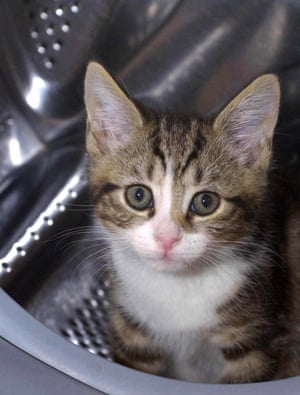
    Kitten in a washing machine
    ‘Having a secure place to live should always be priority number one.’ Photograph: Rui Vieira/PA

    It’s true that cats have different priorities to dogs. Unlike dogs, whose wolf ancestors bequeathed them a flair for building social relationships, cats are descended from a solitary, territorial animal. For a lone predator like a wild cat, a detailed knowledge of its hunting grounds, the places where prey is likely to be found and those where it is not, will make the difference between prosperity and starvation. Even now, when most cats get their food from their owners, cats still obey the ancient rule of their forebears, that having a secure place to live should always be priority number one. That’s why owners are strongly advised to keep cats shut indoors for two to three weeks after moving house – it takes that long for the cat to build up confidence that his new environment is as good as the old one.

    So cats are loyal, but mainly to places. What about people? Are cat owners little more than the link between the cat’s bowl and the pet food aisle in the supermarket? A recent study at the University of Lincoln showed that cats don’t turn to their owners for reassurance (something that most dogs do) when they’re faced with a challenge – in this case, an unfamiliar room.

    When cats find themselves in a place they’ve never been before, they will immediately explore it, but pretty quickly their thoughts turn to getting back to their usual territory. Whether or not their owners are nearby doesn’t seem to make any differenWhen cats are on what they perceive to be safe ground (which for pet cats is most of the time), they can and do behave affectionately towards their owners. They show this in a whole variety of ways including: raising their tails upright when they see us, rubbing their heads or flanks on our legs, licking us when they’re sitting next to us, and purring when we stroke them. How do we know that these are signs of affection? Well, it has to be said that we will never know precisely what’s going on inside a cat’s head (or a dog’s for that matter), but we do know that these are the ways in which cats indicate their affection for other cats.ce as to how insecure they feel.

    The fact that cats get along with other cats at all is something of an achievement for a species that was exclusively solitary just 10,000 years ago. Our domestic cat’s wild relatives, the Arabian wildcat Felis lybica, spend most of their lives alone. During the breeding season, males consort with females for just a few days of the year, but otherwise avoid other cats as much as possible, unlike male lions and cheetahs, both of which are able to form “brotherhoods”, competing with other groups for the attention of females. Adult females have dependent kittens with them for about half of each year, but of necessity drive them away when they reach about six months old, each hunting territory being only large enough to support one cat.

    Everything changed for cats some 8,000 years ago, when the first towns appeared in the Middle East. Prior to that, the early domestic cats lived in villages which would only have produced enough prey, in the form of mice that infested their stores of nuts and wild grains, to feed one or two cats. With the dawn of agriculture came food stores that were both larger and closer together, providing a comfortable living for not one but many cats. This must have forced those cats to lose some of their natural suspicion of one another: cats that persisted with their old, pugnacious habits would have spent more time watching their backs than searching for their next meal, and would have lost out to those who could form alliances with others – which in the domestic cat’s case turned out to be “sisterhoods” (males remaining largely solitary to this day).


    ‘One way owners can satisfy their cat’s need for social interaction is by playing games.’ Photograph: Andrew Marttila/Rex Shutterstock 

    Since amicability was the exception rather than the rule for these cats, they had to evolve a way of communicating their friendly intentions to one another. The “language” that emerged was based on the way that kittens communicate with their mothers, but modified for use between adults. So, a cat that sees another cat that it recognises as an ally will raise its tail upright before approaching, as a signal of friendly intentions. If the other cat raises its tail, the two will walk up to one another and rub their heads, flanks or tails together before going about their business. Or, they may settle down side by side, and groom one another, purring all the while. So, when our cats perform these signals towards us, we can be reasonably confident that they’re showing that they are fond of us.

    The simple difference with dogs is that cats have to feel secure before they can show their affection, whereas dogs can use their instinctive affection for us as a way of calming themselves when they’re feeling insecure. A cat’s need for social interaction isn’t as great as a dog’s, but they do benefit from a certain amount. One particularly good way that owners can satisfy this is by playing games with their cat using toys that the cat can “hunt” – a toy mouse on a string, a bunch of feathers on a miniature “fishing rod” – thereby satisfying the cat’s hunting instincts as well as its need for company. Other than this, it’s always best to wait for the cat to request attention, because, as you’ve probably guessed by now, they’re not always in the mood.


    Cats are not always in the mood for attention.’ Photograph: Alamy
    source

    Your Daily #Cat

    Young white lion looking a bit melancholic 

    Young white lion looking a bit melancholic by Tambako The Jaguar

    New Simon's Cat video "Box Clever"

    The sweetest hug you'll see all day (video)